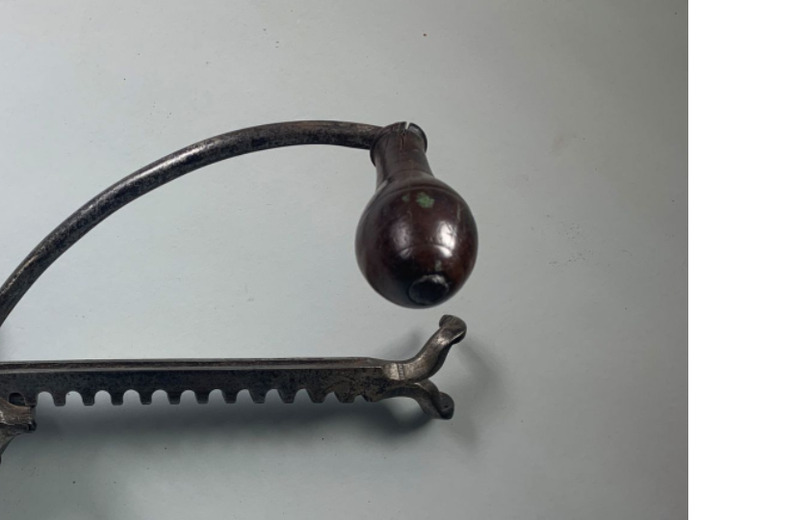
This cranequin is made of iron. Its box is stamped and has some additional decorative lines etched in. On the opposite end of the cranequin, there are some more decorative lines. The knob of the handle appears to have a wooden piece on it.
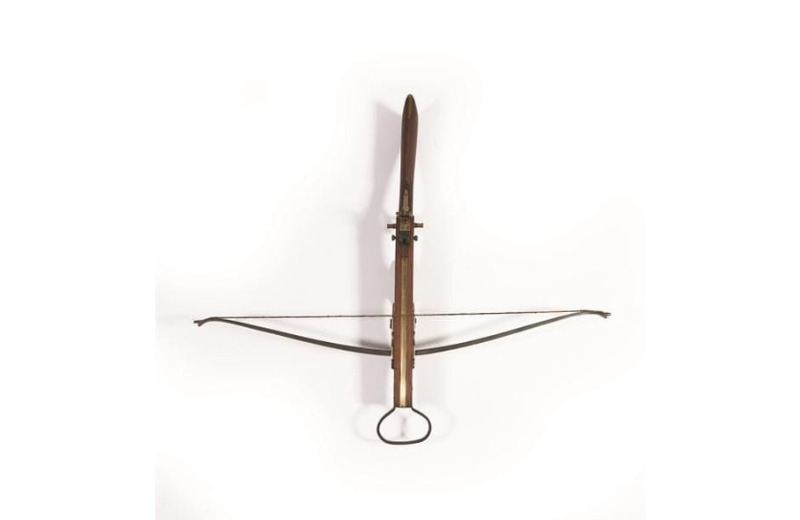
At the tip of this crossbow, there is a suspension ring (possibly stirrup). The crossbow has a steel prod, which is attached to the wooden stock with bow irons. The bow irons appear to be made of brass. The trigger is made of brass, and it has a trigger guard. The sight is made of steel.
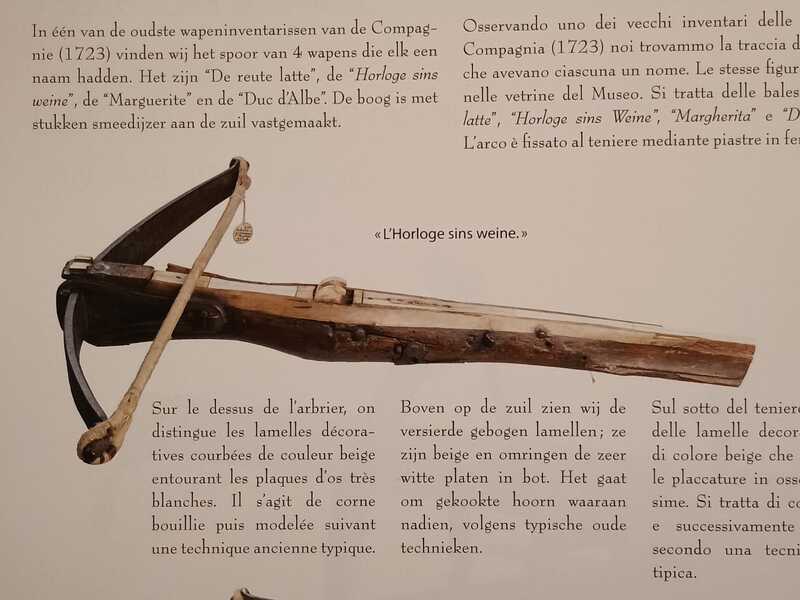
The crossbow has a metal prod, attached to the wooden stock with bow irons. The nut is made of wood. The trigger is a lever-type trigger. There are pieces of bone and horn on the top of the crossbow; the bone pieces are white and the horn pieces are beige. A specific historically common method was used to boil and shape the horn pieces.
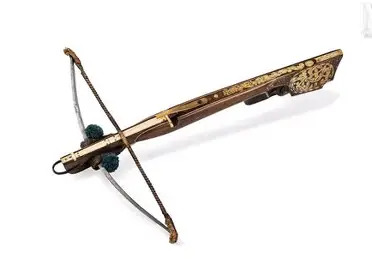
This crossbow has a wrought iron prod (bow) which is attached to the stock with bindings. The crossbow has two pompoms in dark teal. There is a suspension ring at the tip of the crossbow. The stock is made of fruitwood. It has a broken bolt clip, likely made of horn. The stock and cheekplate are decorated with motifs of stylized vegetation in the rinceau style. The cheekplate is also decorated with cherubs. The crossbow is described as having a double set trigger and a wrought iron trigger guard.
This composite crossbow is made from fruit wood and inlaid with horn and deer antlers. As part of its earlier design, the prod of the crossbow was coated with painted birch bark. It features a single axis rolling nut secured with a nussfadden or the “nut thread,” typical of Central European crossbows in the 16th century. A rare feature is its support system for spanning devices.
The crossbows has a prod made of horn and an iron foot stirrup. The nut lock seems to be made of gold, or it is an iron lock painted with gold and the stock is made of wood according to the features described for similar crossbows of the period and geographical location (See link below for source). There are grey geometric patterns around the sides of the stock and surrounding the nut. The composition of the trigger mechanism is not visible as this is the only picture found of this particular crossbow. It was made by an individual named Ulrich Bock
Crossbows in Switzerland were significant because of the legend of the folk hero, Wilhem Tell’s story and his mastery of the weapon. It was used during the 15th century by the country to regain military and political influence. However, it is to be noted that the myth of Wilhelm Tell was only popularized after Friedrich Von Schiller’s play about his deeds which was published after this crossbow was manufactured, deeming it unclear whether it was inspired by the legend or not.
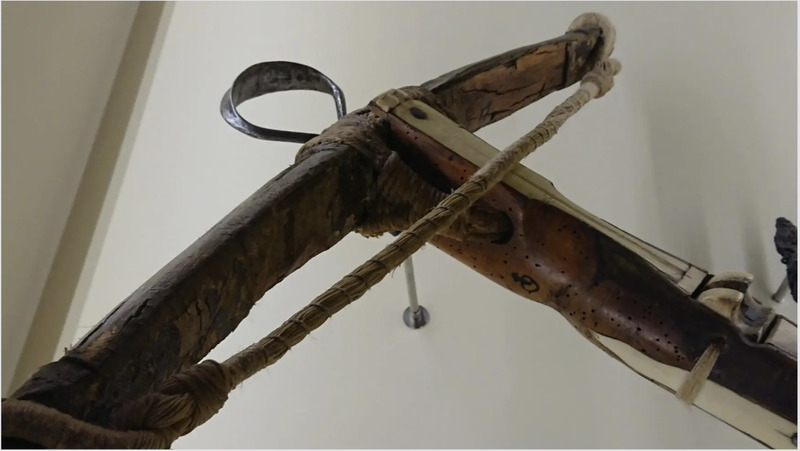
This sporting crossbow has a steel prod that is attached to the wooden stock, inlaid with a rope of hemp or sinew. The string is missing. The stock is made of pear wood and inlaid with bone and is clearly worn out. It depicts hunting scenes on both sides surrounded by vine and floral designs. There are angel-like figures and children featured on the stock, along with birds, one of which seems to be an eagle or gryphon. There is a figure near the prod binding holding a fabric that blooms into multiple flower arrangements. The wooden cheek rest has rotted as evident by the black marks. The rear sight is folded over towards the direction of the nut, and there seems to be an array of spiral designs around the trigger mechanism and the nut lock which lacks a bolt clip. According to the source, there is a maker’s mark underneath the stock indicating the crossbow was produced by the Nuremberg Armoury, but the volunteer inspecting the crossbow could not identify it. The transverse pin, the trigger guard, and the setting chord are still preserved.
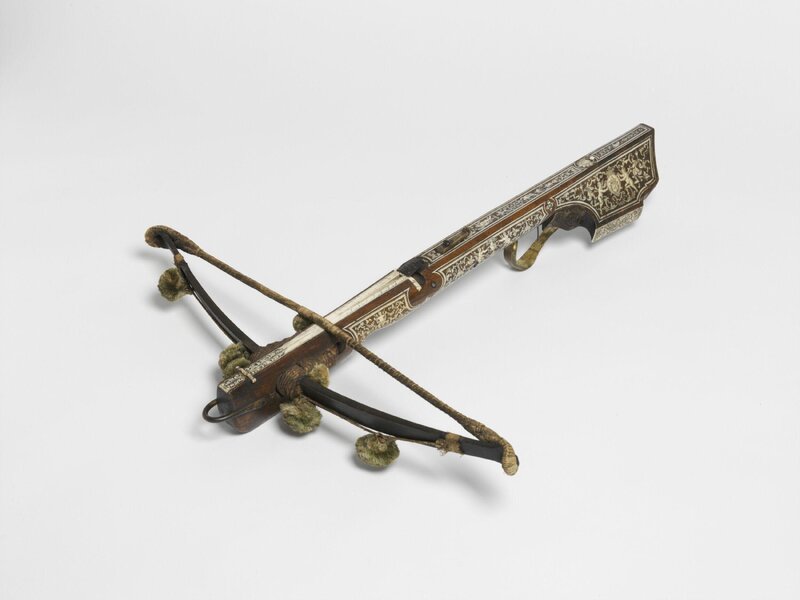
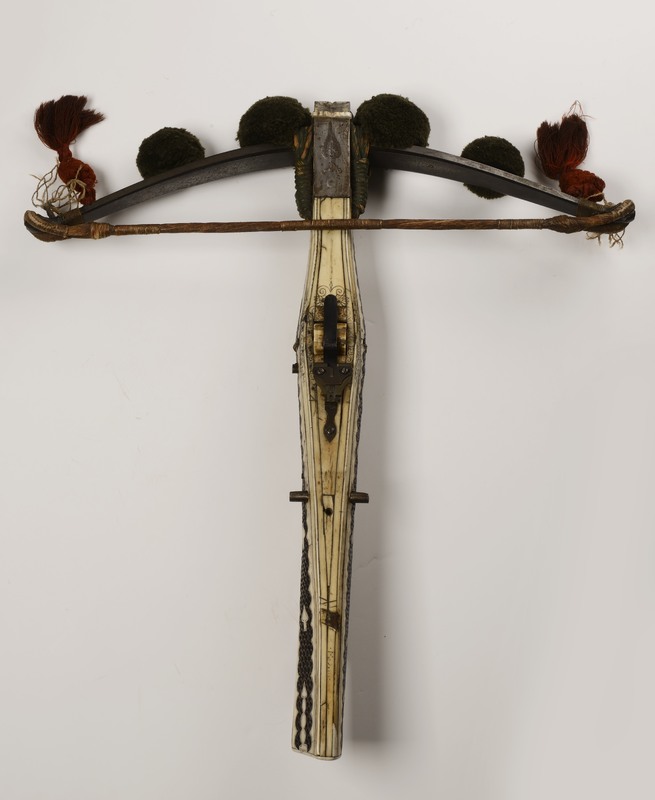
The stock of this crossbow is made of walnut and inlaid with antler engravings. The stock features highly detailed engravings including stylized foliage and cherub figures which are framed into distinct panels by borders which follow the shape of the crossbow stock. However, most interestingly, the butt end of the stock is decorated with the Polish arms of Jan Tarlo, the Governor of Lublin and Steward of the Royal House. The butt end of the stock is additionally ornamented with fine wood engravings in winding foliage designs. The cheek rest appears to be installed at an angle and more pronounced with an extended engraved staghorn panel added to the stock of the crossbow. The steel prod is a grey hue and decorated with yellow green pom poms. Additional hardware including the trigger guard, and the bolt rest standout against the stock with their gold hue.*
*Although appearing differently than the prod and additional metal hardware such as the nut and transverse pin, the Museum description does not indicate these pieces to be constructed of a metal other than steel.
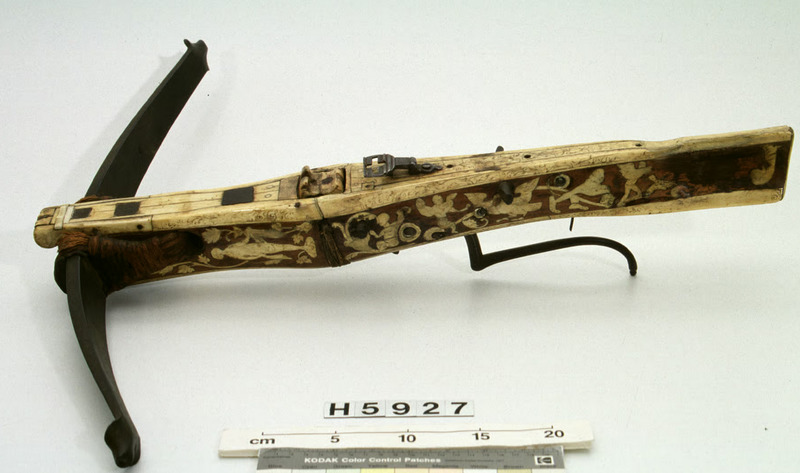
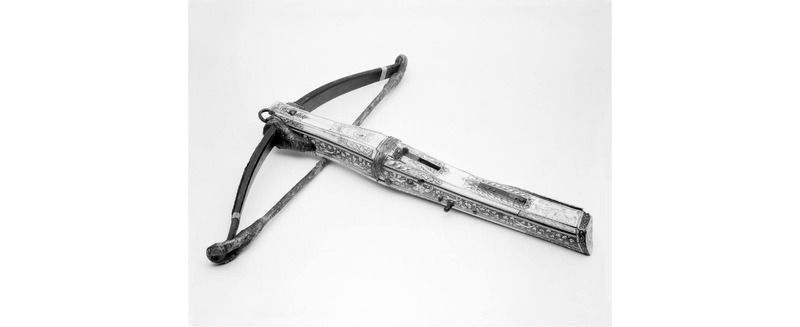
The crossbow has a steel bow and a walnut stock with ivory inlay, depicting motifs of animals and hunter with flowers creeping up the stock on the side, common in German Renaissance crossbows. The butt stock depicts a couple of old men picking flowers. There are more ornate engravings surrounding the trigger mechanism and thumb rest. The string appears to be made of horn. There is a steel chord tied near the buts as a binding thread. A cranequin winder is attached to the crossbow to span the bow belonging to the same century. The crossbowman would put is foot in the stirrup and crank the windlass to trigger the pulley mechanism.
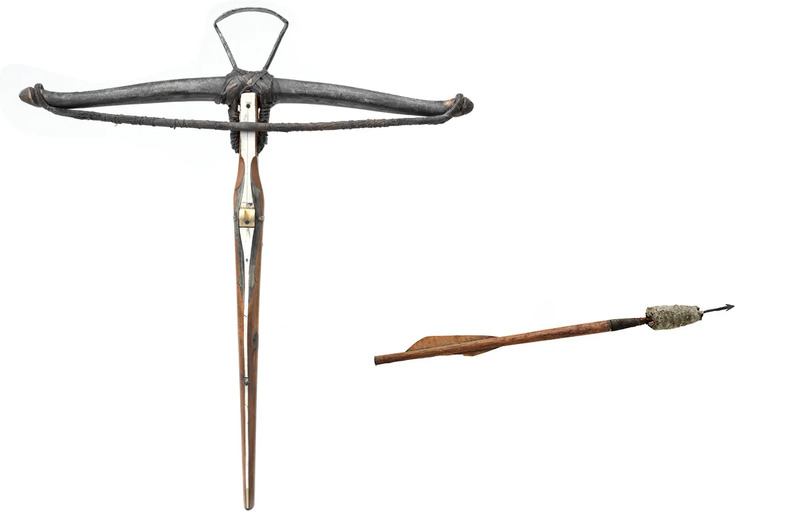
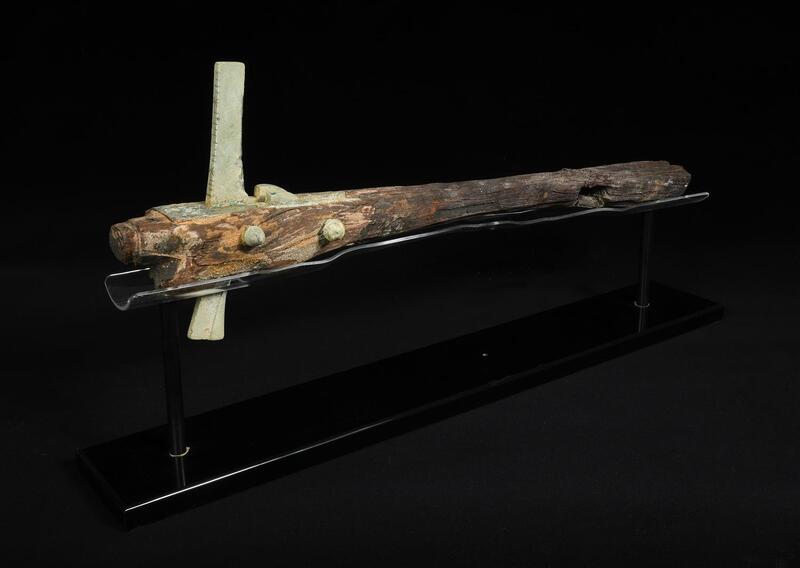
The crossbow has its wooden stock and bronze mechanism, including the hook, with green patina intact. The prod is missing. The wood has rotted with black marks appearing on the side. Its size and range can be understood by the traces of the scale on the bronze firing mechanism. According to the auction house's expert, it is somewhat similar to the crossbow mechanisms found in the Terracotta Pits.
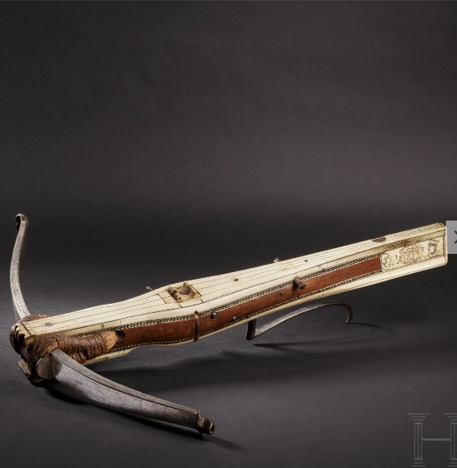
The stock is inlaid with bone and made of fruitwood and the cheek rest is decorated with the heads of a couple, a coat of arms and the monogram of 'IT 1597'. However, according to the auction description, the bottom of the stock also states '1562' at the date. This could suggest there were changes made to the crossbow in later centuries. The nut, made of bone, and binding are original while the string is missing. The iron hair trigger is folded under, and there is a brass trigger guard. There is no rear-sight visible for this crossbow.
Please note that elements of the description have been translated from German.
The wooden stock is marked with a crown in a circle near the rivet. There is a diamond-shaped symbol near a smiling sun on the stock. Below it is what looks to be warrior or a king above angel winged-like design. There are also hearts creeping up the side of the stock and another crown, albeit a more cushioned one, is engraved near the bolt clip. All the engravings are carved in bone. Wool tassels are attached to the prod, the pin trigger, and the edges of the hemp string.
It is mentioned to be exhibited as part of a collection belonging to the Rozenbergs, a Czech Roman Family in Waldstein Riding Hall, Prague.