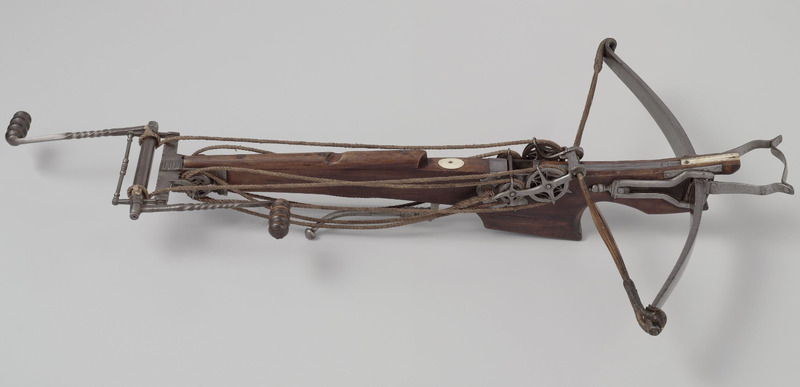
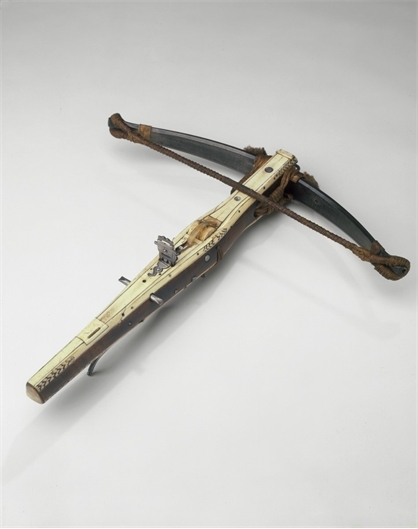
This is a target crossbow with a windlass attached to it. The prod and stirrup, which curved at the corners, appear to be made of steel along with the spatula-shaped metal binding clasping them. According to the website, there is a symbol of crowned coat of arms stamped underneath the prod, however, it is not visible in the image. The string is spanned with an English spanner according to the museum's description and the sides of the stock are hooked with wheel-like components to attach the windless with the ropes looping around the spider-web and star-pointed pieces of the wheels. The stock is made of elm and the top of it is plated with steel and bone and there is small groove behind the raised part of the stock as a thumb rest. The trigger appears to be made of iron.
At the tip of this crossbow, there is a small ring and a forked sight. The prod, stock, and mechanisms are made of wrought iron. The prod has its bowstring, and the bowstring has a small leather pouch on it to hold the pellet. The butt of the crossbow is made of fruitwood with simple strips of deer antler inlay. The butt has multiple sides carved into it lengthwise, and the deer antler strips highlight the edges where the carved facets meet. Ader Auction House states that this crossbow was meant for a child or woman, likely due to its size.
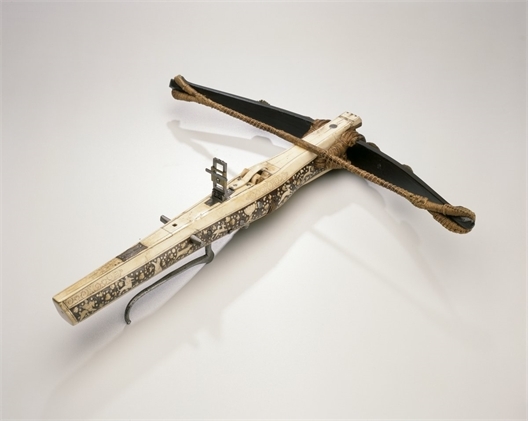
This crossbow has a steel prod and string made of hemp along with bridle binding. The wooden stock appears to be inlaid with bone. The sides of the stock are decorated with hunting scenes with pellet flowers, vines and a man on a horse running after a hound who is chasing a deer. They are also accompanied by birds perching on the vines of the flowers. It is carved with spiral patterns above the hunting scenes and the back of the stock is plated with small column of steel. The nut is made of bone and the material for the bolt clip is unknown. The rectangular rear sight with three slots is made of steel and the transverse pins are visible behind it. It has an iron trigger guard and trigger.
This crossbow has a steel prod with small brown pom-poms attached to it and has a string made of hemp and bridle binding. The top of the wooden stock appears to be inlaid with horn or bone with carvings of black lines and arrow marks at the edges along with a little spiral stamped near the butt stock. The nut is made of bone while the bolt clip appears to belong to a later period and the material is unknown. The elaborate rear sight has a sliding slot with a decorative base with a chiseled top. The transverse pin is visible in the image along with an iron trigger guard and trigger.
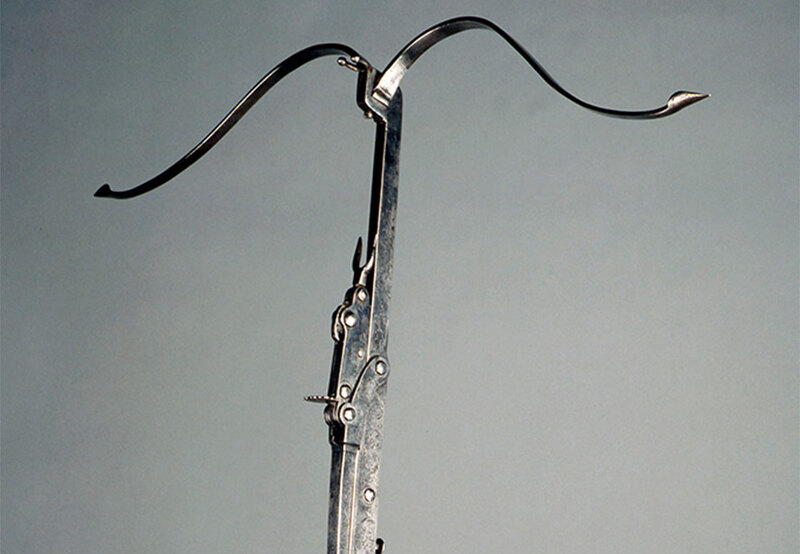
The steel prod of this crossbow is strongly recurved. The nocks are rolled. The photograph shows only part of the crossbow, but the Museum notes that it is made of steel and wood, so this crossbow likely has a wooden butt typical of German kugelschneppers. The Museum notes that the crossbow is decorated with the coat of arms of the Grand Duke of Tuscany as well as stylized vines (rinceaux) surrounding a boar. The Museum does not specify where on the crossbow these decorations are.
This crossbow was made by François Aubert of Luneville, France. He was an arms maker and served the Duke of Lorraine. At the time, the Duke of Lorraine was François-Étienne (anglicized to Francis-Stephen). He later became the Grand Duke of Tuscany.
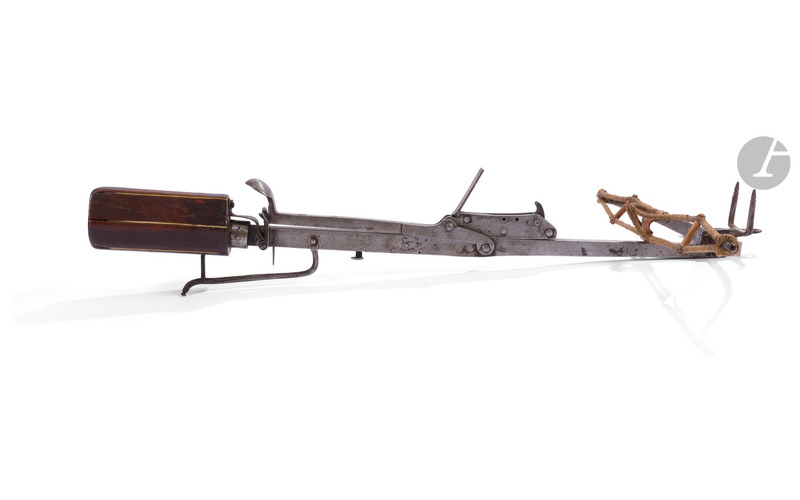
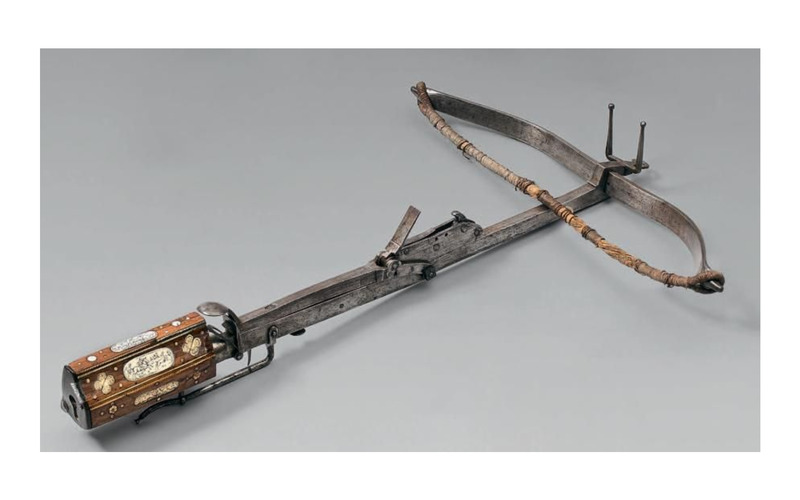
At the tip of this crossbow, there is a forked sight with two metal sticks pointing upward. The prod is made of steel and appears to penetrate the iron stock directly. The prod bears a bowstring which is original. The trigger appears to be a hair trigger. The trigger guard is iron. Typical of the German kugelschnepper, this crossbow is made entirely of metal except for the bowstring and a wooden butt. The wooden butt is inlaid with strips and plates of engraved bone. Some of the inlaid bone depicts flowers or birds, but the largest ones depict whole hunting scenes. Thierry de Maigret describes one such scene as showing a man on horseback with a crossbow in hand. Thierry de Maigret describes the very end of the butt as being covered with brown horn.
Two of the plates of engraved bone are not original.
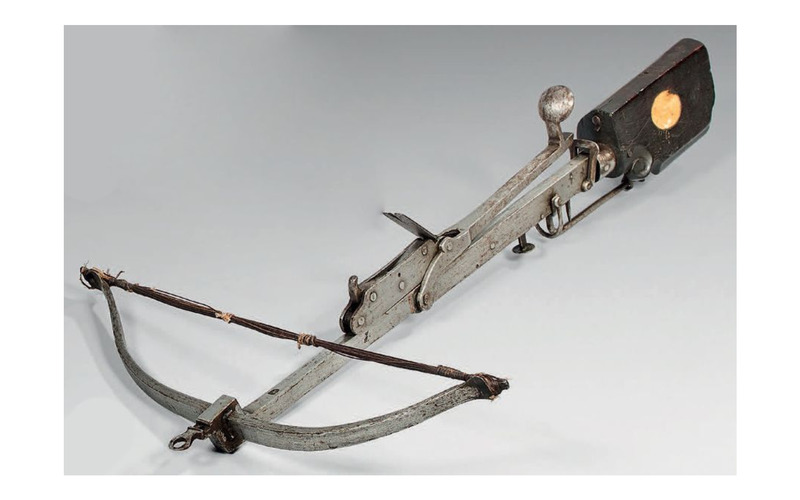
At the tip of this crossbow there is a small ring. The prod is made of steel and appears to penetrate through a hole in the iron stock. It appears there is some welding where the two pieces of metal met, but the photo is not detailed enough to be certain. The trigger guard is noted as being iron. Typical of the German kugelschnepper, this crossbow is made entirely of metal except for a wooden butt. The wooden butt is inlaid with an oval bone plaque. The metal parts of the crossbow are lightly spotted with oxidation.
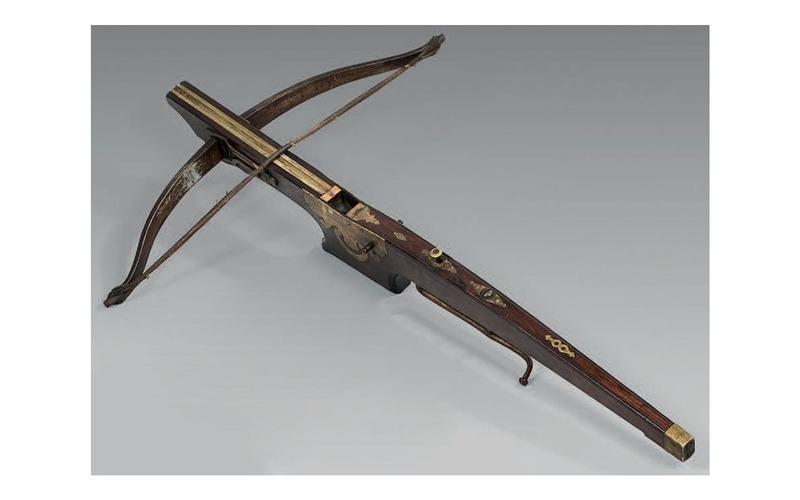
This crossbow has a brass bolt groove in the topside of the stock. Below it, bow irons secure the iron prod to the stock. The iron prod is stamped with an ox’s head and bears the words “BÜNGEN SOHLINGEN.” The stock is made of walnut wood. A support continuous with the stock protrudes below the catch area. The stock is decorated with plates of brass, often cut into decorative shapes. Such decoratively cut brass plates appear around the catch on the sides of the stock. There are also small plates that lie behind the nut area on the top of the stock.
The trigger system is neither depicted in the photo nor discussed by Thierry de Maigret, but the trigger guard is. The trigger guard is made of iron.
The butt of the crossbow has a brass cap.
The overall form of the crossbow - plain wooden stock with elaborate metalwork, a wooden support or “foot” protruding downwards, and a narrow and plain butt - is typical of Flanders. This crossbow emulates the style of the 16th and 17th centuries, but was likely made in the 18th or early 19th century.
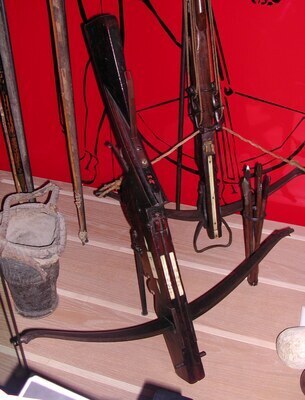
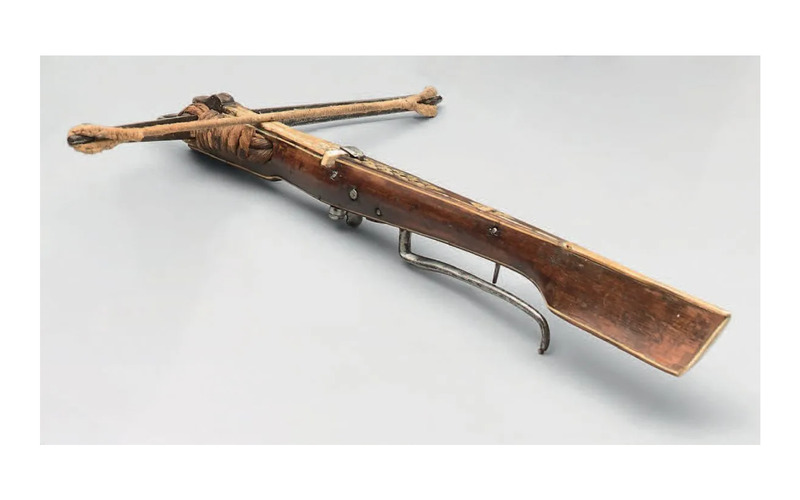
Bindings secure the wrought iron prod to the wooden stock. The prod has a bowstring but it is not original. There is a metal catch. There appear to be engraved wooden plates on the topside of the stock, though the photo is not very detailed. The body of the stock is sinuous, swelling towards the centre near the catch area but thinning and becoming concave towards the cheek rest and butt. The sides of the stock are largely plain and undecorated, with the exception of the edges, where there are thin strips of bone.
The trigger system appears to be a hair trigger with a trigger guard in the shape of a lever.
Thierry de Maigret states that this crossbow would have been intended for use by a child or a woman. The bone plates on the stock are described as being engraved with foliage designs.
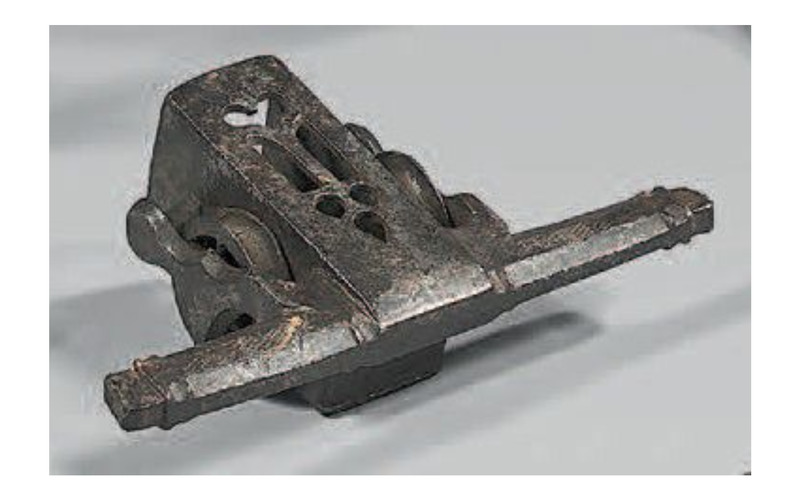
This is a fragment of the upper back part of a windlass, a tool used to span crossbows. It is made of wrought iron. Two pulleys remain. The metal has cutouts in it for decoration. The cutouts form a heart, two rectangles but with one curved corner each, two circles, and a teardrop shape.
The origin of this fragment is not specified.
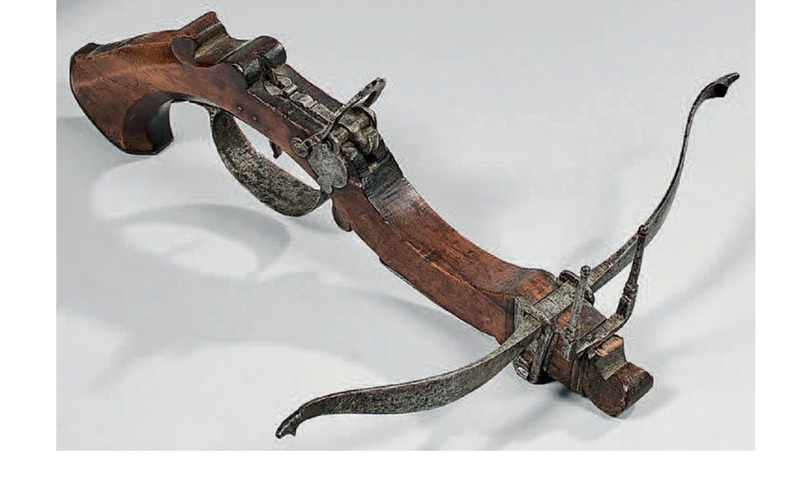
At the tip of the crossbow, two metal sticks form a sight. Bow irons secure the prod to the stock. The prod is iron with rolled nocks and the stock is wooden. The bowstring is missing. On the top of the crossbow, there is a foldable sight. Farther down the stock, there is a simple, small, scroll-like sculpture carved from the wood of the stock. Small sculptures like this are common on this part of the stock of a pellet crossbow. The crossbow has a hair trigger and trigger guard.