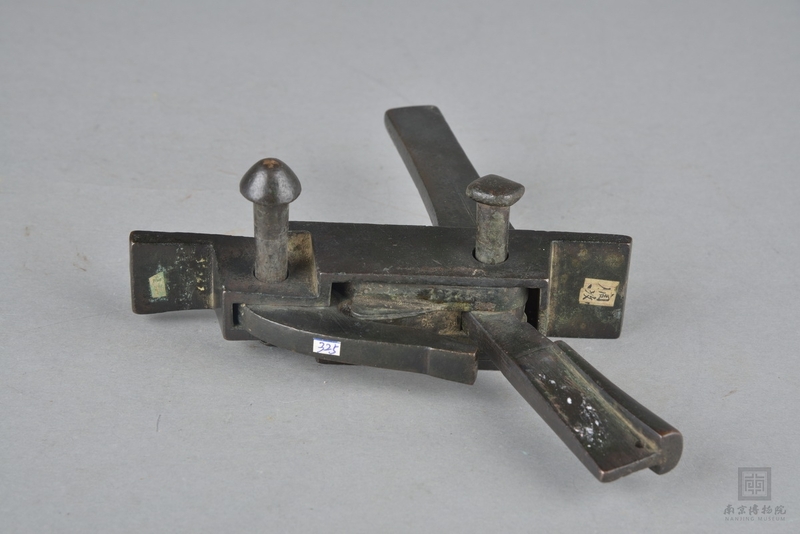
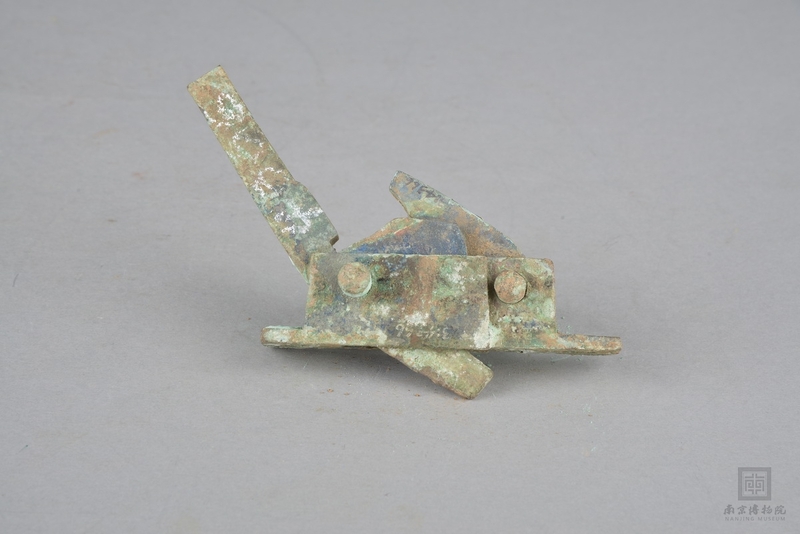
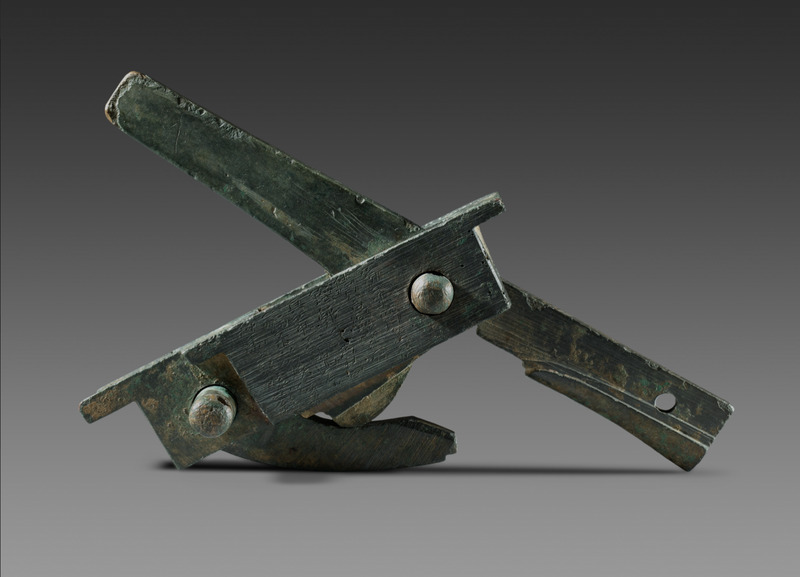
This crossbow mechanism held by the Nanjing museum is dated to the Han dynasty. The exact location of its unearthing is not listed.
The mechanism is made of bronze and it comprises most of the typical parts of a Chinese crossbow mechanism. The long rectangular protrusion at the top of the mechanism is the sight, or wangshan (望山). The two small hooks sticking out in front of the sight are a part of the same component as the wangshan and serve as the nut, or ya (牙). The rectangular handle at the bottom of the mechanism is the trigger, or xuandao (悬刀), and within the bronze casing, or guo (郭) there is a sear, or gouxin (钩心) connecting the sight and nut and the trigger. The mechanism is held together by two bronze axle pins. The top surface of the bronze casing has a groove that goes down the middle which would continue onto the wooden stock of the crossbow. This groove would be where the arrow rests during drawing and aiming. The surface of the mechanism has been very slightly oxidised in certain spots.
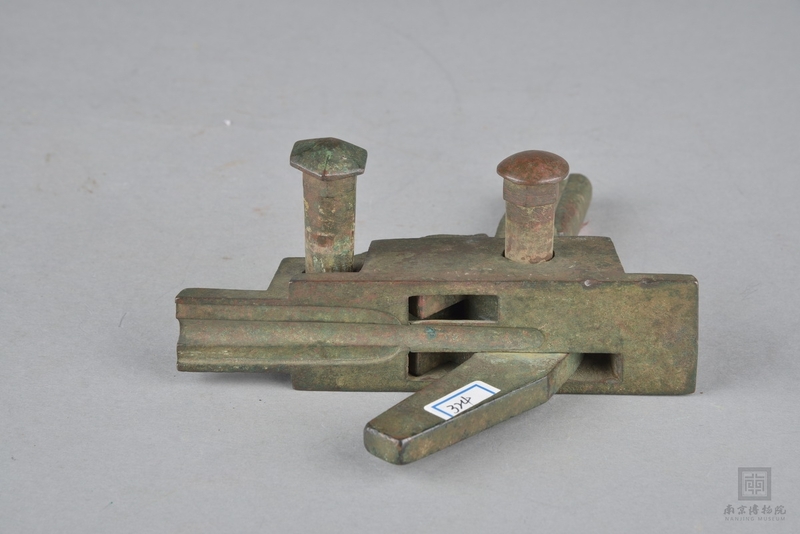
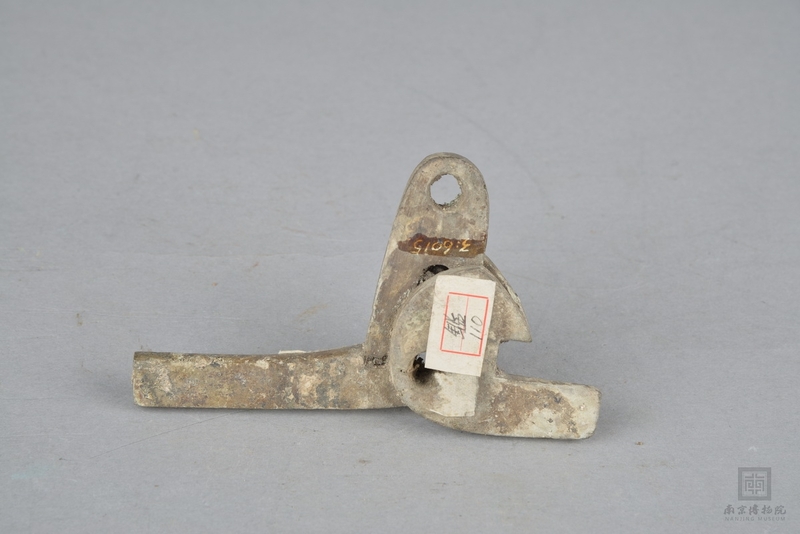
This crossbow mechanism held by the Nanjing museum is dated to the Han dynasty. The exact location of its unearthing is not listed.
The mechanism is made of bronze and it comprises most of the typical parts of a Chinese crossbow mechanism. In the photo, the mechanism is oriented upside-down. The long rectangular protrusion at the bottom of the mechanism is the sight, or wangshan (望山). The two small hooks sticking out in front of the sight are a part of the same component as the wangshan and serve as the nut, or ya (牙). The rectangular handle at the top of the mechanism is the trigger, or xuandao (悬刀), and within the bronze casing, or guo (郭) there is a sear, or gouxin (钩心) connecting the sight and nut and the trigger. The mechanism is held together by two bronze axle pins. The top surface of the bronze casing has a groove that goes down the middle which would continue onto the wooden stock of the crossbow. This groove would be where the arrow rests during drawing and aiming. The surface of the mechanism has been slightly oxidised.
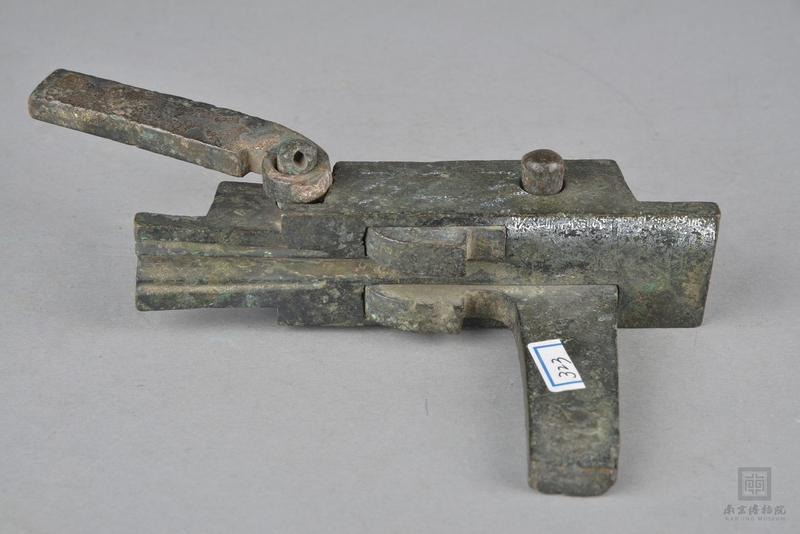
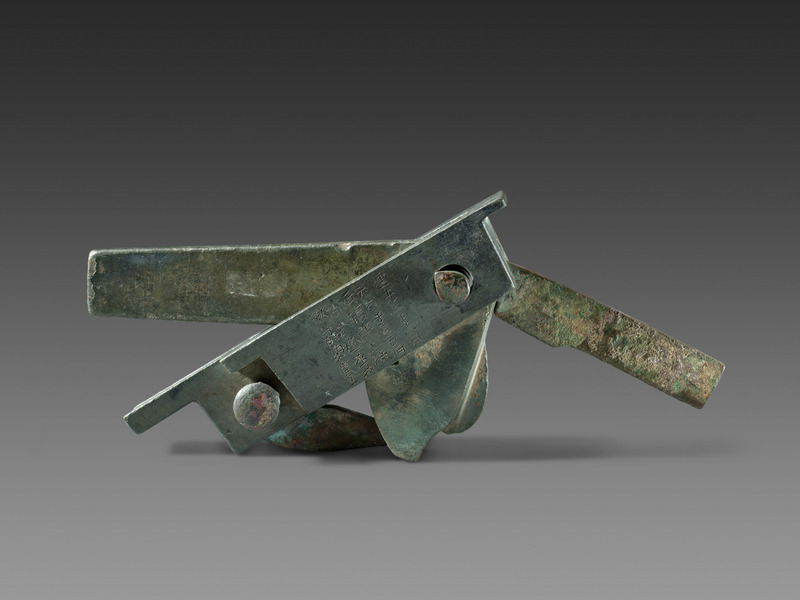
This crossbow mechanism held by the Nanjing museum is dated to the Han dynasty. Its exact location of unearthing is not listed.
The mechanism is made of bronze and it comprises most of the typical parts of a Chinese crossbow mechanism. In the photo, the mechanism is oriented upside-down. The long rectangular protrusion at the bottom of the mechanism is the sight, or wangshan (望山). The two small hooks sticking out in front of the sight are a part of the same component as the wangshan and serve as the nut, or ya (牙). The rectangular handle at the top of the mechanism is the trigger, or xuandao (悬刀), and within the bronze casing, or guo (郭) there is a sear, or gouxin (钩心) connecting the sight and nut and the trigger. The mechanism is held together by two bronze axle pins. The top surface of the bronze casing has a groove that goes down the middle which would continue onto the wooden stock of the crossbow. This groove would be where the arrow rests during drawing and aiming. The surface of the mechanism has been slightly corroded and oxidised.
There appears to be engravings on the top surface of the bronze casing dusted in white. However, these engravings are not clear enough to be deciphered.
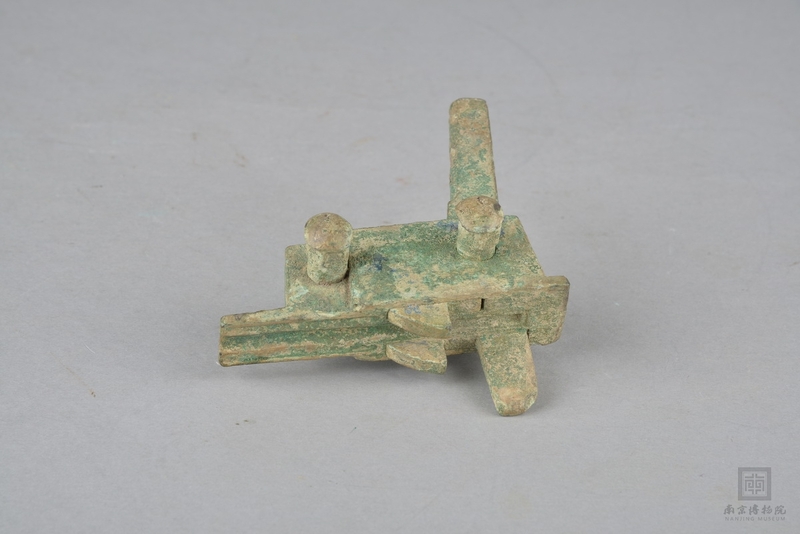
This crossbow mechanism held by the Nanjing museum is dated to the Han dynasty. Its exact location of unearthing is not listed.
The mechanism is made of bronze and it comprises most of the typical parts of a Chinese crossbow mechanism. In the photo, it is oriented upside-down. The long rectangular protrusion at the bottom of the mechanism is the sight, or wangshan (望山). The two small hooks sticking out in front of the sight are a part of the same component as the wangshan and serve as the nut, or ya (牙). The rectangular handle at the top of the mechanism is the trigger, or xuandao (悬刀), and within the bronze casing, or guo (郭) there is a sear, or gouxin (钩心) connecting the sight and nut and the trigger. The mechanism is held together by two bronze axle pins. The top surface of the bronze casing has a groove that goes down the middle which would continue onto the wooden stock of the crossbow. This groove would be where the arrow rests during drawing and aiming. The surface of the mechanism has been corroded and oxidised.
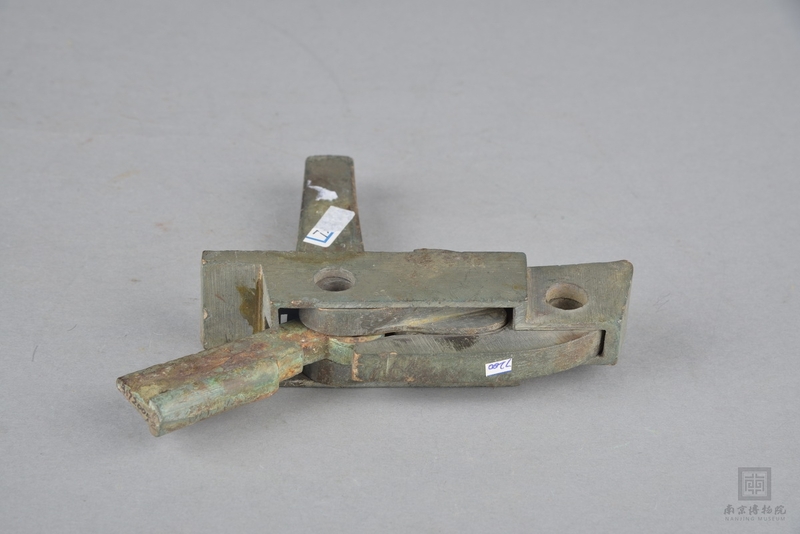
This crossbow mechanism held by the Nanjing museum is dated to the Han dynasty. The exact location of its unearthing is not listed
The mechanism is made of bronze and it comprises most of the typical parts of a Chinese crossbow mechanism. In the photo, it is oriented upside-down. The long rectangular protrusion at the bottom of the mechanism is the sight, or wangshan (望山). The two small hooks that would be sticking out in front of the sight but that are hidden in the photo are a part of the same component as the wangshan and serve as the nut, or ya (牙). The rectangular handle at the top of the mechanism is the trigger, or xuandao (悬刀), and within the bronze casing, or guo (郭) there is a sear, or gouxin (钩心), which protrudes exposed from the casing, connecting the sight and nut and the trigger. The mechanism is held together by two bronze axle pins. The top surface of the bronze casing has a groove that goes down the middle which would continue onto the wooden stock of the crossbow. This groove would be where the arrow rests during drawing and aiming. The surface of the mechanism has been corroded and oxidised quite severely.
This incomplete crossbow mechanism held by the Nanjing museum is dated to between the Han dynasty to the Six dynasties period. The specific location of its unearthing is not listed
The mechanism is made of bronze and it comprises some of the typical parts of a Chinese crossbow mechanism. The component that includes a rectangular protrusion and two small hooks is the sight and nut, or wangshan (望山) and ya (牙). The rectangular handle to the left of the mechanism is the trigger, or xuandao (悬刀), and there is a sear, or gouxin (钩心) connecting the sight and nut and the trigger. The mechanism would have been held together by two bronze axle pins within a bronze casing, or guo (郭), but both the casing and the pins are missing from this specimen. The surface of the mechanism has been corroded and oxidised.
This crossbow mechanism held by the Nanjing museum is dated to the Han dynasty. Its specific location of unearthing is not listed.
The mechanism is made of bronze and it comprises most of the typical parts of a Chinese crossbow mechanism. The long rectangular protrusion at the top of the mechanism is the sight, or wangshan (望山). The two small hooks sticking out in front of the sight are a part of the same component as the wangshan and serve as the nut, or ya (牙). The rectangular handle at the bottom of the mechanism is the trigger, or xuandao (悬刀), and within the bronze casing, or guo (郭) there is a sear, or gouxin (钩心) connecting the sight and nut and the trigger. The mechanism would have been held together by two bronze axle pins, but in this specimen, both pins are missing. The top surface of the bronze casing not visible in this photo has a groove that goes down the middle which would continue onto the wooden stock of the crossbow. This groove would be where the arrow rests during drawing and aiming. The surface of the mechanism has been slightly oxidised and scratched.
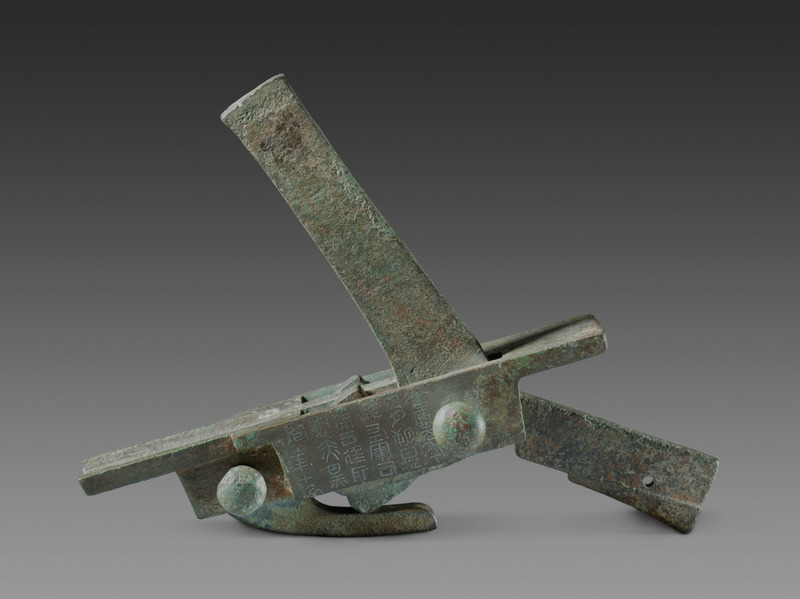
This crossbow mechanism held by the Shanghai museum is dated to 122CE. Its specific location of unearthing is not listed.
The mechanism is made of bronze and it comprises most of the typical parts of a Chinese crossbow mechanism. The long rectangular protrusion at the top of the mechanism is the sight, or wangshan (望山). The two small hooks sticking out in front of the sight are a part of the same component as the wangshan and serve as the nut, or ya (牙). The rectangular handle at the bottom of the mechanism is the trigger, or xuandao (悬刀), and within the bronze casing, or guo (郭) there is a sear, or gouxin (钩心), which hangs exposed in the photo, connecting the sight and nut and the trigger. The mechanism is held together by two bronze axle pins. The top surface of the bronze casing has a groove that goes down the middle which would continue onto the wooden stock of the crossbow. This groove would be where the arrow rests during drawing and aiming. The surface of the mechanism has been corroded and oxidised.
There is engraved text on the surface of the casing that tells us about the mechanism’s time of manufacture. The text on the surface dates this mechanism to the second year of the Jianguang reign title, which corresponds to 122CE. Additionally, there is also engraving on the mechanism that locates this crossbow mechanism as either belonging to or manufactured by the Shuyan office.
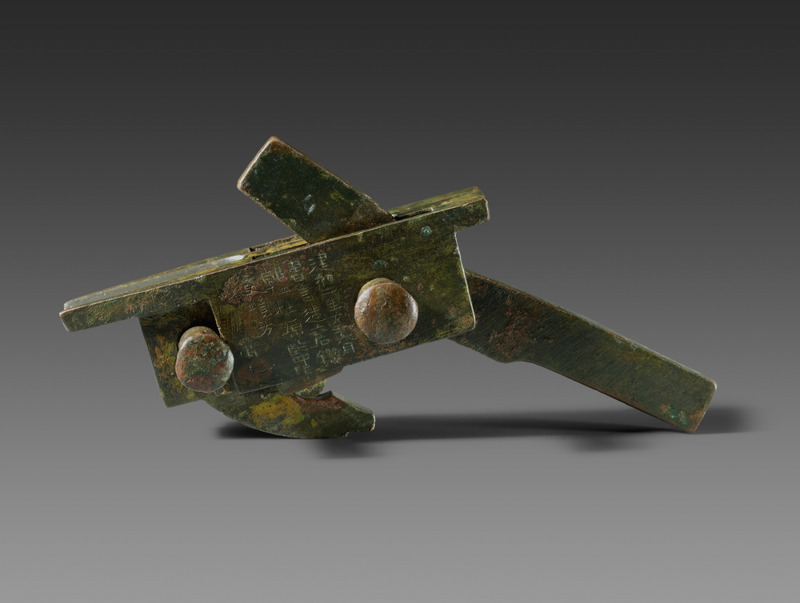
This crossbow mechanism held by the Shanghai museum is dated to 115CE. Its specific location of unearthing is not listed.
The mechanism is made of bronze and it comprises most of the typical parts of a Chinese crossbow mechanism. The long rectangular protrusion at the top of the mechanism is the sight, or wangshan (望山). The two small hooks sticking out in front of the sight are a part of the same component as the wangshan and serve as the nut, or ya (牙). The rectangular handle at the bottom of the mechanism is the trigger, or xuandao (悬刀), and within the bronze casing, or guo (郭) there is a sear, or gouxin (钩心) connecting the sight and nut and the trigger. The mechanism is held together by two bronze axle pins. The top surface of the bronze casing has a groove that goes down the middle which would continue onto the wooden stock of the crossbow. This groove would be where the arrow rests during drawing and aiming. The surface of the mechanism has been corroded and oxidised.
There is engraved text on the surface of the casing that tells us about the mechanism’s time of manufacture. The text on the surface dates this mechanism to the second year of the Yuanchu reign title, which corresponds to 115CE. Additionally, the museum also refers to a “Changgao” in the title of the specimen’s entry. This could refer to the name of an individual or a location, but it is uncertain what exactly it means.
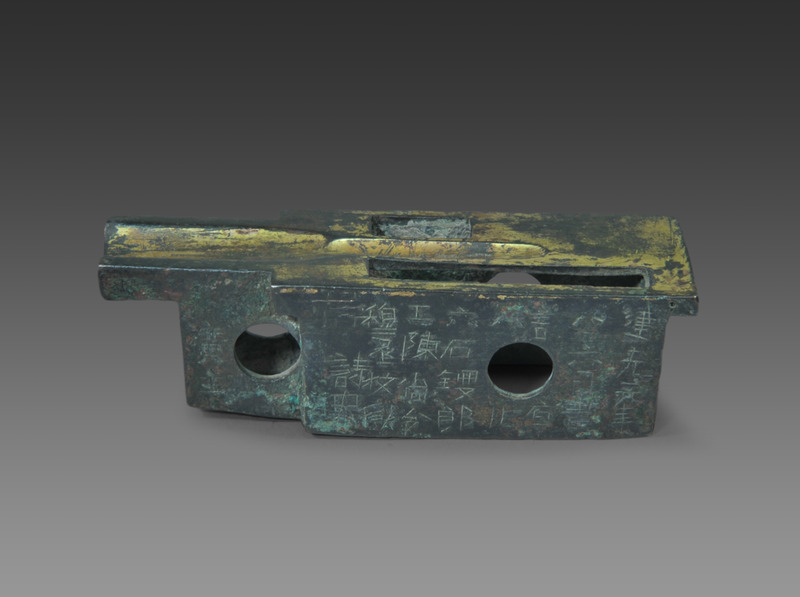
This crossbow mechanism casing held by the Shanghai museum is dated to 121CE. Its specific location of unearthing is not listed.
This mechanism casing, or guo (郭) is made of bronze and it would usually hold most of the typical parts of a Chinese crossbow mechanism. This specimen is missing its sight and nut, or wangshan (望山) and ya (牙); its trigger, or xuandao (悬刀); its sear, or gouxin (钩心), which would have connected the sight and nut and the trigger; and its two bronze axle pins which would have held the mechanism together within the guo. The top surface of the bronze casing has a groove that goes down the middle which would continue onto the wooden stock of the crossbow. This groove would be where the arrow rests during drawing and aiming.
The top surface of the bronze casing is gold-plated with slight corrosion on the edges and in the groove. It is uncertain if the mechanism was originally fully gold-plated and subsequently corroded, or if only the top surface was plated in the first place. There is engraved text on the side of the casing that dates this mechanism to the first year of the Jianguang reign title, which corresponds to the year 121CE
This crossbow mechanism held by the Shanghai museum is dated to the Eastern Han dynasty. Its specific location of unearthing is not listed.
The mechanism is made of bronze and it comprises most of the typical parts of a Chinese crossbow mechanism. The long rectangular protrusion at the top of the mechanism is the sight, or wangshan (望山). The two small hooks sticking out in front of the sight are a part of the same component as the wangshan and serve as the nut, or ya (牙). The rectangular handle at the bottom of the mechanism is the trigger, or xuandao (悬刀), and within the bronze casing, or guo (郭) there is a sear, or gouxin (钩心) connecting the sight and nut and the trigger. The mechanism is held together by two bronze axle pins. The top surface of the bronze casing has a groove that goes down the middle which would continue onto the wooden stock of the crossbow. This groove would be where the arrow rests during drawing and aiming. The surface of the mechanism has been corroded and oxidised.
There is engraved text on the surface of the casing that tells us about the mechanism’s use. Here, it is attributed to the Zuojun Sima, which is the title for the minister of war of the left arm of the army.
This crossbow mechanism held by the Shanghai museum is dated to 77CE. Its specific location of unearthing is not listed.
The mechanism is made of bronze and it comprises most of the typical parts of a Chinese crossbow mechanism. The long rectangular protrusion at the top of the mechanism is the sight, or wangshan (望山). The two small hooks sticking out in front of the sight are a part of the same component as the wangshan and serve as the nut, or ya (牙). The rectangular handle at the bottom of the mechanism is the trigger, or xuandao (悬刀), and within the bronze casing, or guo (郭) there is a sear, or gouxin (钩心), which hangs exposed from the mechanism in this photo, connecting the sight and nut and the trigger. The mechanism is held together by two bronze axle pins. The top surface of the bronze casing has a groove that goes down the middle which would continue onto the wooden stock of the crossbow. This groove would be where the arrow rests during drawing and aiming. The surface of the mechanism has been corroded and oxidised.
There is engraved text on the surface of the casing that tells us about the mechanism’s time of manufacture. The text on the surface dates this mechanism to the second year of the Jianchu reign title, which corresponds to 77CE.