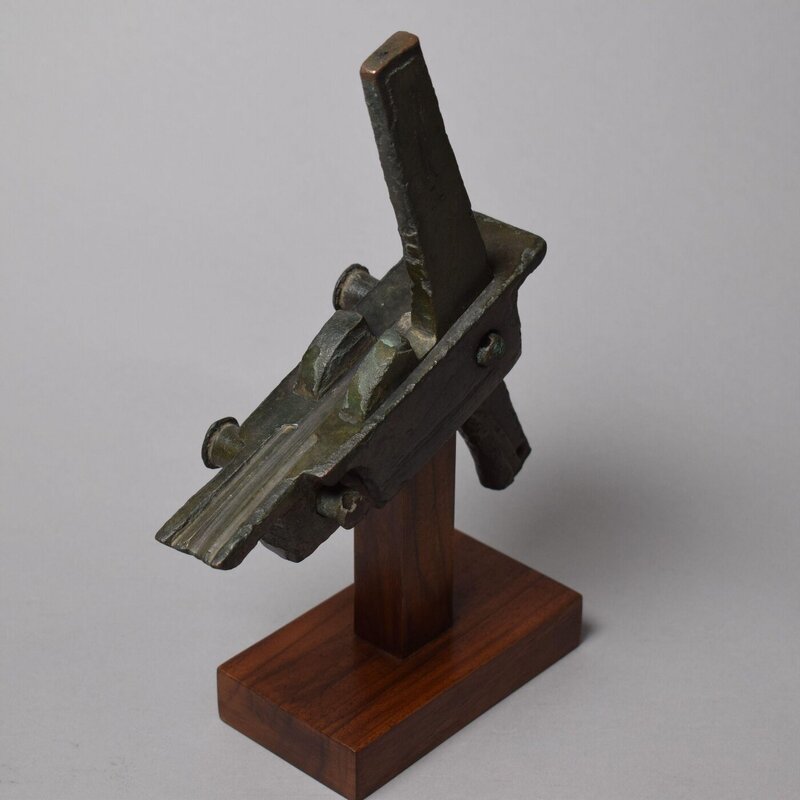
This bronze crossbow mechanism held by the Victoria and Albert museum is dated to 197CE. Its specific location of unearthing is not listed.
The mechanism is made of bronze and it comprises most of the typical parts of a Chinese crossbow mechanism. The long rectangular protrusion at the top of the mechanism is the sight, or wangshan (望山). The two small hooks sticking out in front of the sight are a part of the same component as the wangshan and serve as the nut, or ya (牙). The rectangular handle at the bottom of the mechanism is the trigger, or xuandao (悬刀), and within the bronze casing, or guo (郭) there is a sear, or gouxin (钩心) connecting the sight and nut and the trigger. The mechanism is held together by two bronze axle pins. The top surface of the bronze casing has a groove that goes down the middle which would continue onto the wooden stock of the crossbow. This groove would be where the arrow rests during drawing and aiming. The surface of the mechanism has been slightly corroded and oxidised.
The museum was able to date this crossbow mechanism precisely to 197CE. This could be indicative of engravings on the crossbow mechanism that dates it to a specific year of manufacture. This information could alternatively have been deduced from archaeological context.
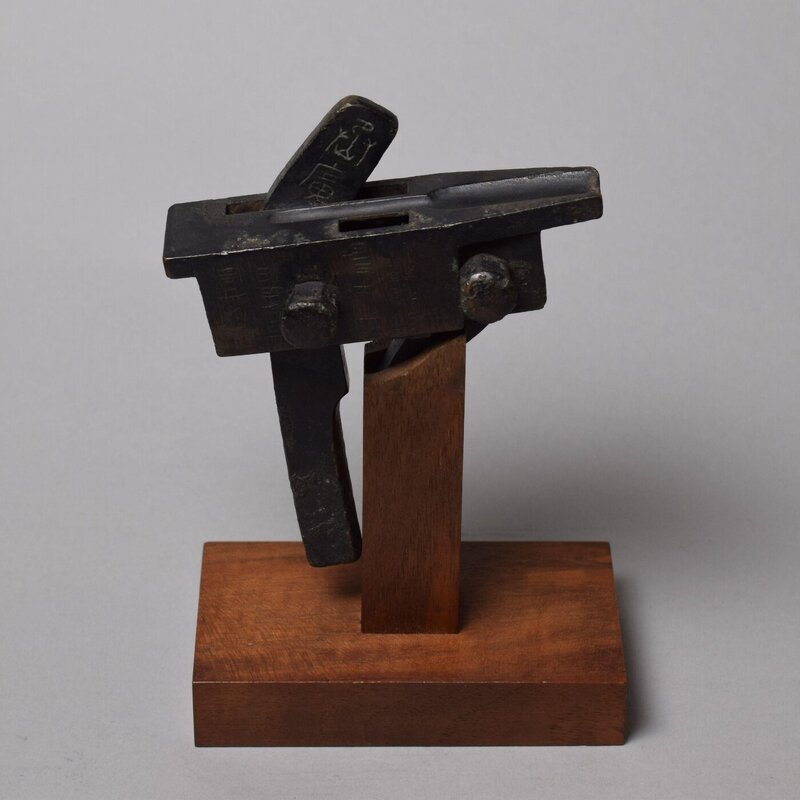
This bronze crossbow mechanism held by the Victoria and Albert museum is dated to 215CE. Its exact
The mechanism is made of bronze and it comprises most of the typical parts of a Chinese crossbow mechanism. The long rectangular protrusion at the top of the mechanism is the sight, or wangshan (望山). The two small hooks sticking out in front of the sight are a part of the same component as the wangshan and serve as the nut, or ya (牙). The rectangular handle at the bottom of the mechanism is the trigger, or xuandao (悬刀), and within the bronze casing, or guo (郭) there is a sear, or gouxin (钩心) connecting the sight and nut and the trigger. The mechanism is held together by two bronze axle pins. The top surface of the bronze casing has a groove that goes down the middle which would continue onto the wooden stock of the crossbow. This groove would be where the arrow rests during drawing and aiming. The surface of the mechanism has been corroded and oxidised.
There are engravings on the crossbow mechanism’s casing and on the sight. The museum was able to date this crossbow mechanism precisely to 215CE. This could be indicative of engravings on the crossbow mechanism that dates it to a specific year of manufacture. This information could alternatively have been deduced from archaeological context.
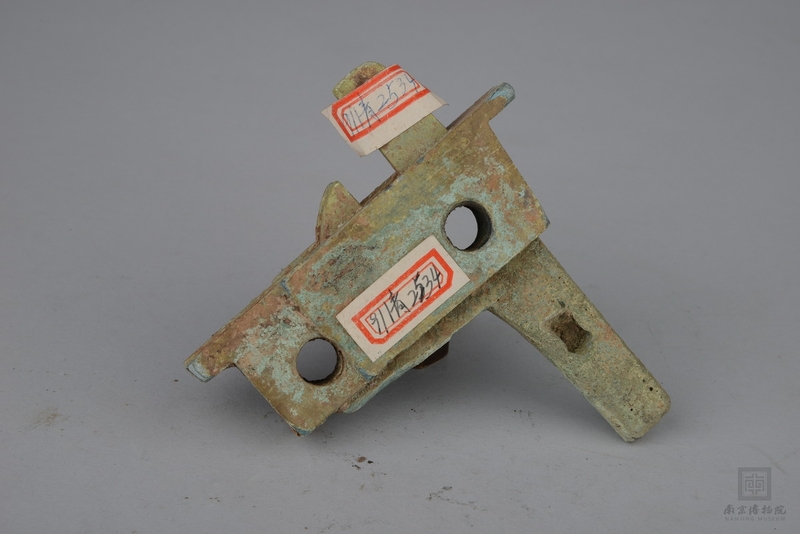
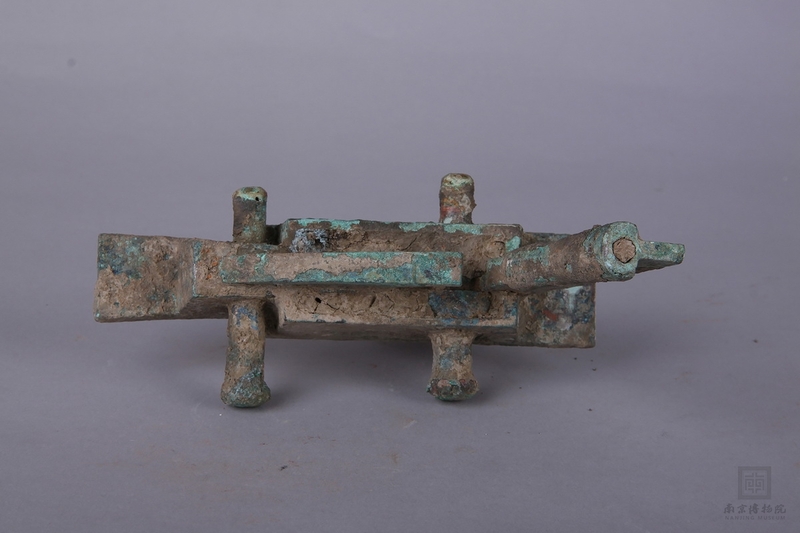
This bronze crossbow mechanism held by the Nanjing museum is dated to the late Qing dynasty. Its exact location of unearthing is not listed.
The mechanism is made of bronze and it comprises most of the typical parts of a Chinese crossbow mechanism. The long rectangular protrusion at the top of the mechanism is the sight, or wangshan (望山). The two small hooks sticking out in front of the sight are a part of the same component as the wangshan and serve as the nut, or ya (牙). The rectangular handle at the bottom of the mechanism is the trigger, or xuandao (悬刀), and within the bronze casing, or guo (郭) there is a sear, or gouxin (钩心) connecting the sight and nut and the trigger. The mechanism would have been held together by two bronze axle pins, but this specimen is missing both. The top surface of the bronze casing has a groove that goes down the middle which would continue onto the wooden stock of the crossbow. This groove would be where the arrow rests during drawing and aiming. The surface of the mechanism has been corroded and oxidised.
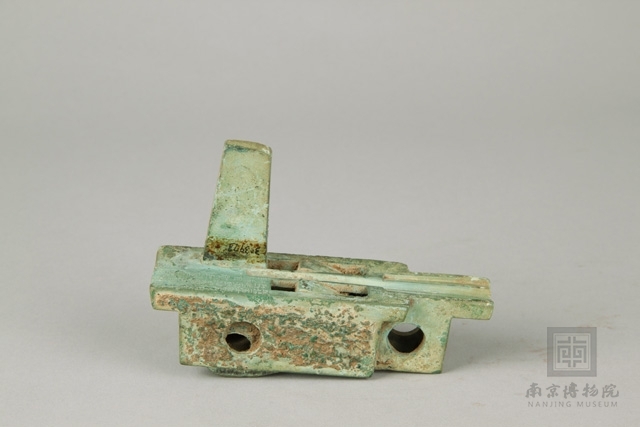
This bronze crossbow mechanism held by the Nanjing museum is dated to 241CE. Its exact location of unearthing is not listed.
The mechanism is made of bronze and it comprises most of the typical parts of a Chinese crossbow mechanism. The long rectangular protrusion at the top of the mechanism is the sight, or wangshan (望山). There are two small hooks in front of the sight not visible in the photo above that are a part of the same component as the wangshan and serve as the nut, or ya (牙). The rectangular handle that serves as the trigger, or xuandao (悬刀) is missing from this specimen, and within the bronze casing, or guo (郭) there is a sear, or gouxin (钩心) connecting the sight and nut and the trigger. The mechanism would have been held together by two bronze axle pins, but both are missing from this specimen. The top surface of the bronze casing has a groove that goes down the middle which would continue onto the wooden stock of the crossbow. This groove would be where the arrow rests during drawing and aiming. The surface of the mechanism has been corroded and oxidised severely, so much so that the components of the mechanism have fused together.
The museum was able to date this mechanism precisely to 241CE, the second year of the Zhengshi reign title. This might indicate that there are engravings on the crossbow mechanism that date the mechanism to a specific date and location of manufacture. Alternatively, this information could also have been gleaned from archaeological context.
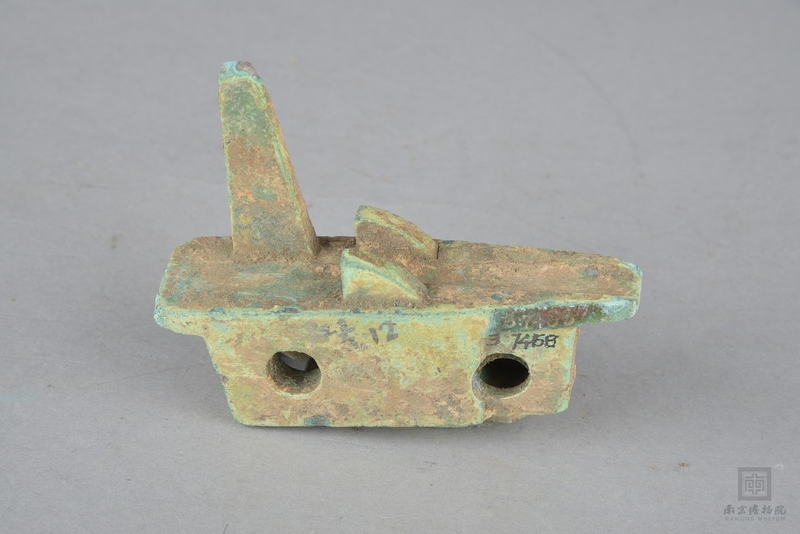
This bronze crossbow mechanism held by the Nanjing museum is dated to the year 313CE. Its exact location of unearthing is not listed.
The mechanism is made of bronze and it comprises most of the typical parts of a Chinese crossbow mechanism. In the photo the crossbow mechanism is oriented strangely, what we see is the bottom of the mechanism. The long rectangular protrusion at the top of the mechanism, which is out of view, is the sight, or wangshan (望山). The two small hooks sticking out in front of the sight are a part of the same component as the wangshan and serve as the nut, or ya (牙). The rectangular handle at the bottom of the mechanism protruding out towards the camera on the right is the trigger, or xuandao (悬刀), and within the bronze casing, or guo (郭) there is a sear, or gouxin (钩心) connecting the sight and nut and the trigger. The mechanism is held together by two bronze axle pins. The top surface of the bronze casing has a groove that goes down the middle which would continue onto the wooden stock of the crossbow. This groove would be where the arrow rests during drawing and aiming. The surface of the mechanism has been corroded and oxidised severely, so much so that the components of the mechanism appear to have fused together.
The museum was able to date the mechanism precisely to 316CE. This could indicate that there is engraving on the crossbow mechanism that dates it to a specific time and place of manufacture. Alternatively, this information could be gleaned from archaeological context.
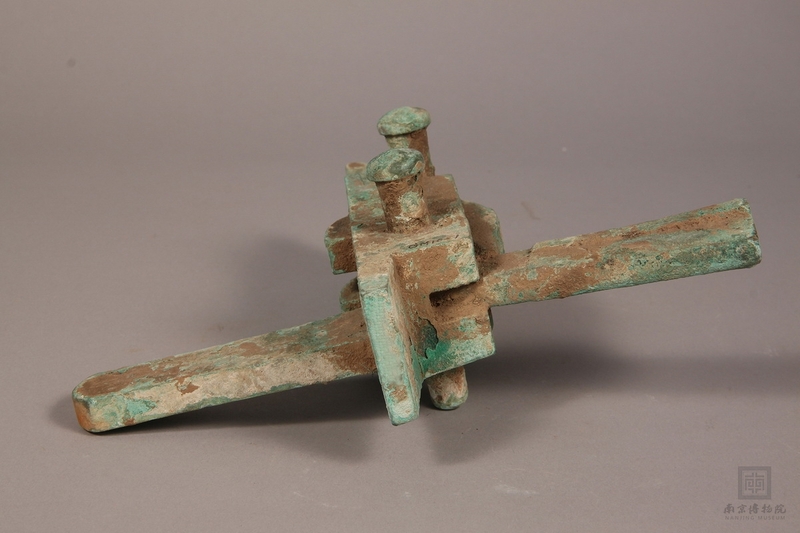
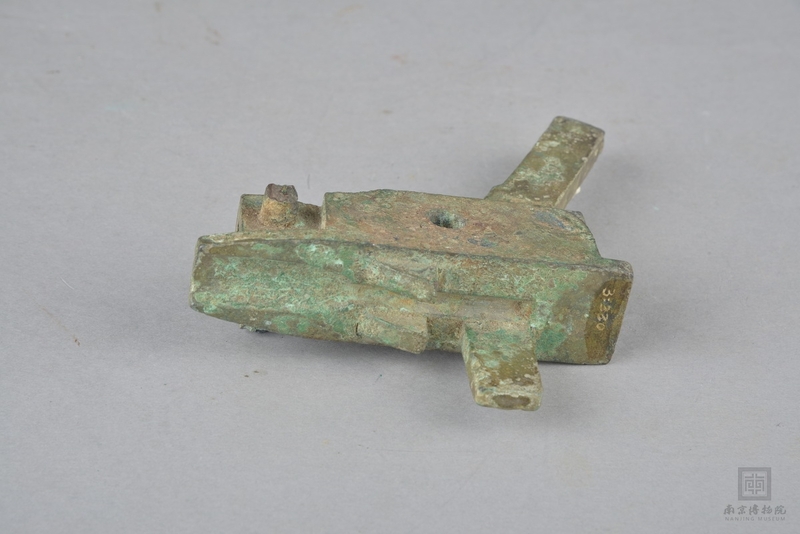
This bronze crossbow mechanism held by the Nanjing museum is dated to the Western Jin dynasty. Its exact location of unearthing is not listed.
The mechanism is made of bronze and it comprises most of the typical parts of a Chinese crossbow mechanism. The long rectangular protrusion at the top (right of the photo from this angle) of the mechanism is the sight, or wangshan (望山). The two small hooks sticking out in front of the sight are a part of the same component as the wangshan and serve as the nut, or ya (牙). The rectangular handle at the bottom (left of the photo from this angle) of the mechanism is the trigger, or xuandao (悬刀), and within the bronze casing, or guo (郭) there is a sear, or gouxin (钩心) connecting the sight and nut and the trigger. The mechanism is held together by two bronze axle pins. The top surface of the bronze casing has a groove that goes down the middle which would continue onto the wooden stock of the crossbow. This groove would be where the arrow rests during drawing and aiming. The surface of the mechanism has been corroded and oxidised severely, so much so that it appears the mechanism’s components have almost fused together.
This bronze crossbow mechanism held by the Nanjing museum is dated to Cao Rui’s reign in the Wei Kingdom during the Three Kingdoms period. Its exact location of unearthing is not listed.
The mechanism is made of bronze and it comprises most of the typical parts of a Chinese crossbow mechanism. The long rectangular protrusion at the top of the mechanism is the sight, or wangshan (望山). The two small hooks sticking out in front of the sight are a part of the same component as the wangshan and serve as the nut, or ya (牙). The rectangular handle at the bottom of the mechanism is the trigger, or xuandao (悬刀), and within the bronze casing, or guo (郭) there is a sear, or gouxin (钩心) connecting the sight and nut and the trigger. The mechanism is held together by two bronze axle pins, this specimen appears to be missing one of its pins, with the other damaged. The top surface of the bronze casing has a groove that goes down the middle which would continue onto the wooden stock of the crossbow. This groove would be where the arrow rests during drawing and aiming. The surface of the mechanism has been corroded and oxidised.
The museum has dated this mechanism to the reign of Cao Rui, the second emperor of Wei. This might indicate that there were engravings on the mechanism itself that marked its time and location of production, or that this crossbow mechanism was found in association with other artefacts of the time period.
This bronze crossbow mechanism held by the Nanjing museum is dated to the Six Dynasties period. Its exact location of unearthing is not listed.
The mechanism is made of bronze and it comprises most of the typical parts of a Chinese crossbow mechanism. The long rectangular protrusion at the top of the mechanism is the sight, or wangshan (望山). The two small hooks sticking out in front of the sight are a part of the same component as the wangshan and serve as the nut, or ya (牙). The rectangular handle that serves as the trigger, or xuandao (悬刀) is missing from this specimen, and within the bronze casing, or guo (郭) there is a sear, or gouxin (钩心) connecting the sight and nut and the trigger. The mechanism would have been held together by two bronze axle pins, but this specimen is missing both. The top surface of the bronze casing has a groove that goes down the middle which would continue onto the wooden stock of the crossbow. This groove would be where the arrow rests during drawing and aiming. The surface of the mechanism has been severely corroded and oxidised, so much so that the components of the mechanism appear to have
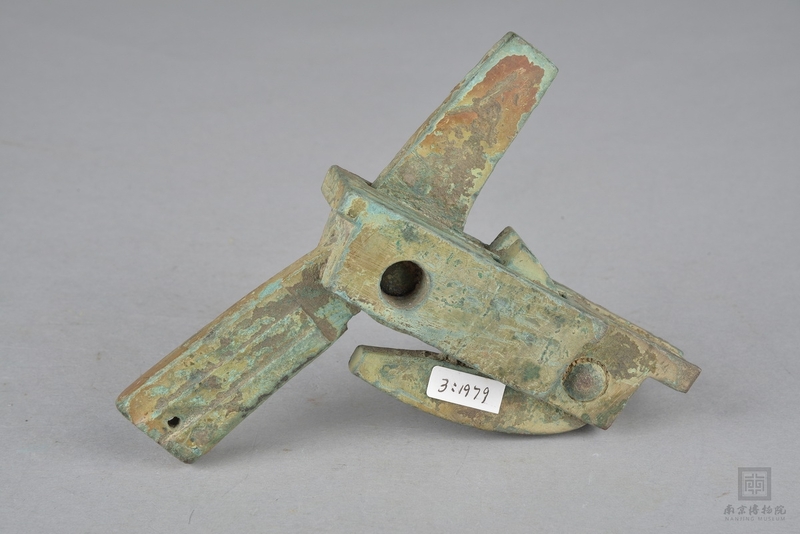
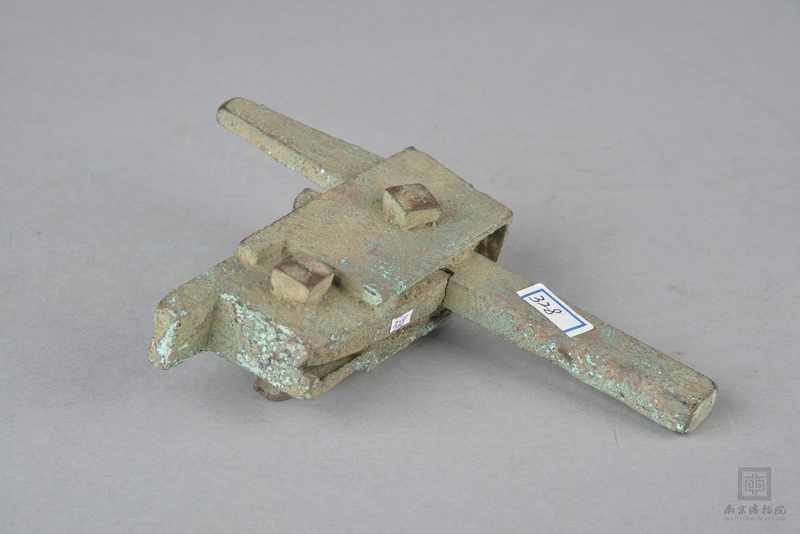
This crossbow mechanism held by the Nanjing museum is dated to the Han dynasty. The exact location of its unearthing is not listed.
The mechanism is made of bronze and it comprises most of the typical parts of a Chinese crossbow mechanism. In the photo, the mechanism is oriented upside-down. The long rectangular protrusion at the bottom of the mechanism is the sight, or wangshan (望山). The two small hooks sticking out in front of the sight are a part of the same component as the wangshan and serve as the nut, or ya (牙). The rectangular handle at the top of the mechanism is the trigger, or xuandao (悬刀), and within the bronze casing, or guo (郭) there is a sear, or gouxin (钩心) connecting the sight and nut and the trigger. The mechanism is held together by two bronze axle pins, but in this specimen, one is missing. The top surface of the bronze casing has a groove that goes down the middle which would continue onto the wooden stock of the crossbow. This groove would be where the arrow rests during drawing and aiming. The surface of the mechanism has been severely corroded and oxidised, so much so that the mechanism’s components appear to have fused together.
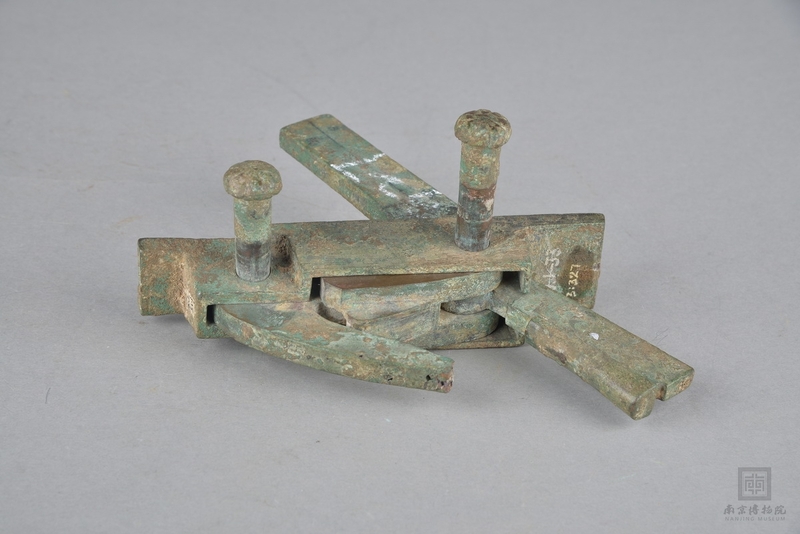
This crossbow mechanism held by the Nanjing museum is dated to the Han dynasty. The exact location of its unearthing is not listed.
The mechanism is made of bronze and it comprises most of the typical parts of a Chinese crossbow mechanism. The long rectangular protrusion at the top of the mechanism is the sight, or wangshan (望山). The two small hooks sticking out in front of the sight are a part of the same component as the wangshan and serve as the nut, or ya (牙). The rectangular handle at the bottom of the mechanism is the trigger, or xuandao (悬刀), and within the bronze casing, or guo (郭) there is a sear, or gouxin (钩心) connecting the sight and nut and the trigger. The mechanism is held together by two bronze axle pins. The top surface of the bronze casing has a groove that goes down the middle which would continue onto the wooden stock of the crossbow. This groove would be where the arrow rests during drawing and aiming. The surface of the mechanism has been corroded and oxidised.
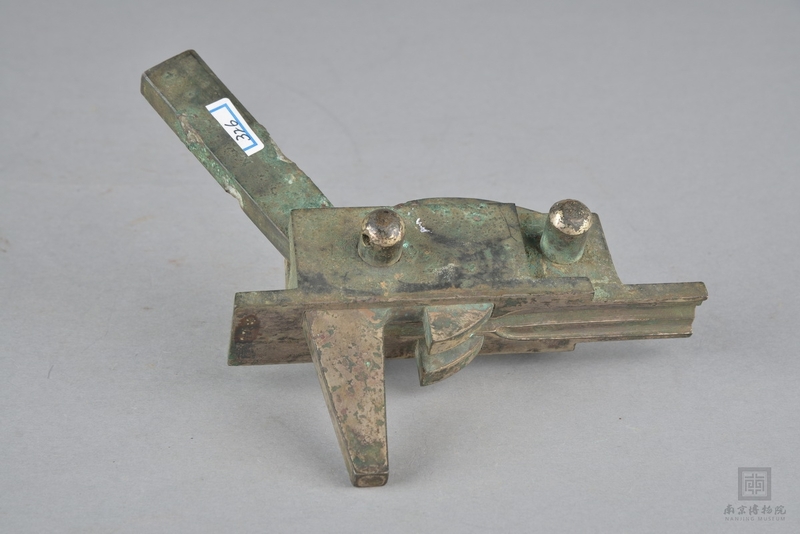
This crossbow mechanism held by the Nanjing museum is dated to the Han dynasty. The exact location of its unearthing is not listed.
The mechanism is made of bronze and it comprises most of the typical parts of a Chinese crossbow mechanism. In the photo, the mechanism is oriented upside-down. The long rectangular protrusion at the bottom of the mechanism is the sight, or wangshan (望山). The two small hooks sticking out in front of the sight are a part of the same component as the wangshan and serve as the nut, or ya (牙). The rectangular handle at the top of the mechanism is the trigger, or xuandao (悬刀), and within the bronze casing, or guo (郭) there is a sear, or gouxin (钩心) connecting the sight and nut and the trigger. The mechanism is held together by two bronze axle pins. The top surface of the bronze casing has a groove that goes down the middle which would continue onto the wooden stock of the crossbow. This groove would be where the arrow rests during drawing and aiming. The surface of the mechanism has been oxidised.