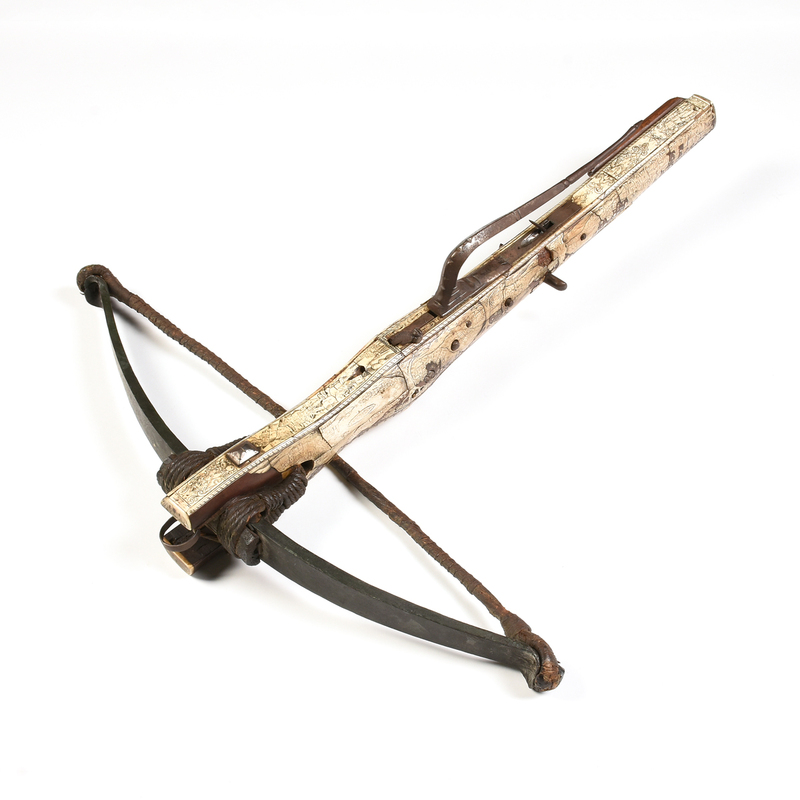
This rustung crossbow is dated to the 15th or 16th century and originates from Germany. The stock is made of fruitwood and has bone and mother-of-pearl inlays. On the upper surface of the stock are ornate decorations of scrolling tendrils. Embedded in the stock is a rolling nut made of bone, and above the nut is a metal bolt clip. The crossbow possesses a four-axle trigger mechanism, and the thread holding the nut in place appears to be broken, with its remains protruding slightly out of the hole for the thread. Along the sides of the stock are decorations depicting scenes from the Swiss folk legend, William Tell. The scenes depict William Tell (a Swiss folk hero) using a crossbow, including the famous scene of shooting an apple off his son’s head, Tell’s capture, and his release by the Austrian Vogt, Albrecht Gessler. The background of the scenes features a series of structures from cabins to castles in the Late Medieval and Renaissance style. The background also depicts scenes of a woman riding a horse, imagery of Lake Lucerne, and a final scene of William Tell holding a shield with a Swiss cross on it. The crossbow also features a metal trigger lever and a horn foresight. The prod is made of iron and is attached to the front of the stock, secured with a rope bridle. There are minor signs of damage, including a crack in the foresight. There are also signs of slight repairs made to the inlay of the crossbow.
Measurements: Height: 4" Width: 27" Depth: 30 1/8"