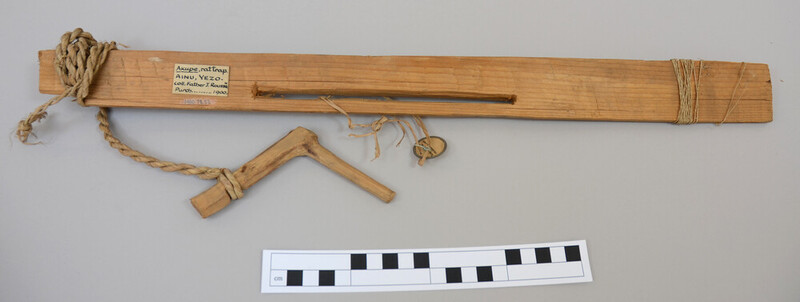
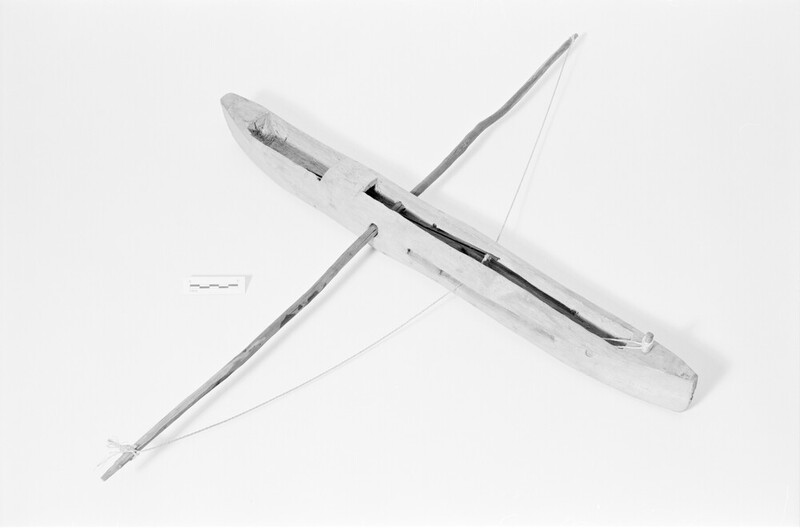
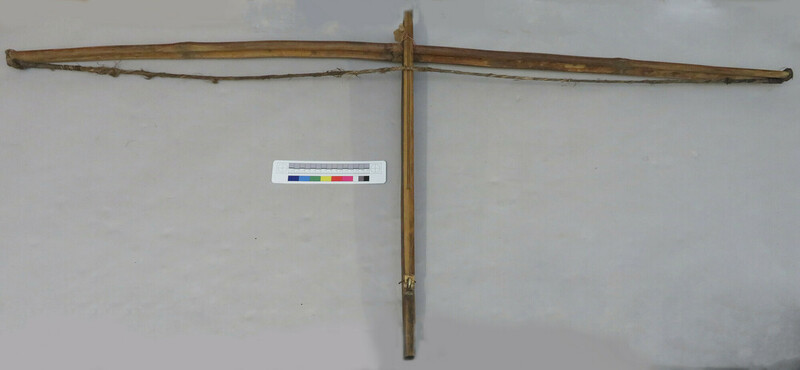
This crossbow rat-trap originates from Japan and is linked to the Ainu (アイヌ) peoples. It features a rectangular wooden stock with a rectangle-shaped hole that runs along its middle, and a thin twisted string made of plant fiber that is wrapped through it. Wrapped around one end of the stock is a string made of a twisted plant fiber which is attached to a wooden trigger with a 90-degree angle. Wrapped around the other end of the stock is another piece of twisted plant fiber.
Measurements: Depth: max 46 mm, Length: max 537 mm, Width: max 105 mm
Materials and processes: Material Wood Plant, Material Plant Fibre, Material Nettle Fibre Plant, Process Carved, Process Carpentered, Process Twisted, Process Bound
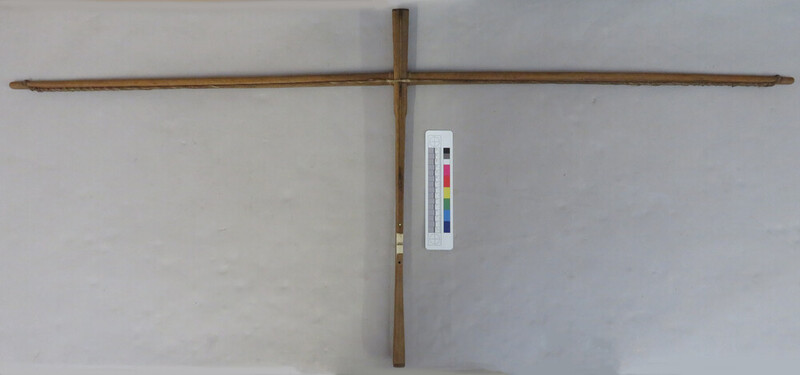
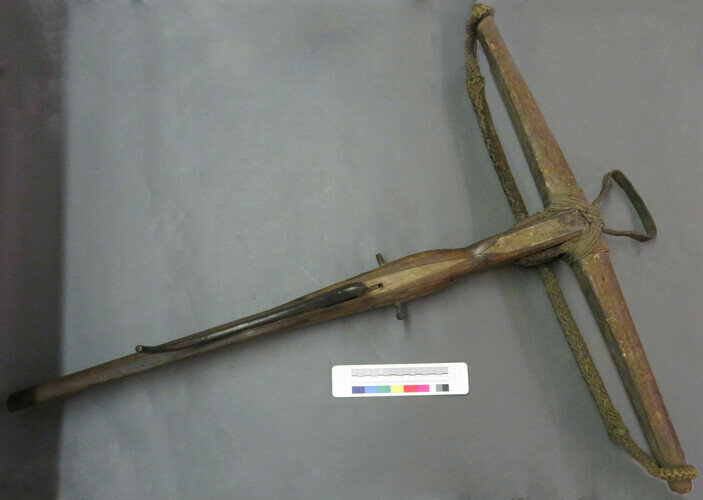
This Burmese crossbow is linked to the Ganan Kachin ethnic group of Myanmar. It consists of a wooden stock that is recessed, curving inwards in the middle, while the fore end and butt of the stock flare outwards. The bow is also made of wood and passes through the upper middle portion of the stock. Toward the butt of the crossbow is a trigger made of bone. The string of the crossbow is attached and made from a plant material.
Measurements: Width: max 623 mm, Height: max 43 mm, Length: max 1390 mm
Materials and processes: Material Wood Plant, Material Bone, Material Plant Fibre, Material String, Process Carved, Process Inlaid, Process Perforated, Process Twisted
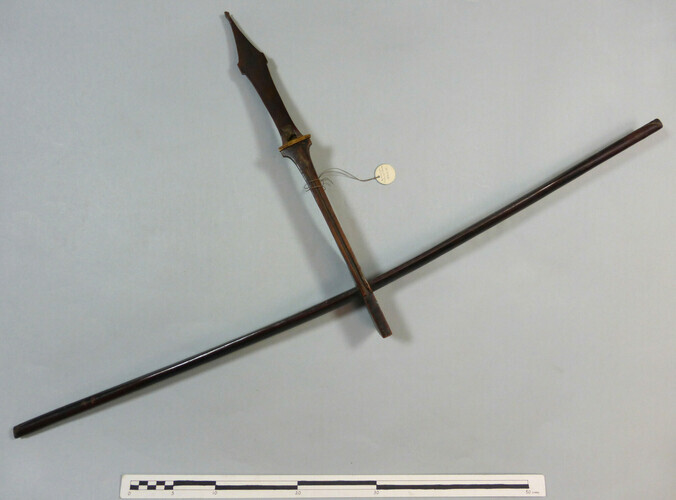
This Vietnamese crossbow is dated to have been made before 1936, and it is linked to the Sedang ethnic group of Vietnam. It consists of a slender, dark wooden stock that is recessed in the upper portion. The middle of the stock protrudes outwards in a rectangular fashion, while the butt of the stock is shaped into a rhombus. The prod of the crossbow is slim and narrows in width toward either end. The prod passes through the upper portion of the stock and is longer in length compared to the stock. In the middle of the stock is what appears to be a wooden peg.
Measurements: Length: max 894 mm, Width: max 452 mm, Height: max 57 mm
Materials and processes: Material Wood Plant, Process Polished, Process Carved
This crossbow originates from the Kachin State of Myanmar, located more specifically in the Ahkyang Valley in Putao. Its date of creation is sometime before 1934. The crossbow consists of a thin wooden stock that is pointed at its fore end. In the middle upper portion of the stock is an oval-shaped hole where the prod would be slotted. In the middle of the crossbow stock is the trigger (possibly made of bone) that protrudes to the other side of the stock. The prod is slender in shape and tapers toward either end. The original string of the crossbow is missing.
Measurements: Depth: max 28 mm, Width: max 42 mm, Length: max 1152 mm
Materials and processes: Material Palm Wood Plant, Process Carved, Process Notched
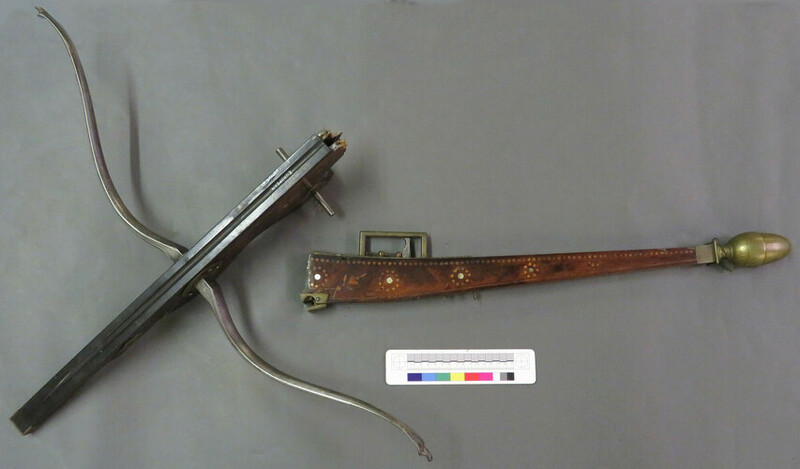
This crossbow is dated to have been made before 1891, though its exact origins are uncertain (likely China but unconfirmed). The crossbow’s stock is made of wood and is fragmented into two parts. The upper portion of the stock features a rectangular groove that runs along the top surface. Through the middle of the broken front portion of the stock is a metal transverse pin that is used as a support for the crossbow’s spanning device. The end of the front portion of the crossbow shows signs of damage where it was broken in half. The bottom half of the stock features a slight curve that straightens and narrows in width at the end of the stock. Attached to the butt of the stock is an acorn-shaped piece made of copper metal. The stock also possesses a mother-of-peal inlay and ornate dotted decorations along its sides. The trigger mechanism is featured on the bottom half of the stock, with both the trigger and trigger mechanism being made from copper metal. The trigger appears to be a snap lock trigger mechanism.
Measurements: Height: max 145 mm, Length: max 1245 mm, Width: max 750 mm
Materials and processes: Material Wood Plant, Material Metal, Material Copper Alloy Metal, Material Mother of Pearl Shell, Process Inlaid, Process Carved, Process Forged (Metal)
This crossbow originates from Nagaland, India. It features a thin wooden stock that is pointed at the front end. Toward the front of the stock is an oval hole made for the crossbow’s prod to pass through the upper middle section of the stock. In the middle of the stock is what appears to be a wooden peg that is possibly the trigger mechanism of the crossbow. The prod is made of wood and features an oval-shaped cross-section. The string is attached to both ends of the prod, which narrows in width towards the ends.
Measurements: Depth: max 22 mm, Width: max 45 mm, Length: max 1487 mm
Materials and processes: Material Wood Plant, Material Plant Fibre Yarn, Process Carved, Process Wound, Process Twisted
This crossbow rat-trap originates from the Moshi region of Tanzania and is linked to the Chagga peoples. It consists of a wooden stock that is carved out in the middle of both the upper and lower halves of the crossbow. The stock is rectangular in shape and tapers to a more pointed shape at either end of the stock. The prod is made from a wooden stick and passes through a circular hole in the middle of the stock. The string of the crossbow is made of a plant fiber and is hooked onto the wooden trigger of the crossbow. At the butt of the stock is a wooden peg that sticks upwards with a string wrapped around it.
Materials and processes: Material Wood Plant
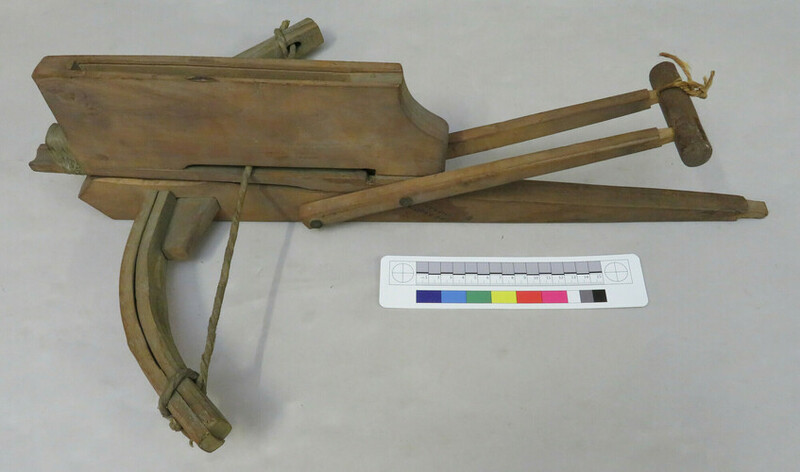
This crossbow originates from China and is classified as a repeating crossbow. It features a wooden stock that narrows in width toward the butt. Fixed onto the stock is a rectangular box and a wooden lever attached to the middle of the stock, extending outwards. The lever has a piece of string tied around it. The prod of the crossbow is made from two pieces of wood placed on top of each other. The prod passes through the middle of the stock through a slotted hole and angles toward both ends. The string is made of twisted plant fiber and is wrapped through a circular hole on either end of the prod.
Measurements: Length: max 613 mm, Width: max 445 mm, Depth: max 158 mm
Materials and processes: Material Wood Plant, Material Metal, Material Plant Fibre Yarn, Material Animal Rawhide Skin (uncertain), Material Animal Sinew (uncertain), Process Carved, Process Perforated, Process Jointed
This crossbow originates from Europe and is speculated to come from Germany, though this is uncertain. It is classified as an imitation, or ‘toy’, crossbow and is composed of a stock made from wood that widens in the middle where the transverse pin is located, and tapers toward the end. The prod of the crossbow is made of wood and wrapped in snake skin. On the fore end of the prod is a metal stirrup, triangular in shape, that is secured with hide. The prod is fixed onto the stock with a rope bridle. The metal trigger lever is curved.
Measurements: Dimensions Length: max 1130 mm, Height: max 150 mm, Width: max 835 mm
Materials and processes: Material Wood Plant, Material Snake Skin Reptile, Material Animal Hide Skin, Material Rope, Material String, Material Metal, Process Carved, Process Carpentered, Process Forged (Metal), Process Twisted, Process Woven (uncertain)
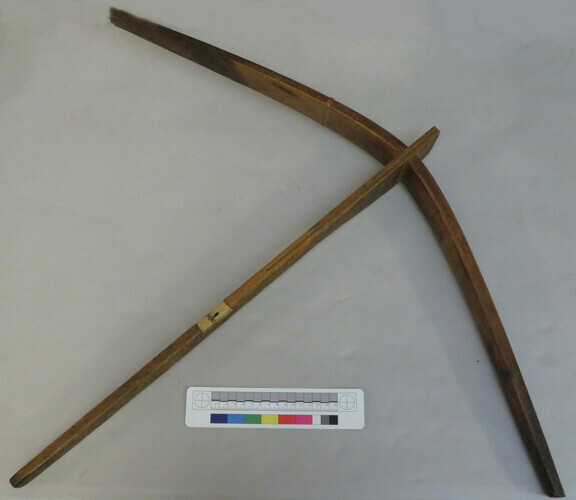
This Burmese crossbow is dated to have been made before 1934, and its use is speculated to be linked to the Lisu (Lishaw Yawyin) ethnic group, though this is uncertain. The crossbow is made of a wooden stock that takes a straight, rectangular shape. On the upper surface of the stock is a hollowed-out slot that acts as the bolt channel. In the middle of the stock is an indentation made of bone and a bone trigger. The prod of the crossbow is made of wood and curves in an angular fashion, slightly narrowing in width on both ends. On one side of the prod is a woven band made of cane.
Measurements: Height: max 63 mm, Width: max 825 mm, Length: max 659 mm
Materials and processes: Material Wood Plant, Material Animal Bone, Material Cane Plant, Process Plaited, Process Grooved, Process Bent, Process Carved
This Indian crossbow originates from the Nagaland region in India and was created before 1921. Its use is linked to the Lotha Naga, a subgroup of the Naga people. The crossbow features a wooden stock that narrows in width toward the butt. The bone trigger embedded in the stock is located at the butt and secured with a metal piece. The crossbow also features a bamboo prod that goes through the upper middle portion of the stock, and the string attached to it is made of a plant material that has been twisted.
Measurements: Length: max 1560 mm, Depth: max 83 mm, Width: max 675 mm
Materials and processes: Material Bamboo Plant, Material Wood Plant, Material Plant Fibre, Material Bone (uncertain), Material Animal Ivory Tooth (uncertain), Process Carved, Process Twisted
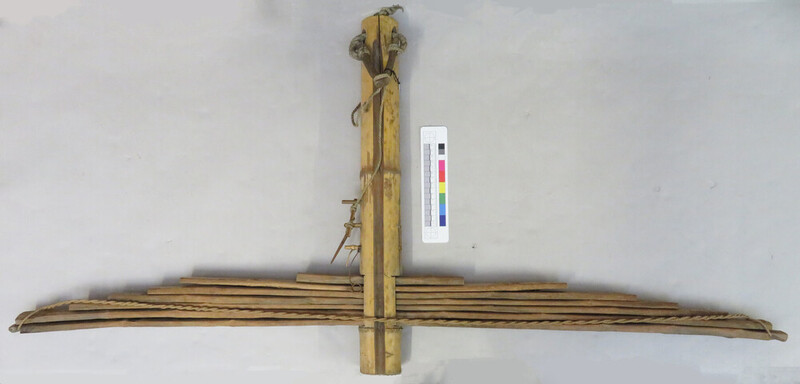
This crossbow trap originates from China and is dated to have been made sometime before 1913. It features a bamboo stock that has been hollowed out, while the upper surface has a raised line that extends across the length of the stock. Sticking out the left side of the stock are three small wooden pegs. The butt end of the stock has a wooden piece in the shape of a V that passes through a hole. The wooden piece is fixed to a twisted string that ties around two of the wooden pegs on the left side of the stock, and the bottom of the stock has two square holes. The prod of the crossbow is made from eight pieces of bamboo sticks layered on top of each other in ascending order of length. The original string is intact and is made from twisted plant fiber.
Measurements: Dimensions Length: max 1333 mm, Depth: max 72 mm, Width: max 612 mm
Materials and processes: Material Bamboo Plant, Material Rope, Material String, Material Wood Plant, Process Carved, Process Twisted, Process Perforated