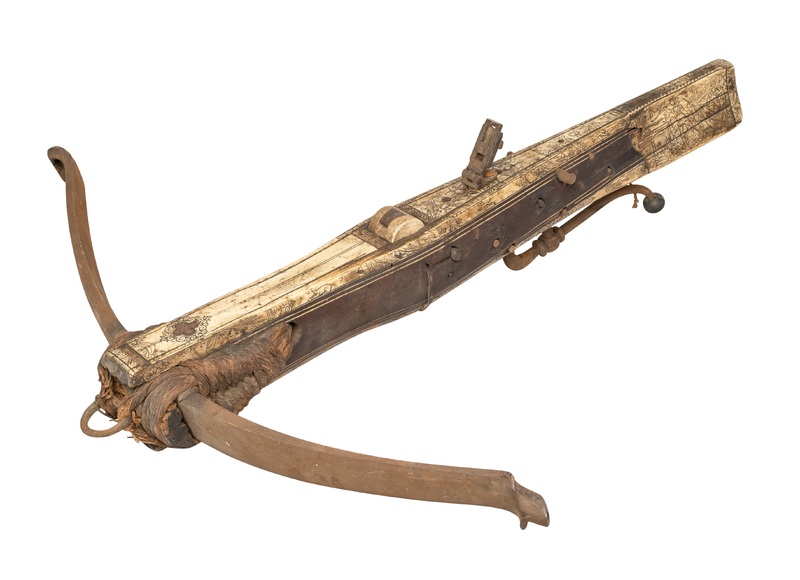
This sporting crossbow is dated to the late 16th century and originates from Germany. It consists of a wooden stock that is veneered and inlaid and across its surface and the butt of the stock. The stock features ornate decorations that depict a series of scrolled and spiral patterns, animals, and floral designs on the top and bottom of the borders. On the upper surface of the stock is an image of biblical figures such as Jacob, an angel, and a person and a stag wrestling behind the nut. Other scenes along the staghorn cheek rest depict three archers with bows and a king (likely Joshua) stabbed with two crossbow bolts. Underneath the stock are signs of damage and minor repairs to some imagery of women figures and an allegory about faith on the butt of the stock. The crossbow features a four-axel trigger system with a bone rolling nut mechanism that is secured with a piece of thread. There is also an iron transverse pin used to support the cranequin, a device that helps span the crossbow. The crossbow also has an opening for the cocking pin. The folding sight is located behind the rolling nut. The trigger is made of brass with a knob on its end. The butt-plate is made of staghorn and depicts a sign of Hope.
Measurements: 61.5 cm tiller
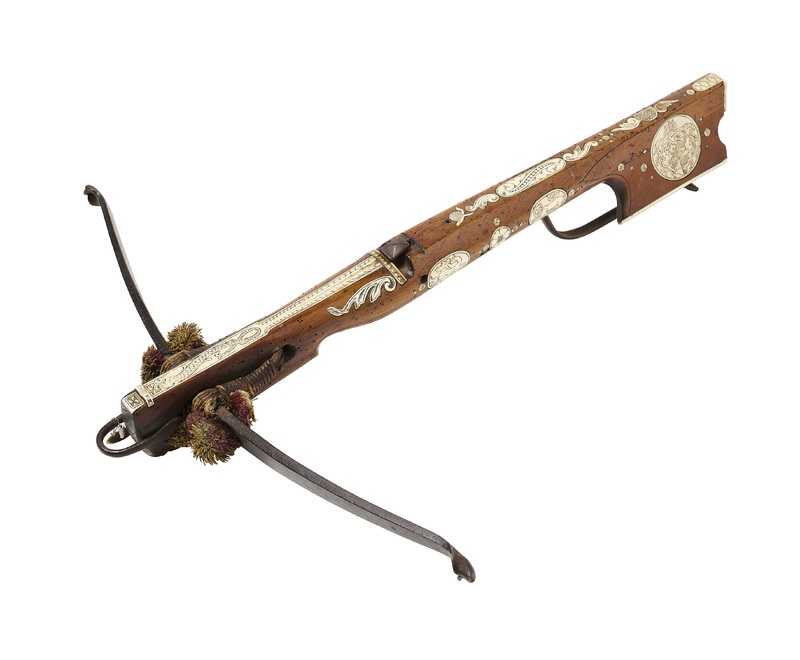
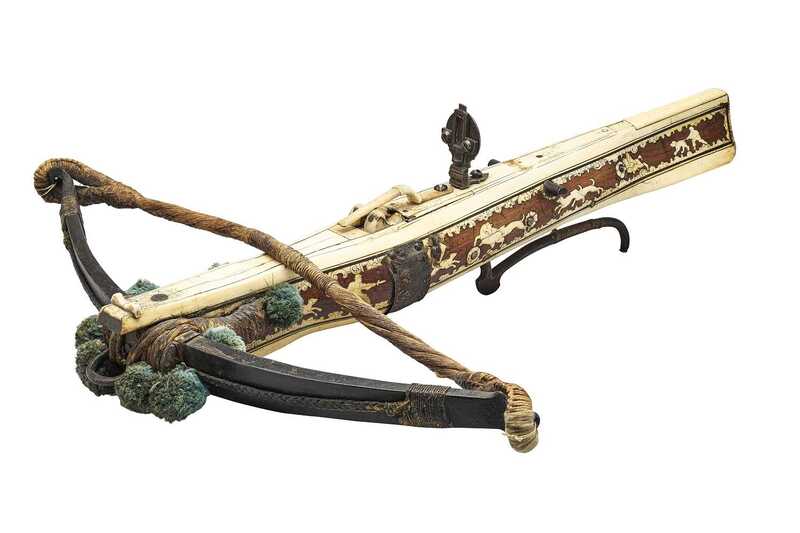
This German sporting crossbow, dated to around 1750, features a slim wooden stock and steel prod. The prod passes through the upper middle portion of the stock and is secured with a bridle cord, with two pompoms framing its sides. The fore of the stock is an iron stirrup, and the upper side of the stock features a staghorn inlay that spans from its top, and the bolt rest, to the iron string catch. The original string of the crossbow and the transverse pin are missing. The stock, previously repaired from worm damage, possesses an intricate design with staghorn inlays that depict decorated flowers, a deer, a lion, and foliage. At the butt of the stock is a concave cheek rest that features a staghorn inlay of a coat of arms. The trigger guard is made of iron, and the set trigger of the crossbow is incomplete.
Stock Measurement: 65.8 cm
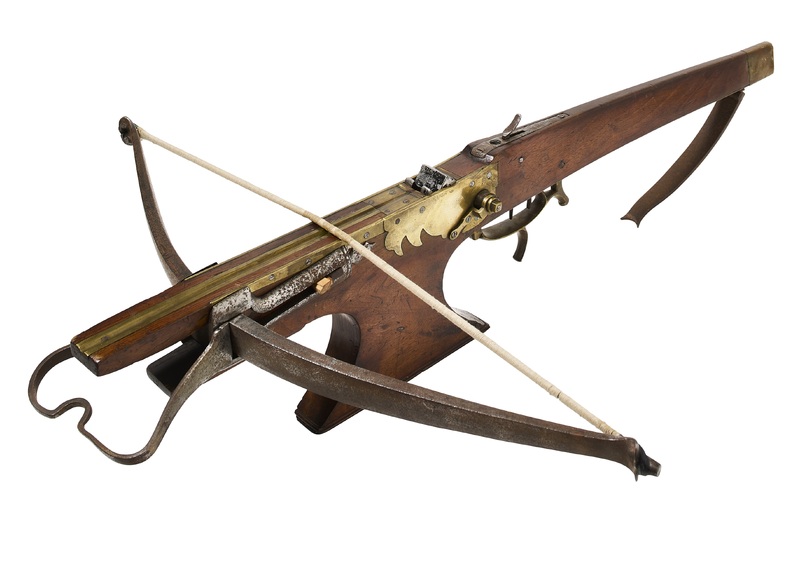
This Flemish target crossbow is dated to approximately the late 17th and 18th centuries. It possesses a steel bow running through the stock that is fastened in place with iron plates. The back of the prod is marked with the imagery of three stars. Connected to the front of the prod is a worn iron stirrup used as a footing for spanning the crossbow that has bent into a heart-like shape over time. The string is not original to the crossbow and is a later addition. The stock is made from walnut wood and features a rest that widens from the bottom side of the crossbow into a flared stand. At the top side of the stock is a bolt groove plated with brass that spans out to the middle of the stock, all the way to the metal nut and the sides of the stock’s middle that reinforce the area. The nut is also a later addition, not original to the crossbow. The butt of the crossbow is encased with brass metal and features an adjustable rest made of steel with some damage, while the trigger guard is made of brass.
Stock measurement: 96.0 cm
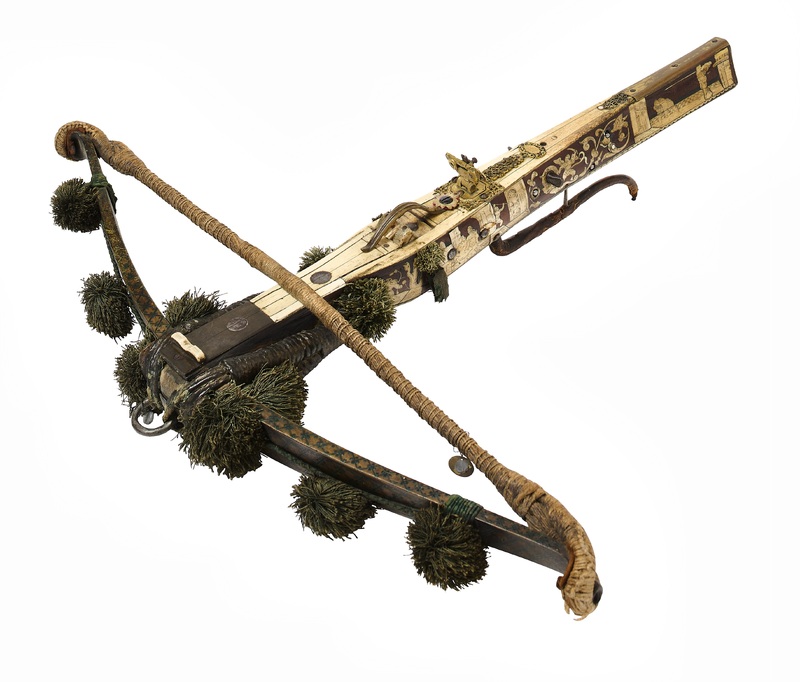
A 16th-century German sporting crossbow that is dated to the year 1587. Its prod is made of steel and features an ornate decoration in a grid style with small painted flowers across the intersections of the grid. The prod is secured to the stock with a bridle made of twisted cord. Along the prod and upper half of the stock are twelve green woollen pompoms. The shape of the stock is bulbous towards its middle (around the nut) and tapers towards the butt of the stock, with much of its surface veneered in staghorn. The crossbow is also inlaid with staghorn at its sides, depicting scenes of a man hunting in the woods in front of a castle with hounds, multiple woodland creatures and intricate floral designs throughout the scene. The decorations also showcase a coat of arms from a person in the Princes Salm family (likely belonging to the original owner of the crossbow), imagery of a young couple, a scene depicting a serpent being killed by St. Michael, and a scene of a fencing dual depicting Joachim Meyer, a 16th century German fencer and author from his book the Art of Combat, uncommon and unusual detail. Further imagery includes scroll decorations that frame the scenes, such as the pair of sea monsters, the Roman goddess Ceres (the goddess of agriculture and fertility), and the date engraved around the opening for the cocking pin of the crossbow. The crossbow features a rolling nut mechanism made of bone with a horn bolt clip above the nut. Behind the bolt clip is an adjustable gilded copper back-sight and a transverse pin made of iron. On the crossbow, there is a gilded copper plate with an engraved German phrase ‘ehrlich zu leben und selig zu sterben’ that translates as “to live honestly, to die in blessedness”. There is also a gilded copper plaque on both the top side and the butt of the stock that was repaired during the time of its original use. The trigger of the crossbow is made of iron and is wrapped in leather, showing some minor damage. There are signs of restoration on the crossbow, possibly from the 17th century, and it is speculated to have improved upon parts of the crossbow, including the woollen pompoms, the bolt clip, the gilded copper fittings, and a repaint of the prod.
A German Rustung crossbow replica that is dated to the 20th century and made to replicate the 16th century style. The crossbow consists of a steel prod attached to the crossbow in the notch of the stock’s fore end, but missing the hemp cord bridle that would secure it to the stock. The string made of twisted cord is still intact. The material of the stock is made of wood and is veneered in staghorn on its top and bottom sides. At the butt of the stock is a hollowed-out cheek rest that is concave on the left side, made for a right-handed user. Both the rolling nut, nut thread, and transverse pin are missing from the crossbow.
Stock measurement: 84 cm
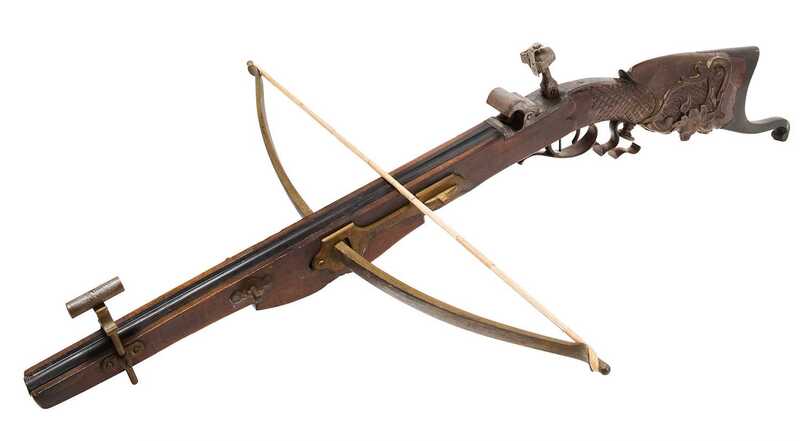
A target crossbow of Northern European origin. It consists of a wooden stock made from walnut and a steel prod that is secured to the middle of the crossbow stock with iron plates. The string on the prod is not original to the crossbow but is instead a later addition. The butt of the stock has a chequered or fish scale pattern grip above the trigger and features an intricate floral carving. The fore of the stock contains an adjustable front-sight and rear-sight. The trigger mechanism of the crossbow is a double set trigger with a molded trigger guard.
Measurements: 102.5 cm overall
This German crossbow is classified as a Halbe Rüstung crossbow and is dated to the year 1586. It features a blackened steel prod secured to the stock with a twisted cord bridle. Around the prod and the upper portion of the stock are a series of eight green woollen pompoms, and along the fore end of the prod are the engraved letters ‘JHC’. The string of the bow is made of a plant material, while the stock itself is made from wood and veneered in staghorn along its top and bottom sides. The top side of the crossbow possesses ornate decorations, such as the engraved date of 1586, floral engravings, and a small panel of checkerboard patterns. The bottom side of the crossbow features scrollwork with designs of fruit bouquets, an image of the Roman goddess of fortune, and an opening for the loading rod. The sides of the crossbow stock feature intricate decorations of staghorn inlays that depict a hunting scene with a huntsman and hounds and scrolling tendrils at the top and bottom of these scenes. These decorations possess minor damage with cracks that have since been repaired. The crossbow also contains a rolling nut and bolt clip made of bone. Behind the nut is an iron-rear sight and an iron transverse pin used to support a cranequin spanning device. The trigger of the crossbow is made of iron and wrapped in cord, and there is a folding trigger that appears to be an older replacement. Toward the butt of the crossbow is a concave cheek rest.
Stock measurement: 62.3 cm
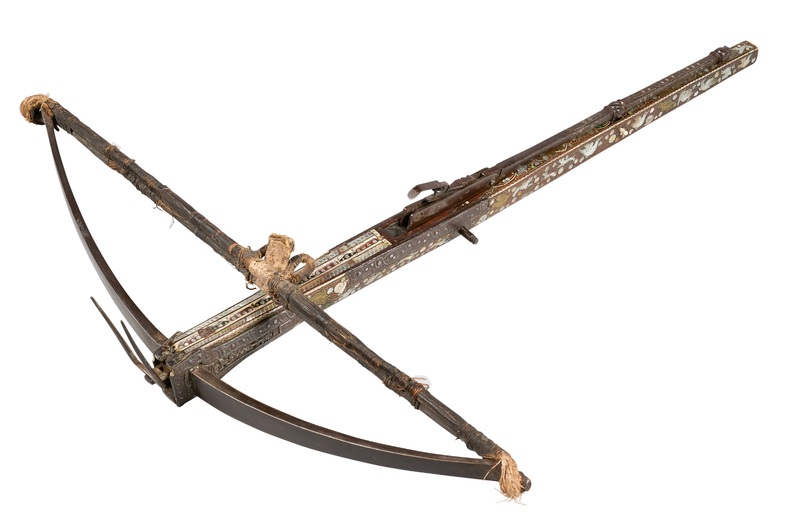
A bullet crossbow of English origin, originally belonging to an ancestral Northumbrian family. The prod of the crossbow is made of steel, set securely within the upper middle portion of the stock. At the fore of the prod is an adjustable foresight which retains a U-shape, and towards the back is a foldable backsight. The string of the crossbow is made from a twisted plant material and possesses a pocket or cradle at the center of the cord for the pellets. The wooden stock is ornately decorated, featuring intricate staghorn, mother-of-pearl, and plaques of copper alloy inlays throughout all sides of the stock. The engraved decorations depict images of hunting scenes, with animals such as hares, hounds, and exotic birds. The scene features intricate decorations with curling tendrils of vine-like patterns and leaves in green coloured horn. At the top side of the stock is a bolt channel, bordered by detailed decorations of a rope pattern made from mother-of-pearl. The crossbow also features an iron gaffle—a lever for drawing back the crossbow—secured with a transverse pin that passes through the stock. The area surrounding the pin is reinforced with iron plates at the side of the stock, lined with silver. The release button, an older replacement, is missing its catch and retains minor damage. The butt of the stock possesses a horn inlay that retains minor damage and repairs.
Stock Measurement: 77.2 cm
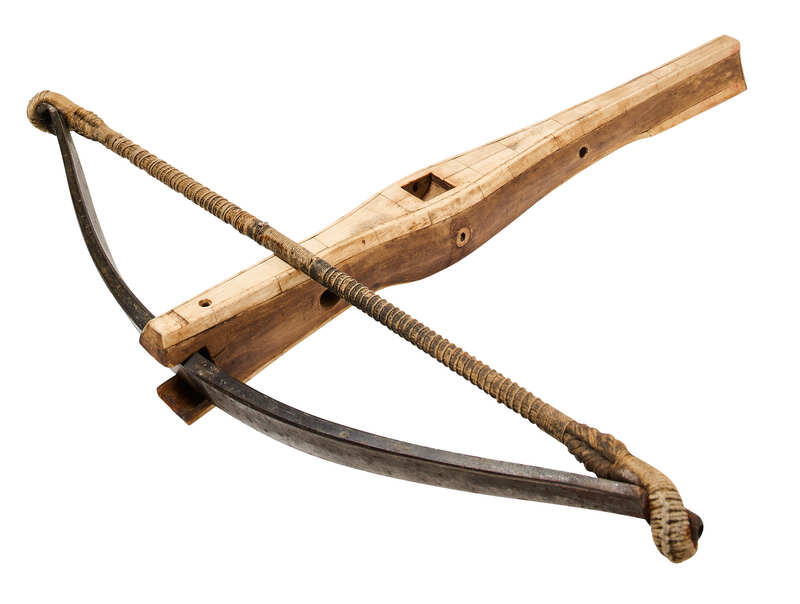
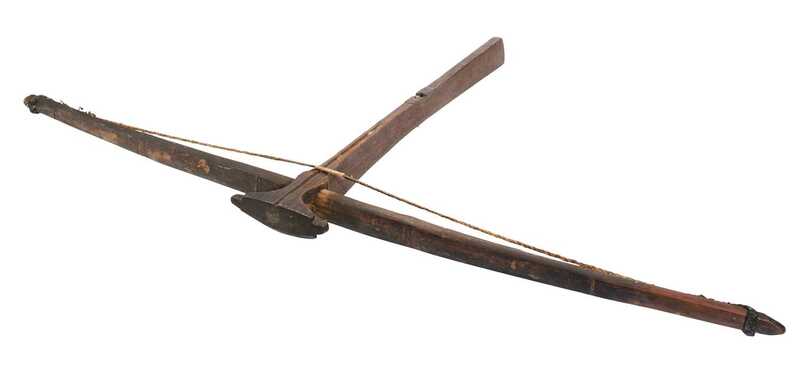
A crossbow from the late 1800s of Southeast Asian origin, likely used for hunting purposes. It is composed of a short wooden stock that is slender towards the main body and widens towards the front. The crossbow features a rectangular bolt groove carved into the stock. The prod of the crossbow is made from a piece of split bamboo and passes through the upper middle portion of the stock. The string attached to the prod is made of a twisted plant fiber. The nut mechanism, made of bone, is set deeply within the stock in a wooden bracket and protrudes through the other side of the stock, thus forming the trigger.
Measurements: 63.3 cm long, 116.0 cm bow
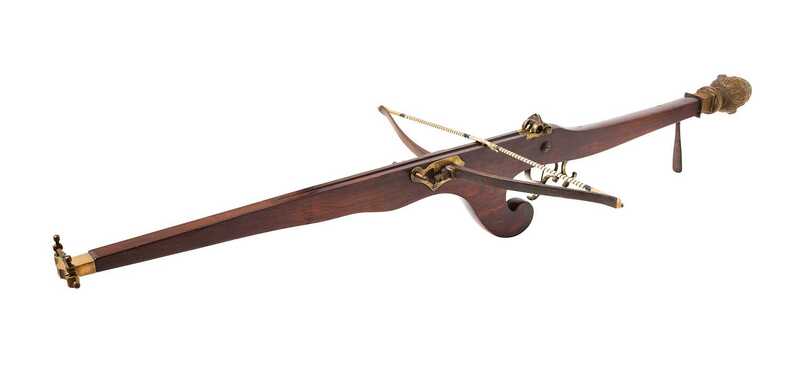
This target crossbow is of Northern European origin, dating to the late 19th century. It contains a slim steel bow unusually positioned in the middle of the wooden stock and secured with copper alloy plates on both sides. It also features a scrolling rest at the bottom of the crossbow, a bolt groove at the top, an adjustable sight, and a double set trigger. Towards the back of the crossbow is an iron rest. On both ends are ornately designed iron terminals painted in gold.