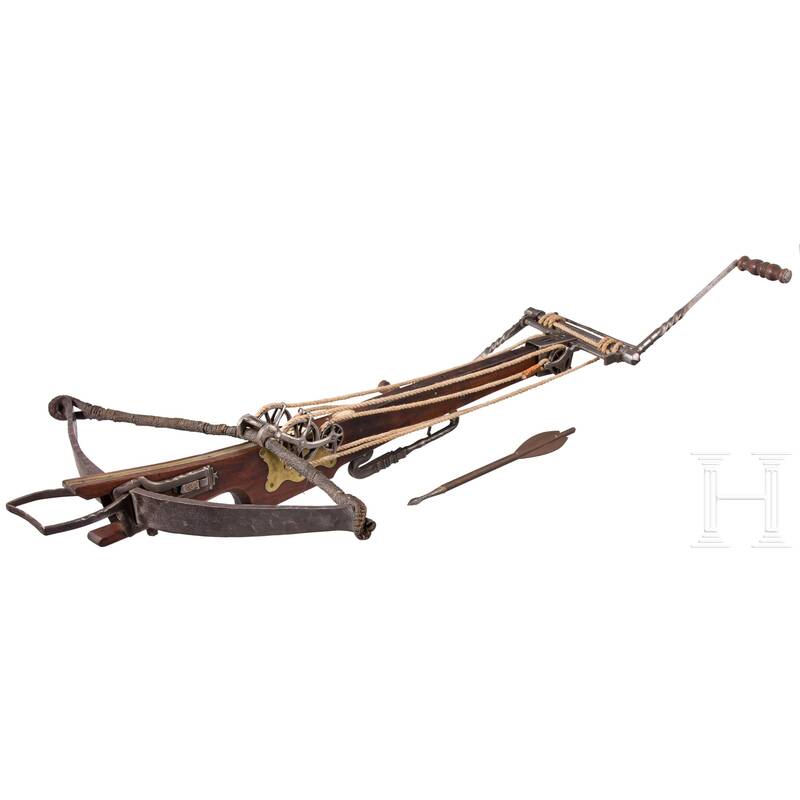
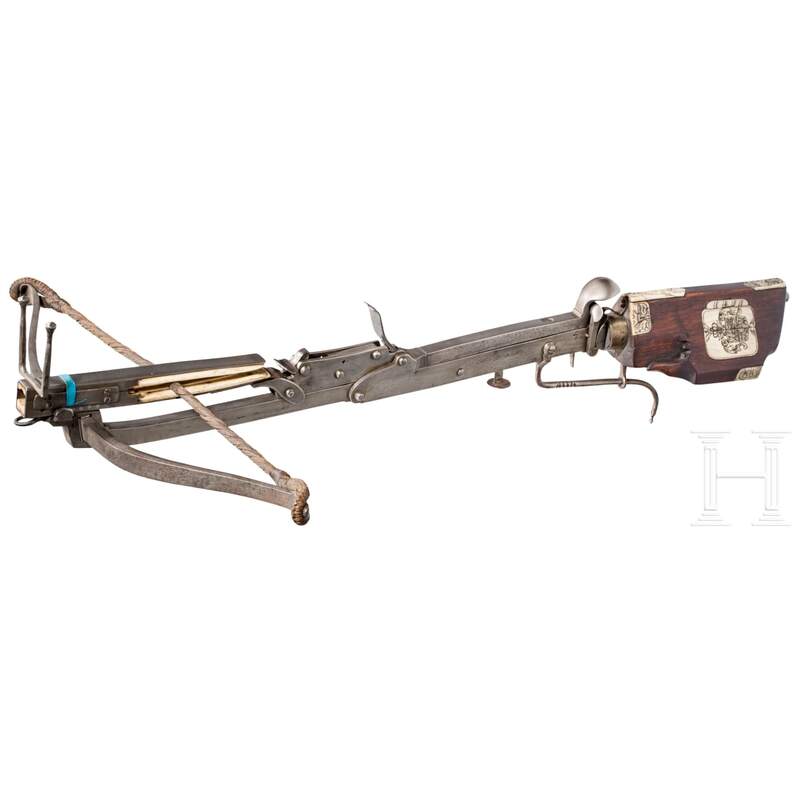
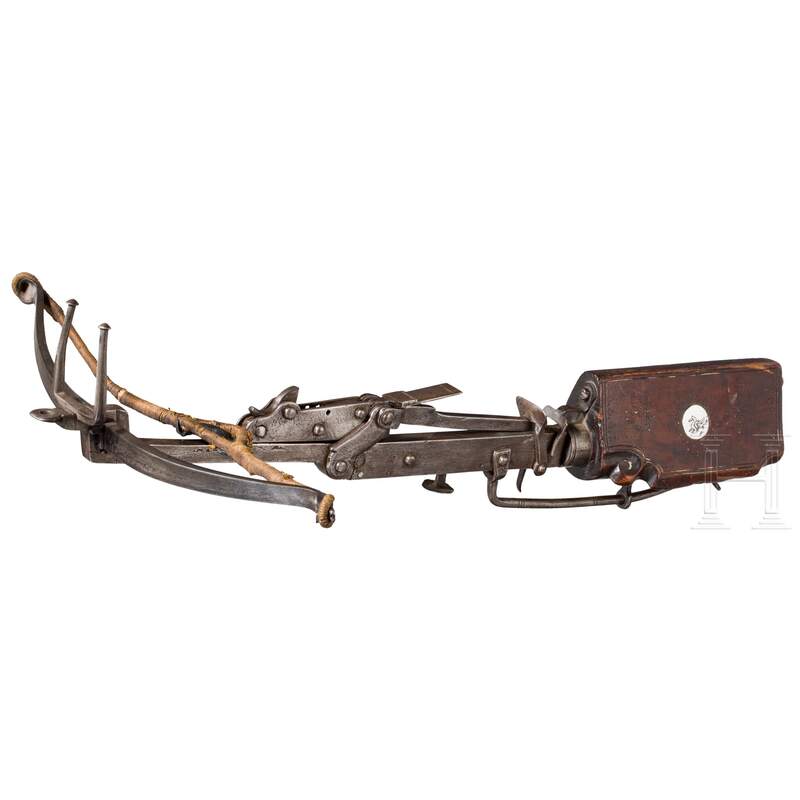
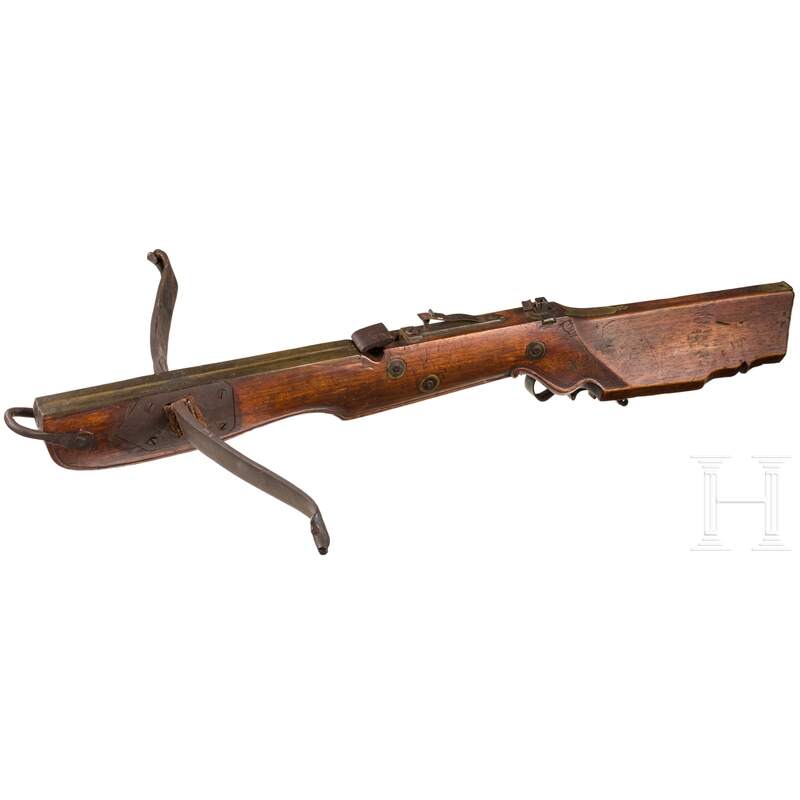
This Flemish target crossbow dates to the 18th century. It consists of a square-shaped wooden stock with a crossbow support beam that protrudes from beneath the stock. The stock tapers toward the butt while the front is slightly wider. On top of the stock is a brass-plated bolt channel used to slot the crossbow bolt when preparing for a shot. Along the stock is a series of brass metal plates. The lock mechanism is a rolling nut, and the seats of the nut are both made of bone. The trigger guard is made of iron, and located on the underside of it are the engraved letters “MVM” into the iron plate of the trigger guard. Fixated on the stock’s surface is a windlass, a spanning mechanism for the crossbow. The windlass features wooden handles that show signs of minor damage. The prod of the crossbow is made of steel and passes through the stock, secured by metal plates on either side. The metal stirrup is mounted to the front of the stock. Next to the crossbow is a crossbow bolt.
Condition: II
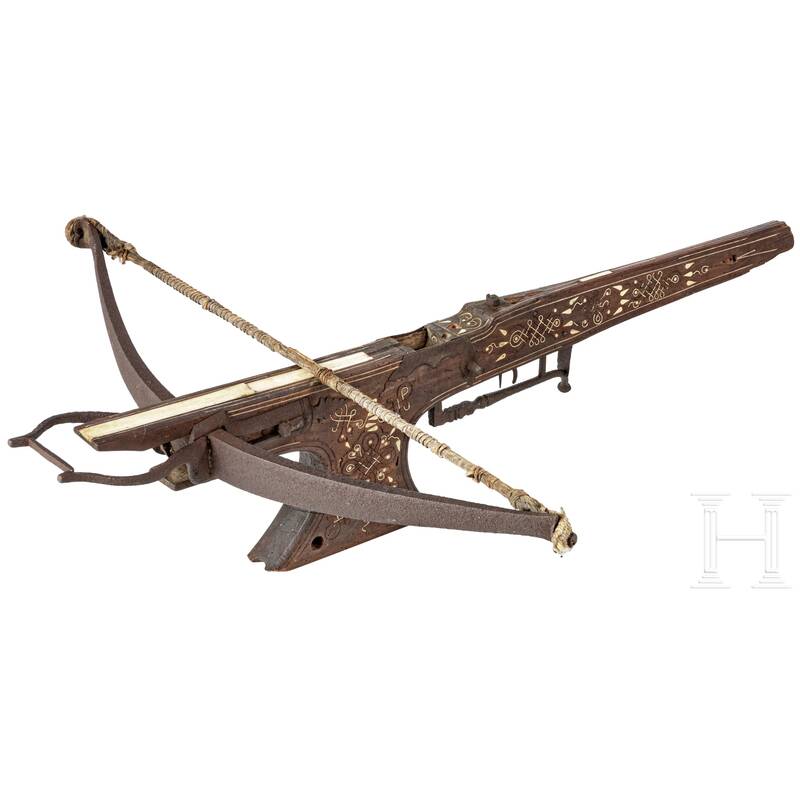
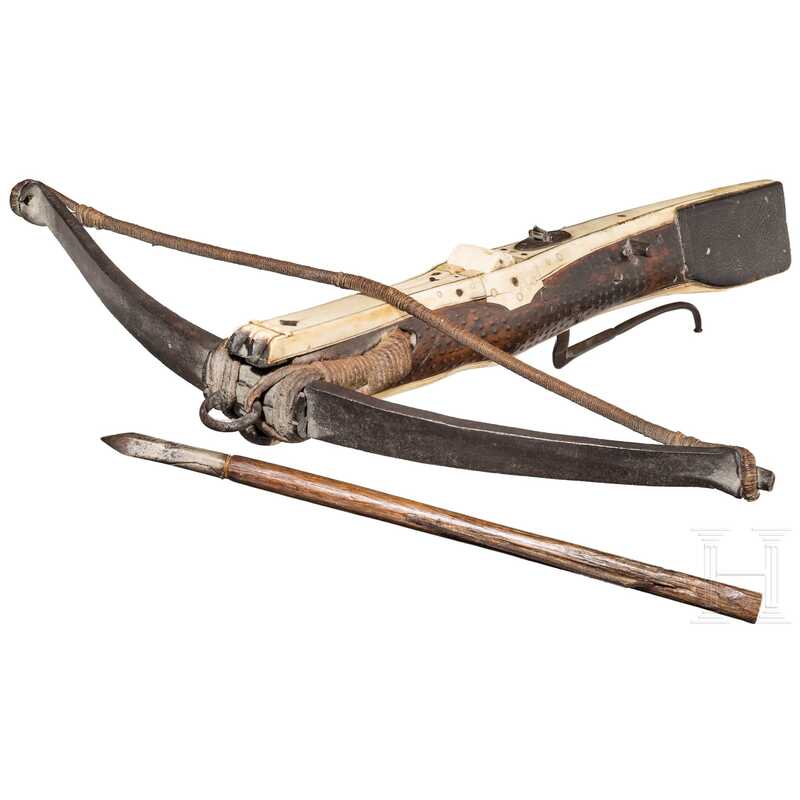
A Flemish target crossbow that is dated to have been made around the year 1700. It features a heavy walnut stock that extends downwards from beneath the stock’s middle to form a rest or support base for the crossbow. The crossbow stock tapes toward the butt. Along both sides of the stock are elaborate bone inlays in a geometric pattern, continuing right behind the slot for the nut. There are minor areas of damage to the inlay. On top of the crossbow is a bolt groove inlaid with bone. The crossbow’s rolling nut is missing. The trigger guard and transverse pin are made of iron and show signs of extensive rusting. The wood of the stock has sustained some damage from wood-eating worms. The prod of the crossbow is made of iron and features a mark on its inner right side. The prod is securely fixed onto the stock with a bridle rope. The string is still attached to the prod.
Measurements: Length 95 cm.
Condition: III -
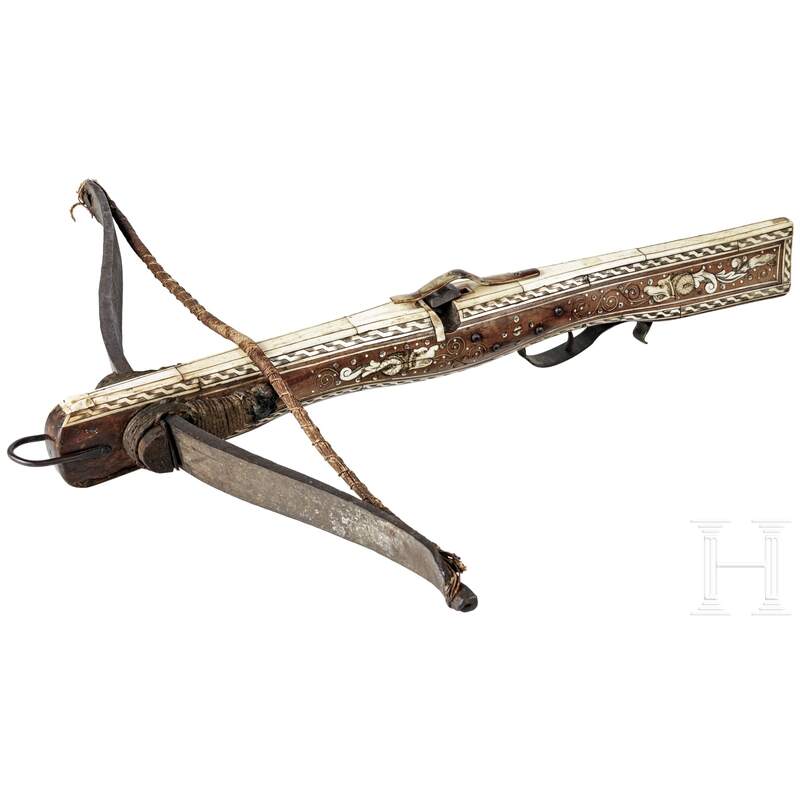
This German hunting crossbow originated from the region of Saxony in the 17th century. The crossbow is made up of a stock made from fruitwood, which has intricate and finely carved designs from bone inlays. These inlays form a detailed design of vine and floral-like patterns, woven stripes along their borders, and a series of mythical creatures. On the upper surface of the stock is an iron snap lock mechanism with a bolt clip made of horn above it. The trigger guard is made of brass and was a later addition, not original to the crossbow. Additionally, there are some signs of refurbishment along the inlays, indicating they may have been changed. The prod of the crossbow is also made of metal and passes through the stock, secured by metal plates and a bridling made of hemp cord. Attached to the fore end of the stock is a metal stirrup used in the process of spanning the crossbow. The original string is attached to the prod but is slightly unravelling at each end.
Measurements: Length 76cm
Condition: II
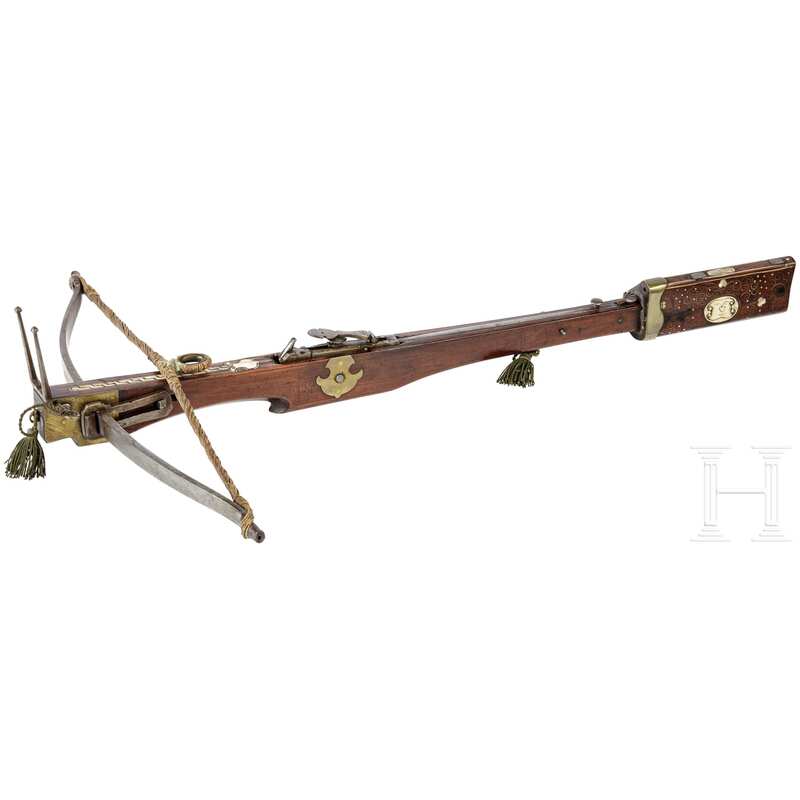
This German bullet crossbow is dated to around 1620. The crossbow consists of a slender walnut stock, fitted with brass plates and bone and mother-of-pearl inlays. These inlaid decorations feature floral vine-like imagery as well as what appears to be a face located on the concave cheek rest. The trigger system of the crossbow is made of iron, and the upper surface of the stock has a folding sight. There are signs of old restoration on the stock in the area with the lock mechanism and a crack at the stock‘s front. The prod of the crossbow runs the stock and is secured in place with brass plates. On the left side of the stock, just below the U-shaped sight, is what appears to be a metal peg with a hole at the end attached to the stock, along with some plaited string and rope tassels. The string of the crossbow is intact and features a pocket area for the bullets.
Measurements: Length 78 cm.
Condition: II
This crossbow features a steel bow and stock. It has a braided hemp bowstring but comes without a pocket in the string to carry the pellet. A feature added for assistance in accurate aiming is a slot for the bowstring lined with bone on the inside. At the fore of the prod is a U-shaped aiming sight and a suspension ring. At the top side of the cocking lever there is stamped image of a squirrel. There is an iron nut and an iron trigger guard.
Length 71 cm.
Condition: II"
This crossbow’s stock is made of steel and has a braided bowstring made of hemp and a pocket made to hold the pellet when firing. It possesses a cocking lever and appears to have repairs made to stock. There is an iron trigger guard and a folding back sight. The butt of the crossbow is the cheek rest made of walnut wood and bone inlay, which features a decorative engraving of a bird.
Length 57 cm.
Condition: II -"
A hunting crossbow with a steel prod and a braided bowstring made of hemp cord that is likely added as a later addition. The stock is made of walnut wood and has a bone inlay on its upperside and underside. The underside of the stock features an engraving of the letters “IHS” while the sides of the stock is decorated with a raised pattern of dots. The foresight is damaged with a large portion of it missing. The trigger guard is made of iron, and the trigger mechanism is a rolling nut made of bone and appears to have had repairs made at a later date. Toward the butt of the crossbow is a cheek rest covered in leather, modified likely to create a more comfortable rest. There is a transverse pin passing through the stock used for spanning the crossbow. The bolt accompanying the crossbow is original to it.
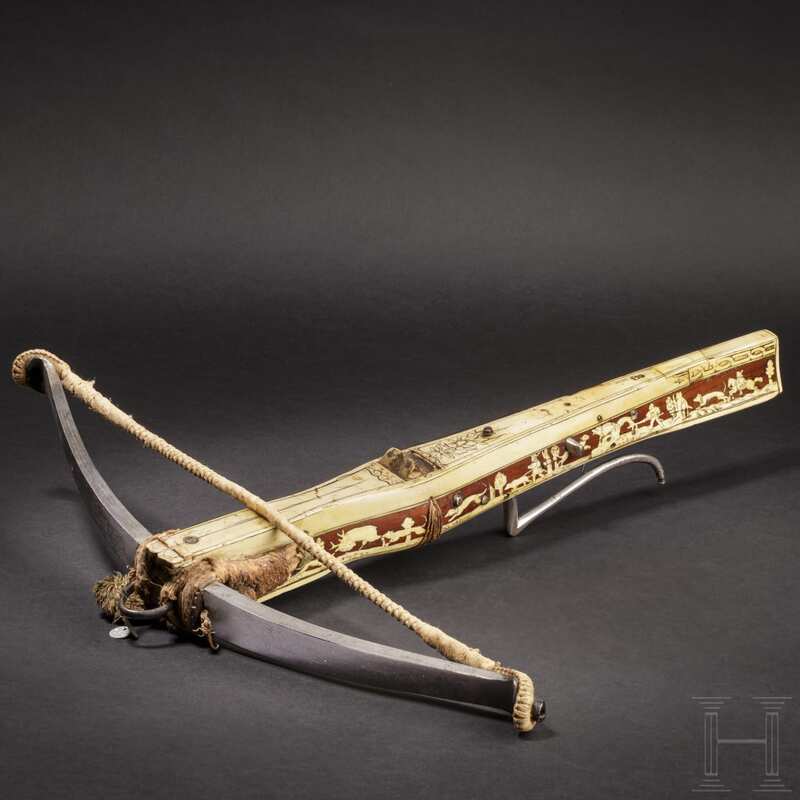
A German crossbow with lavish bone inlays featuring hunting motifs dating to circa 1580. It features a steel prod with a mark embedded into the inside of the right of the prod. This mark showcases a wheel with a sun burst. Attached to the prod is a braided bow string made of hemp and at the fore of the crossbow is a suspension ring and one green woolen pompom on the right side. The stock is made of fruitwood and features engraved inlays of bone. The sides of the stock are ornately decorated with detailed hunting scenes illustrating hunters with their hounds chasing down a wild boar and stag. The crossbow features a single axis nut made of bone and secured with a thread. There is an iron trigger guard. At the butt of the prod is a concave cheek rest, and there are likely repairs to the bone inlay. On the underside of the crossbow are the engraved letters “MCVI”
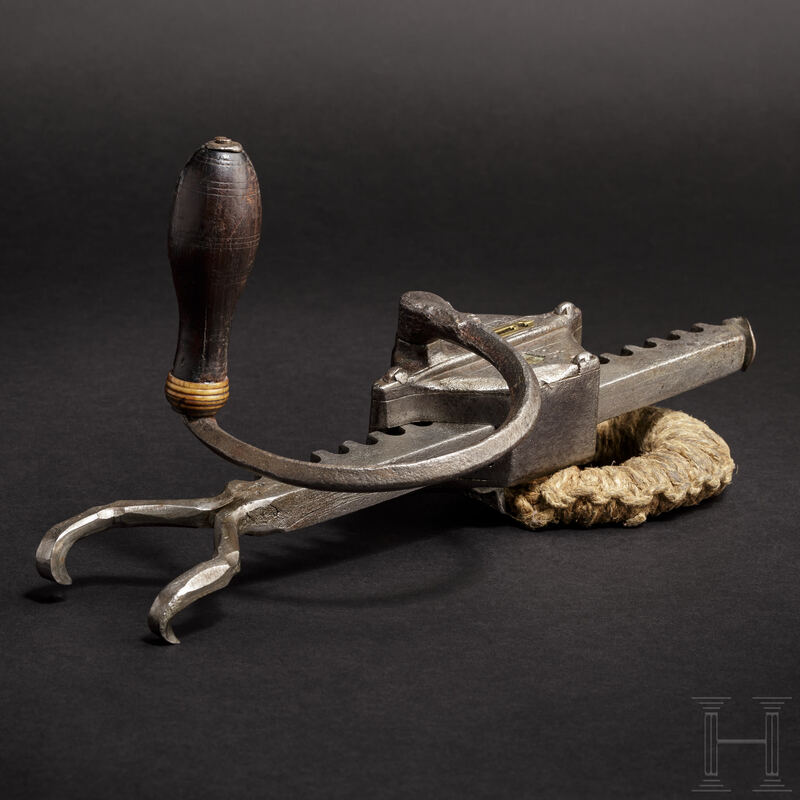
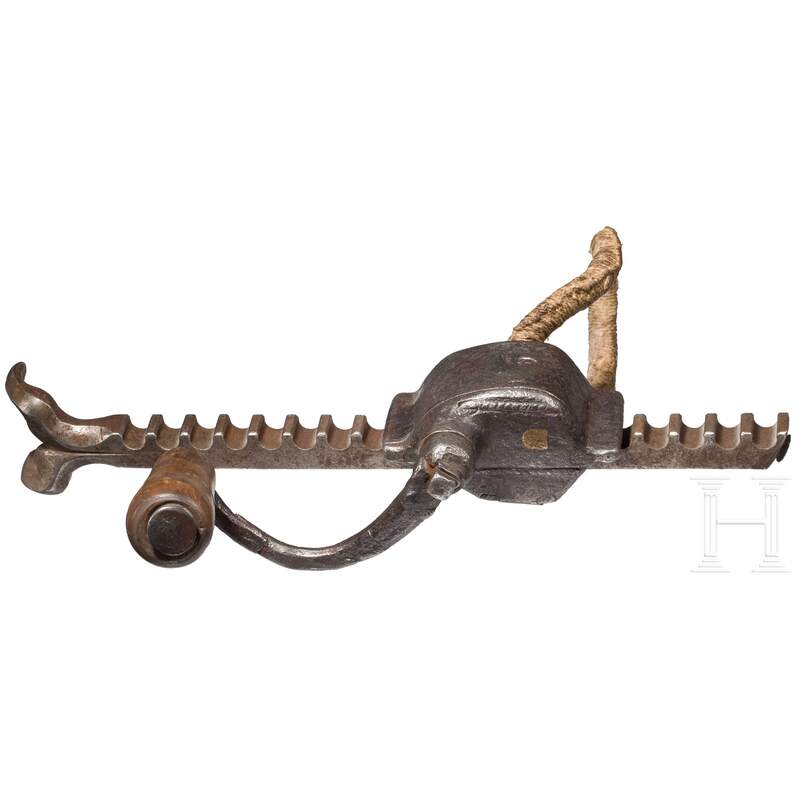
A cranequin from Nuremberg Germany, dated to the 16th Century. It features a curved iron crank with a wooden handle. It also possesses a square opening at its back and a braided hemp cord. The rack is made of iron and part of it has been retouched. Missing from this cranequin is its belt hook. The area facing upward there is a metal embossing of what appears to be an emblem in gold.
A cranequin used as a spanning device to pull back crossbow bowstring behind a transverse pin in preparation of firing. It features a crank set at a strong curve with brass inlay, cloverleaf mark, and a wooden handle. Attached to the device is a braided hemp cord. At the end of the device is a double claw. The rack is made of iron. Both the rack and the crank show significant corrosion.
Length 34.5 cm. Condition: II - III
This crossbow features a carved wooden stock and an iron prod. The prod of the stock is securely bound to the crossbow with metal plates and passes through the upper portion of the stock. At the fore end of the crossbow is the suspension ring. The top of the crossbow features an iron bolt channel, and the trigger guard is made of brass.
Length 82 cm. Condition: III+
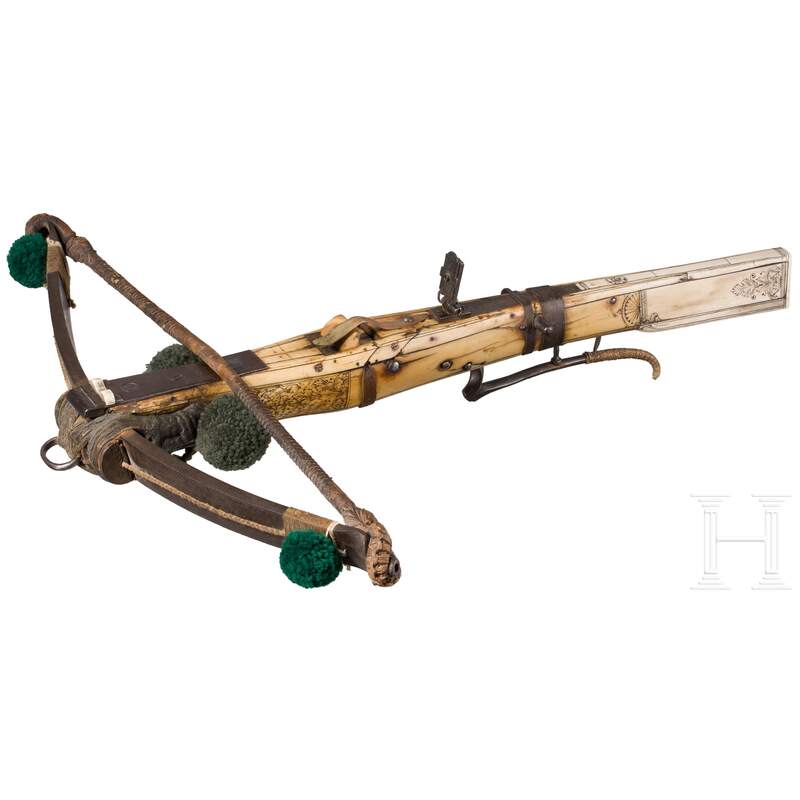
A target crossbow of German origin featuring an iron prod with braided hemp bowstring. The prod is securely attached to the stock with tarred cords which also bounds the suspension ring to the fore of the prod. At the front facing end of the prod are two woollen pompoms at either end with two additional pompoms attached to either side of the stock directly under the woven cord attaching the prod to the stock. The wooden stock is completely covered in engraved and blackened bone veneer. It features a single axis nut mechanism made of bone secured with a thread. In the nut’s surrounding area, there are a series of repairs around the nut. Across the stock are a number of floral decorative engravings. Towards the butt of the crossbow are extensive replacements. iron quarrel groove with a replaced bolt channel. The stock shows slight water damage. The crossbow also possesses a folding iron foresight, and a transverse pin used to help span the crossbow with a cranequin that shows older repairs. The trigger is made of iron and features a winding cord at its end. The iron parts of the crossbow show wearing down and significant aging with its patina and fine scarring. The crossbow showcases considerable use over a long period with a multitude of modifications and repairs done over time.
Condition: II – III
Length 70 cm.