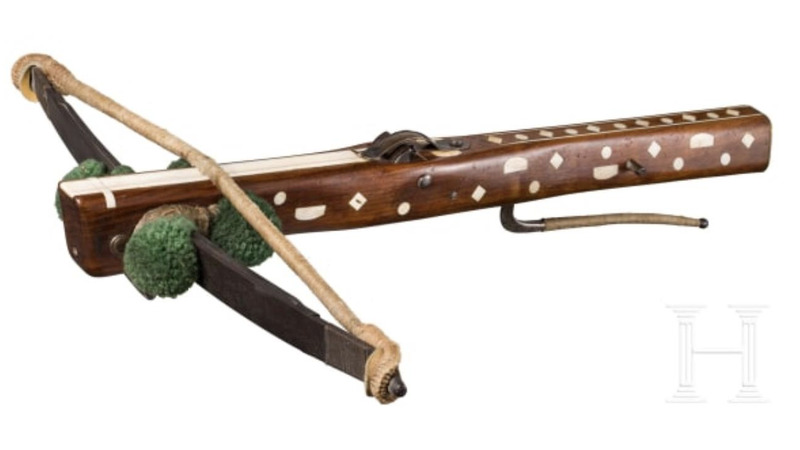
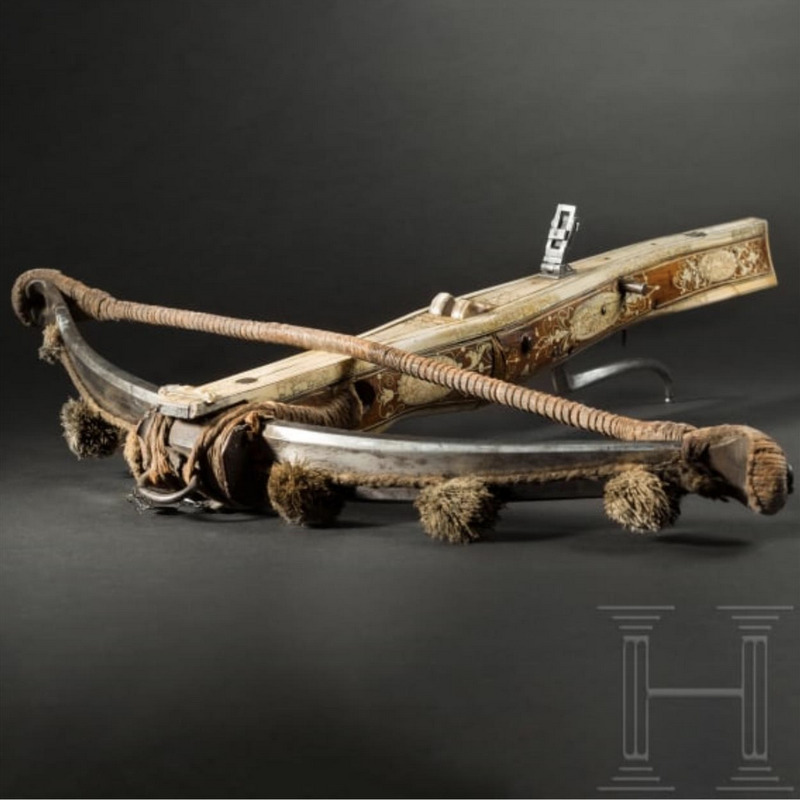
This crossbow has a double-layered steel prod with a braid string made of hemp and the bridle binding is decorated with a four woolen green pompoms. The stock is composed of walnut and inlaid with bone, featuring different shapes like diamonds, curved rectangular, and circular motifs on the sides of the stock. The top of the stock is inlaid with alternating circular and diamond patterns as well. A bolt clip covers the iron nut and there is a transverse pin poking out near the side of the butt stock. It has an trigger guard wrapped in cord.
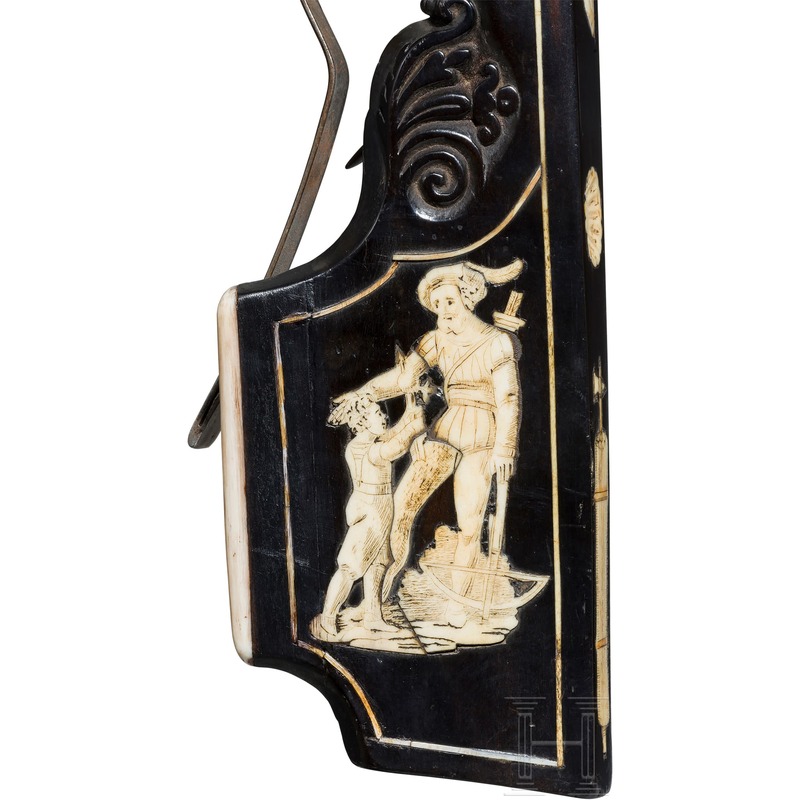
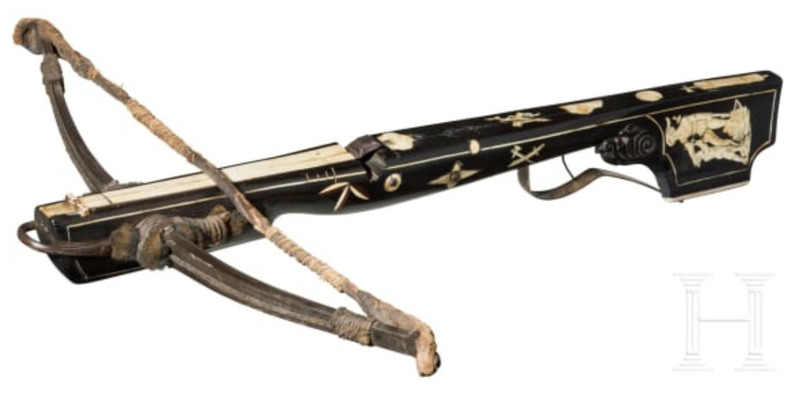
This crossbow has a steel prod (bow) and a braided hemp bowstring. There are the original pompoms, made of green wool. The prod is attached to the stock with cord bindings. The stock is made of sculpted ebony decorated with bone inlay, some of which is missing or replaced. Inlay motifs include a scimitar crossed with an ax, a fasces symbol, a Roman officer (lictor), and a conch shell. The inlay on the cheek rest depicts William Tell and his son (Swiss folk heroes). The bolt rest is made of bone, while the suspension ring, nut, and trigger guard are made of iron. The crossbow has an iron flap lock mechanism and a set trigger.
This crossbow is an example of the Saxon type, referring to the German province of Saxony, but the Swiss imagery suggests another possible origin.
This crossbow has a steel prod with a braided hemp string and suspension ring, most likely made of steel. The edges of the bridle binding are decorated with small green pompoms. The stock is composed of ebony and inlaid with bone engravings of star-shaped and sword motifs on one side and trophy bundles with flags on the other side. The top of the stock is also inlaid, however, the engravings are less clear but the butt stock does seems to be engraved with a cross on the platform. The cheek rest showcases Wilhelm Tell and his son, with the boy smiling at his father and wearing a form of headpiece while Wilhelm holds his crossbow. The stock has a groove for the nut, possible made of bone. It also has a iron trigger guard and trigger with a lock.
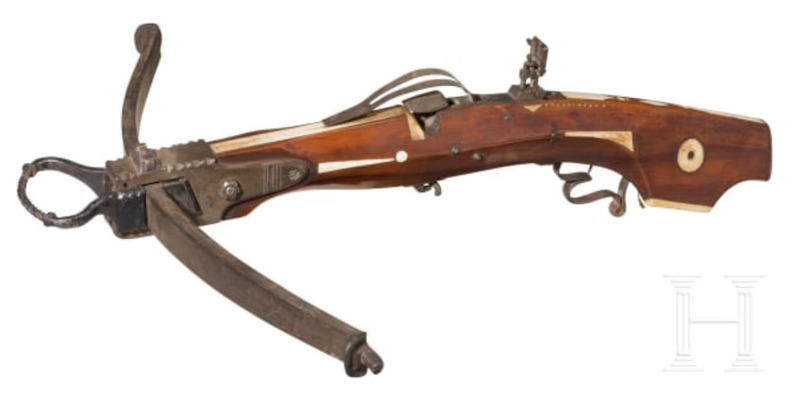
This crossbow has a steel bow and is missing a string. There is an stirrup and a column with ridged edges attached on the top of the bridle and bolted to the side of the stock, both made of steel. The walnut stock is bevelled in the middle and inlaid with bone, displaying geometrical patterns like small circles on top of triangles. The top of the butt stock is decorated with diamond motifs and side has a dotted line. It has a lock mechanism, bolt clip, and an oddly shaped rear sight along with a set trigger guard and trigger.
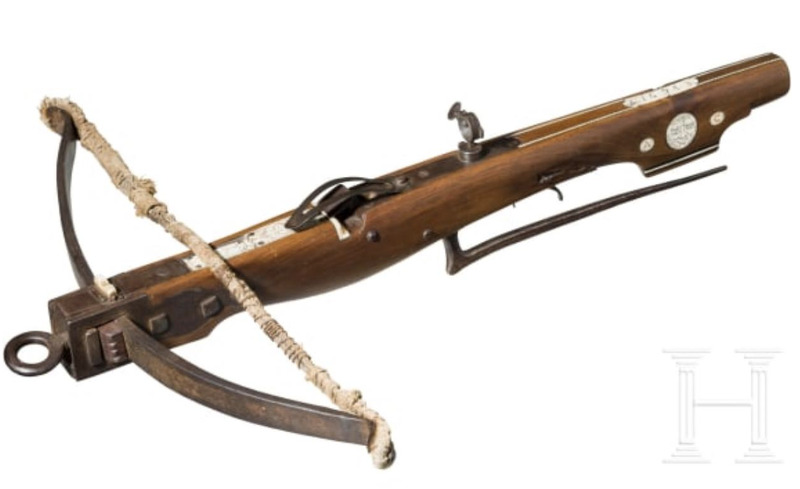
This crossbow has a steel prod bolted with a circular suspension ring and a braided string made of hemp. The top of the wooden stock has steel plating and inlaid with bone. The nut is also made of bone and two-stringed bolt clip appears to be composed of steel. The rear sight is shaped like a telescope and the top of the butt stock is also inlaid with bone, showcasing a rectangular decorative pattern and the side of it is engraved with circular patterns with the biggest circle displaying most likely a humanoid face, although, it is unclear. The date '1691' is stamped on the butt stock, although the weapon is of a later date. There is a long trigger guard and trigger is attached to the bottom of the stock which also appears to be made of steel.
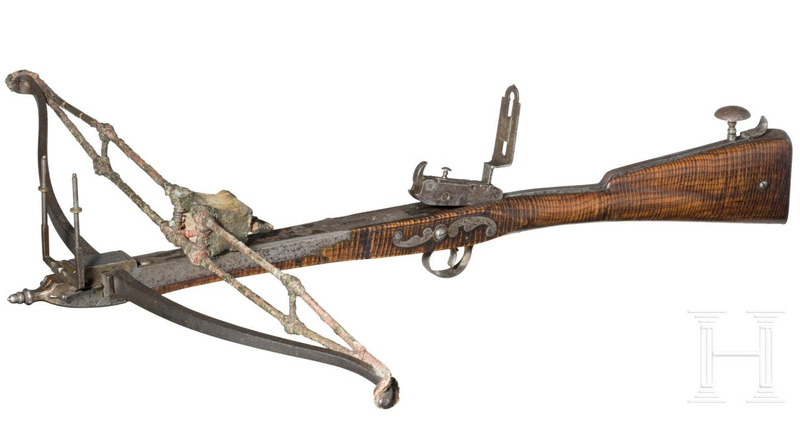
This crossbow has a curved steel bow with a two-pillared stirrup and a string from a later period attached to the leather ball bag. It has a checkered stock made of maple wood where the sides of it are plated with steel. It has a large lock mechanism with a single-finger nut and an adjustable folding rear sight along with an additional fork-shaped sight for the beads. Both appear to be made of iron. The side of the stock near the lock mechanism is decorated with a petal-shaped steel design. The butt stock has a circular thumb rest, most likely made of bronze. The crossbow has a curved trigger guard and trigger.
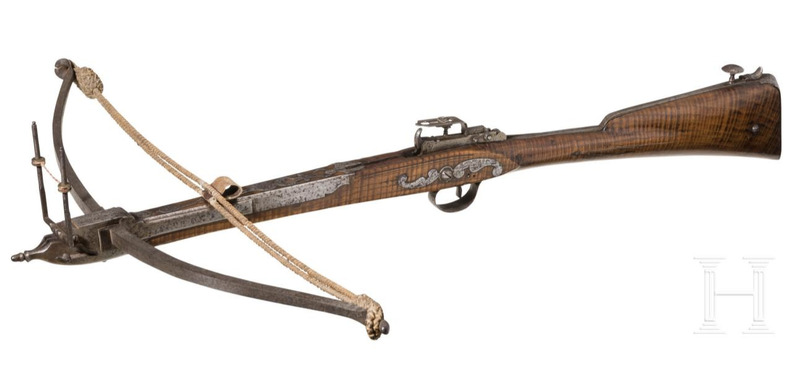
This crossbow has a steel prod and a two-pillared iron stirrup and the pillars are connected with a small rope. The checkered stock is made of maple wood and pointed at the front. The side of the stock is decorated with iron plating near the string and the trigger. The lock mechanism and small folded, adjustable lever is made of iron and most of the lock components appear to be intact. The butt stock is mounted with a pin-like thumb rest made of iron. It also has an iron trigger and trigger guard.
This crossbow has a steel prod with bevelled edges that is stamped with the mark of the manufacturer-wheel. It has six green woollen pompoms attached to the braided, also green, lanyard on the prod, The weapon has a knotted string made of hemp and an iron suspension ring. It has a fruitwood stock with the top and bottom having veneered bone inlays, engraved with different fruits and birds with blackened tendrils. The sides of the stock are engraved with images of hares in cartouches (a carved frame), deer, birds, scrollwork, tendrils, and flowers. The folded rear sight is adjusted laterally. The revolving nut is made of antler and has a multi-axle lock, but the bolt clip is missing. The lock components also have decorative gilt etching. The crossbow has a hair-set trigger and trigger guard.
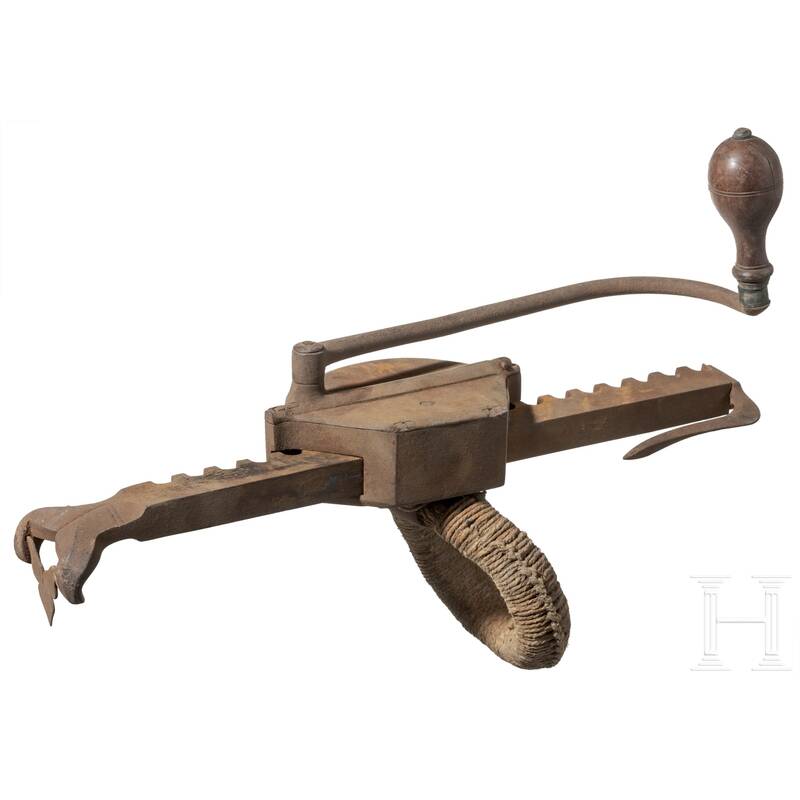
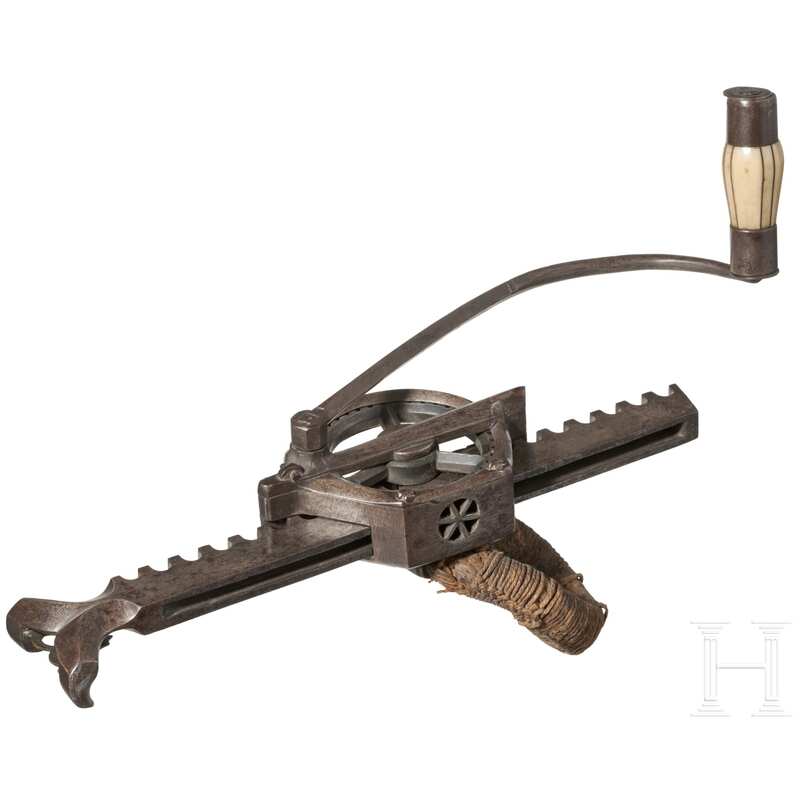
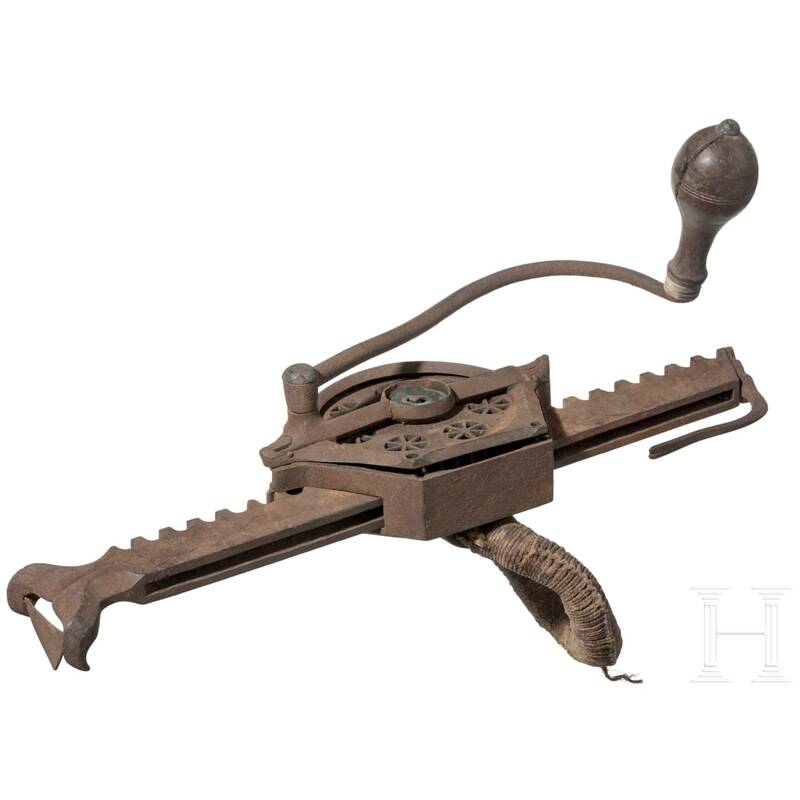
This is a cranequin with closed casing over the wheel. The wheel housing is also stamped with two crossed arrows, the maker's mark. The rack is sparsely decorated with tendril and dotting patterns. It has a belt hook, pointer plate and wind tuft along with a hook for the crossbow.
This is an iron cranequin with an open angular casing on the front. It has a three-spoked wheel with a star-shaped opening on it. The crank arm has a bone handle, belonging to the time period. There is a retaining braided loop made of hemp attached to its back and a heart-shaped hook at the edge. The rack is stamped with a mark of crescent moon with two stars. The belt hook appears to be missing.
This cranequin has a round and open-topped clock case with a visible gear that has star-shaped decoration. The crank arm is made of iron with the original wooden handle. According to the source, there is a maker's mark displaying two crossed arrows on the side of the ridged rack. The side of the rack is decorated with dot and tendril decoration. The date, 1564, is stamped near the claw-like hook. It is complete with a belt hook, pointer plate, and wind tuft.
Provenance: Attic find from Saxony
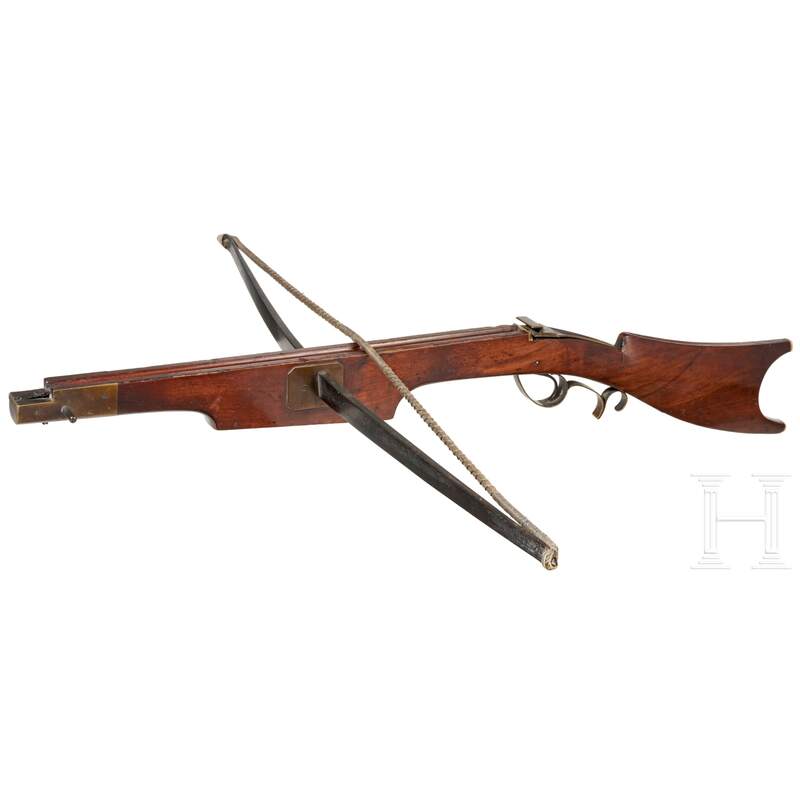
This crossbow has a blackened steel prod and the string is replaced, belonging to a different time period. The bridle block is secured with brass plates and screws. It has a stained dark wooden stock which features a bolt groove and the butt stock is inlaid with bone. Both the prod and stock are slightly damaged. The trigger guard is made of brass and has a paper attached to it which states, "Jules Lazon Fils Cambrai", the maker's name according to the website.