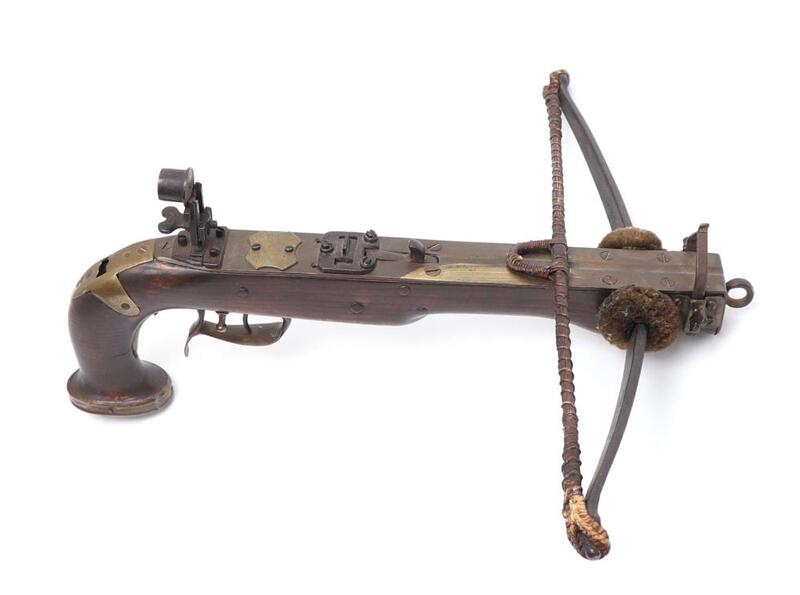
This is a pistol crossbow with a steel prod, brass suspension ring, a narrow stirrup , and string that has a looped pellet catch. There are dark yellow pom-poms attached near the prod to the sides of the stock. The wooden stock is gilded with brass plates and the lever and lock mechanism are made of iron. The elaborate iron rear sight contains cylindrical and gear-shaped components. It has a double set trigger, also made of iron.
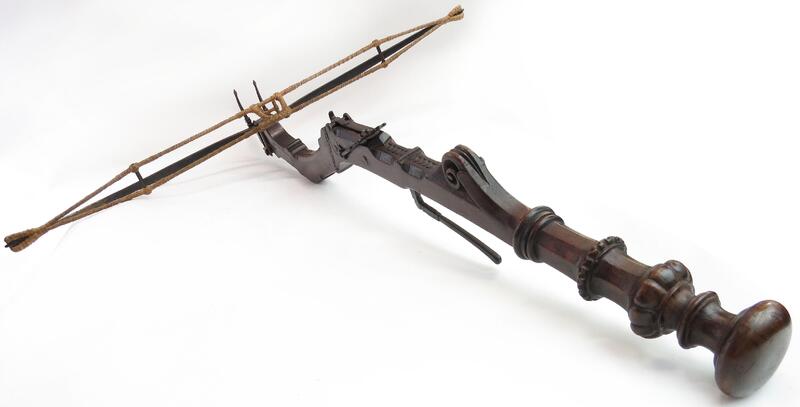
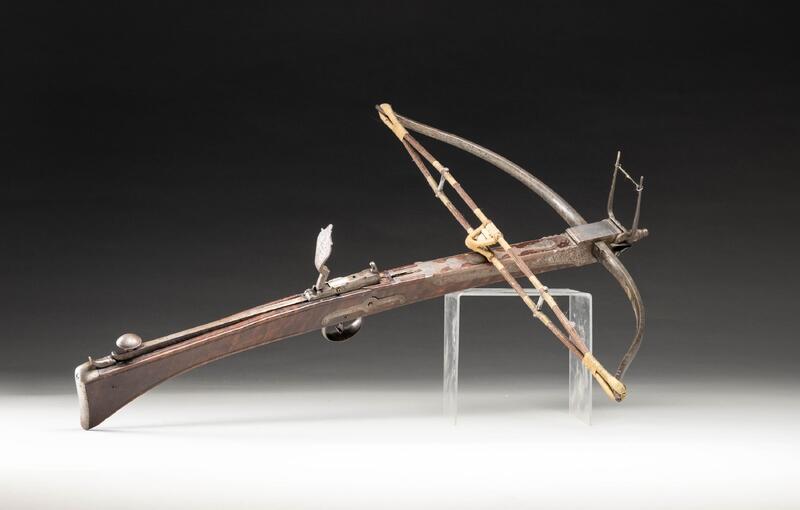
This pellet crossbow is dated to the late 16th and early 17th centuries and was used for hunting small game, such as birds. The origin of this crossbow is uncertain, though it is speculated to have come from France. It consists of an intricately carved wooden stock with scrolling patterns. The butt of the stock is a circular, flattened knob. Along the middle of the stock are indented ridge-like patterns that continue to the upper portion, which curves downwards. The stock is fixed with steel plates, and the trigger system is made of metal, including the snap lock mechanism and the trigger lever. The crossbow also features a double sight, one U-shaped sight in front of the prod, and another sight located behind the lock mechanism. The prod of the crossbow is fixed to the front of the stock, and the double string with the pocket for the pellets attached.
Measurements: Overall length 83.2cm.
Condition II
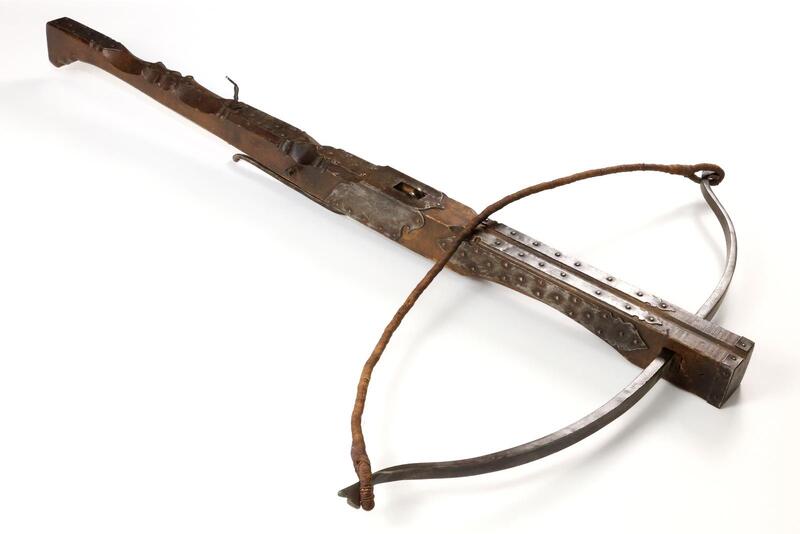
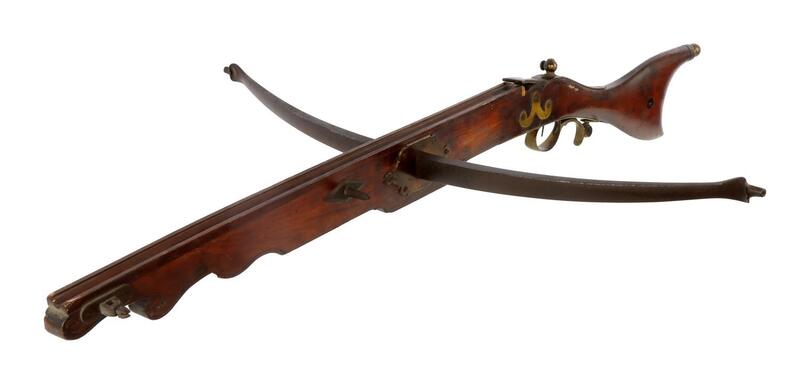
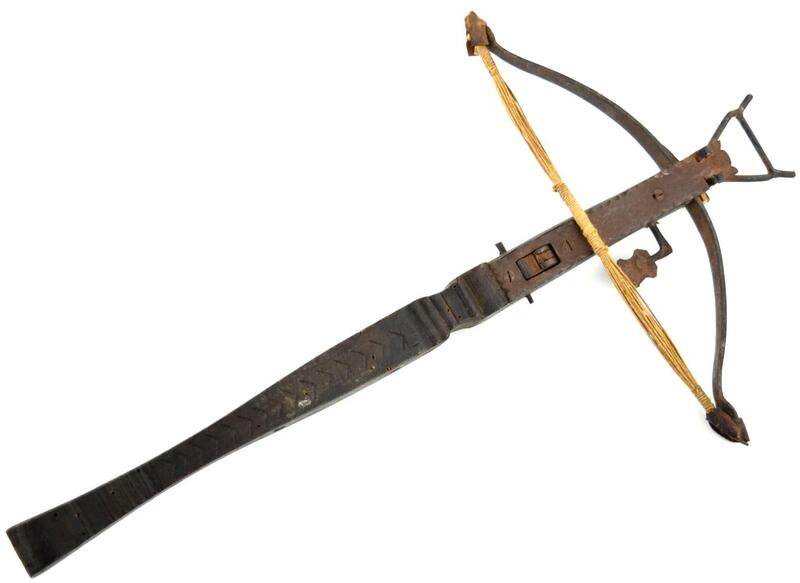
This German crossbow is dated to the 17th to 18th centuries. It consists of a wooden stock with iron metal plates that run across the length of the crossbow. At the upper portion of the stock is an indented slot that acts as the bolt groove. The trigger mechanism of the crossbow is a steel rolling nut that is framed by iron plates along the sides of the stock. Toward the butt of the stock is a metal transverse pin, used to hook on the cranequin spanning device of the crossbow. Above the transverse pin, the shape of the stock dips inwards, repeating again in a pattern at the butt of the stock. The trigger lever is made of metal. The prod of the crossbow is made of steel and passes through the middle of the stock in a rectangular hole. The butt of the crossbow features a formed cheek rest supported by decorative iron mounts, both on top and at the sides of the stock.
Measurements: Full Length 38, Width 28
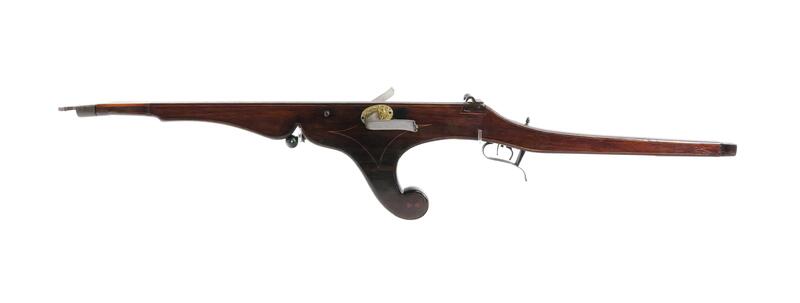
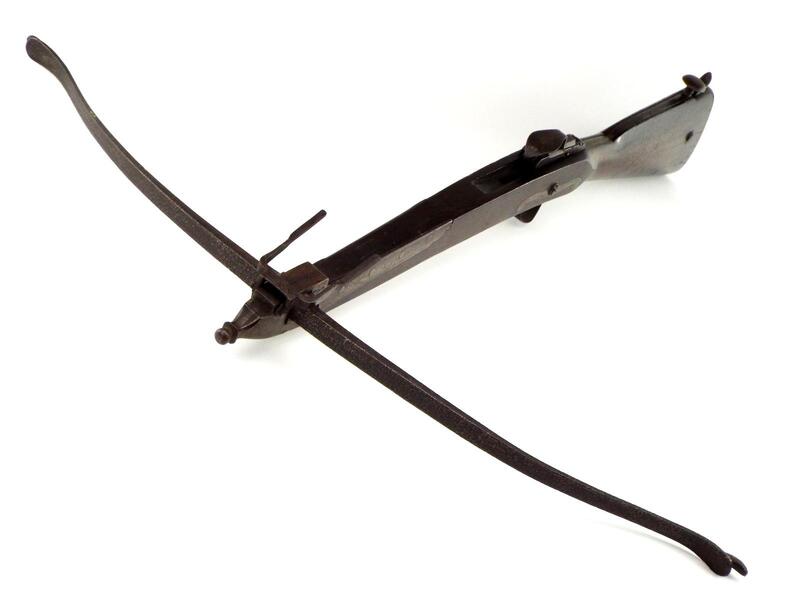
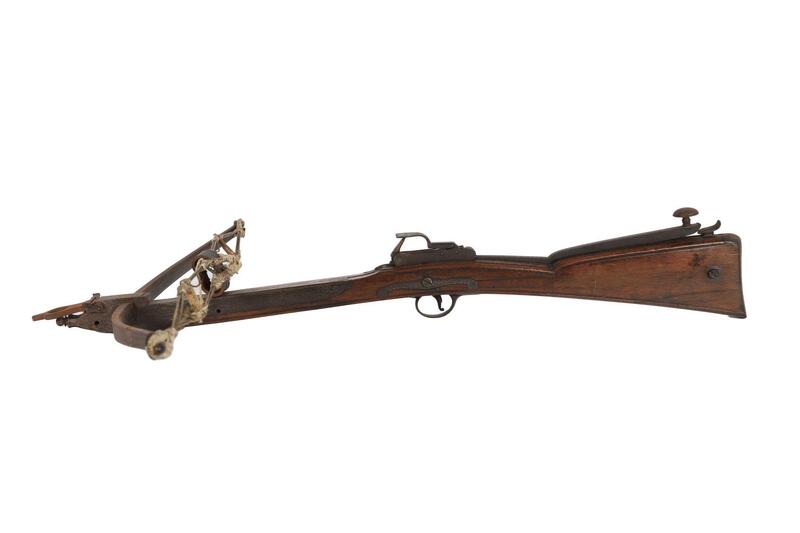
This target crossbow originated in Central Europe during the 19th century. The stock of the crossbow consists of a dark, hardwood colour, and there is a decorative inlay along the stock. In front of the prod is a metal transverse pin that runs through the stock and is used as a support for the goat's foot lever spanning device. The stock is flat across its length but curves downwards at the butt of the stock. The parts of the trigger system are made of metal, including the trigger handle and the snap lock mechanism that holds the string in place. The crossbow also features a wooden rest or handle that extends from beneath the stock and curves slightly inward. The prod is made of metal and passes through the middle of the stock, fixed with iron and bronze plates on either side. The original string is missing. The crossbow is generally in good condition, with the exception of a missing screw from one of the metal plates.
This 1765 crossbow is made by William Barker of Wigan, a clock and crossbow maker. The crossbow consists of a wooden stock, rectangular in shape but narrowing in width toward the butt before flaring outwards at the butt. The stock also goes into a more pointed tip at the front end of the stock. Along the upper half of the crossbow are fitted metal plates. The fore end of the crossbow features a metal U-shaped front sight. The prod is made of steel and passes through the middle of the stock. It features a snap lock mechanism, and the whole trigger system is made of metal. The string of the prod is missing.
This 19th-century target crossbow features a rectangular wooden stock with curved edges at the bottom of its front end. The stock narrows toward the butt before flaring outwards. At the butt of the stock is a symbol of a compass rose inlay. The steel prod passes through the middle of the stock and is fixed in place with metal plates on either side. In front of the prod is a metal pin running through the crossbow. The entire trigger system is made of metal, and the lock is a snap lock mechanism made of what is likely brass metal. The crossbow has been restored, with repairs being made to the back of the prod, trigger guard, and stock. The condition of the crossbow is deemed to be functional.
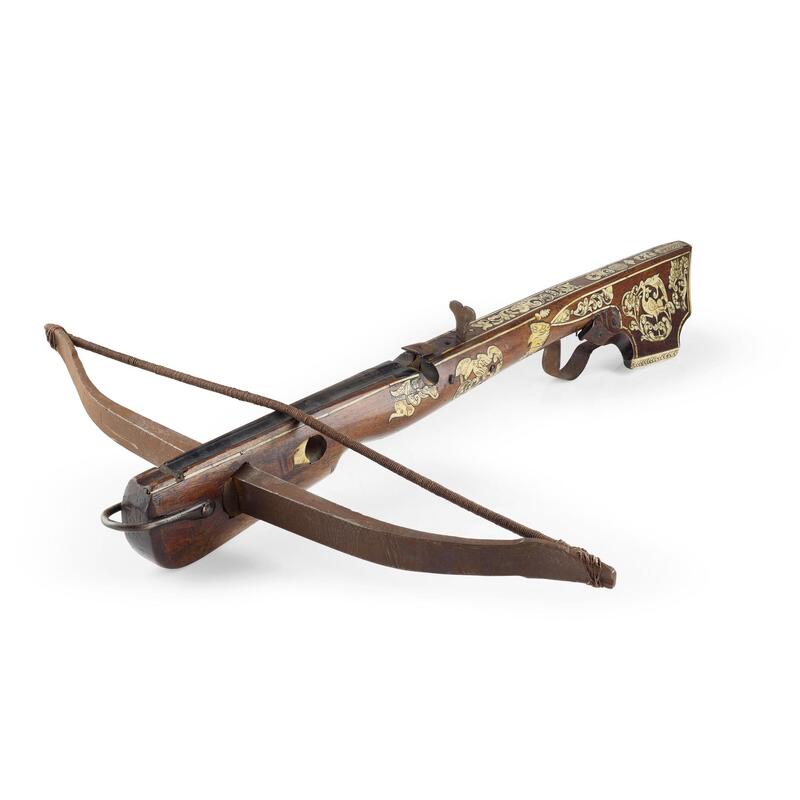
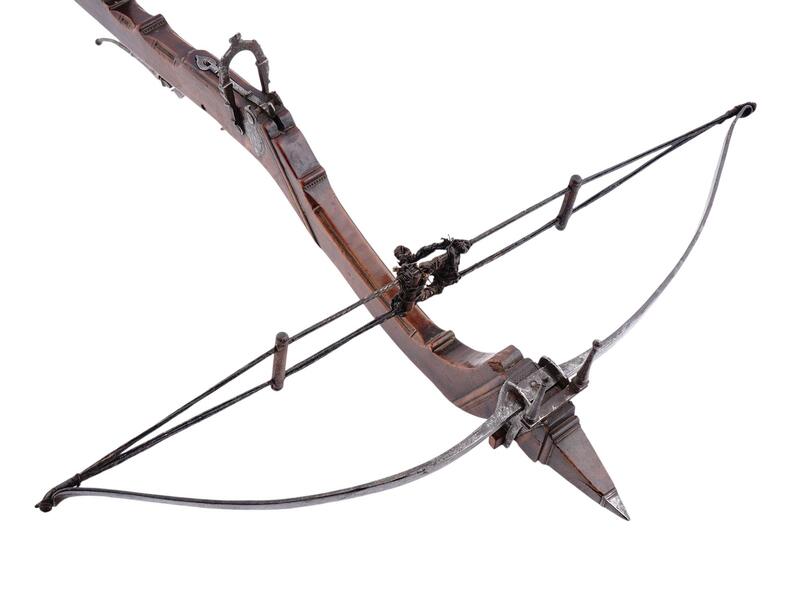
This crossbow classifies as a Ganze Rüstung or “full-size” crossbow and is dated to the late 17th or early 18th century. Its location of origin is unknown, however. The crossbow features a stock made from fruitwood and intricate decorations of staghorn, ivory, and bone inlays that depict animals, plants, and floral imagery. The stock is rectangular in shape, but widens at the lock mechanism. The crossbow has a metal snap lock trigger mechanism and a bolt clip made of steel that appears above the lock. Along the top of the stock is a groove for the crossbow bolts. The fore end of the stock is fixed with a metal stirrup, and the trigger is made of steel. At the butt of the stock, the cheek rest is concave. The crossbow also features an adjustable sight made of metal. The prod passes through the stock, and the crossbow string, likely made of twisted plant fiber, is attached to the prod.
Measurements: 72cm long, 51cm wide
This bullet shooting crossbow is dated to the early 19th century. It features a wooden stock with fitted metal plates on its sides and its upper surface. The crossbow maintains a rectangular shape but flares outwards at the butt of the stock, while the front of the stock narrows into a pointed shape with a rounded metal tip. The lock is a Schnepper or “snap lock” mechanism that hooks onto the string. In front of the prod is a folding front sight that has the engraved words “JOHNSON/MANCHESTER”. The prod is made of walnut wood and passes through the upper section of the crossbow with fixed plates on either side. The crossbow also features a linen fiber double string with a pocket in the middle to hold the bullets in preparation for firing. The crossbow is in good condition with minor signs of fraying at the string and worn paint. The trigger guard also features an acorn design on top, and the trigger is made of metal.
This pellet crossbow is dated to the 18th century, but its origins remain unknown. The crossbow features a rectangular wooden stock that curves and then flares out to the butt. It possesses a snap lock trigger mechanism used to hold the string in place. The prod passes through the middle of the upper portion of the stock. The string is attached to the prod and features a double string with a pocket or ‘cradle’ for firing pellets. The trigger is made of iron. The condition of the crossbow is generally good, but does show signs of aging and wear.
Measurements: 78 cm. high; 66 cm. wide
This German crossbow dates to the 18th century and consists of an ornately decorated wooden stock with carved ridges at the butt of the stock and triangle patterns that runs up the stock. The butt of the stock is a curved knob. The trigger of the stock is a wooden rolling nut mechanism. On the front of the stock is a mounted iron stirrup used to help space the device. The stock possesses some minor damage, including holes from a past insect problem. The iron parts of the crossbow show aging due to oxidization and more. The prod passes through the stock, and the string is made of twisted plant material. That is attached to the display
Measurements - Total length: 17", crossbow 10" wide.
This English pellet crossbow is dated to the 18th Century. It consists of a wooden stock that curves downwards in the upper portion of the crossbow. The fore end of the stock is shaped in a pointed triangle, while the butt of the stock is in a circular flat knob. Located on the left side of the stock are the engraved initials ‘F G’. On the stock are two shaped posts that act as the front sight. There is also a folding back sight. located at the top of the stock. The prod is made of metal and features an imprinted maker’s mark on the upper center portion with a circle that has four raised lines. The prod passes through the stock, and the double string with the pellet pocket is attached. The trigger is made of metal. The crossbow overall is functioning.
Measurements:
L: 38 1/2 in., (97.5 cm.) W: 28 1/2 in., (72.5 cm.)
Condition Report: Very good, Minor scratches on the wood.
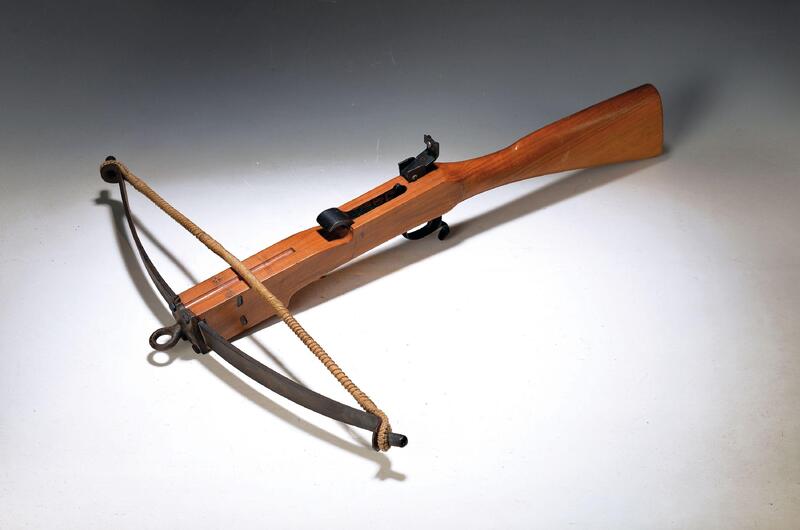
This Swiss crossbow from the 20th century is made from a walnut wooden stock that is rectangular in its upper half but narrows out towards the middle and flares out at the butt. It consists of a bolt groove on its upper surface. The prod of the crossbow is made of steel and is fixed onto the front of the stock with an iron suspension ring. The trigger mechanism is a “Schnepper” or “snap-lock” mechanism that is made of metal. The trigger handle is also made of metal, and the string of the crossbow is a twisted plant material.
Measurements: Bolt Groove Length 15 cm. Overall dimensions: Length: 68 cm, Width: 61 cm
Condition Report: 2